Meta's Content Moderation Philosophy Put Under Oath at Australia's Antisemitism Royal Commission
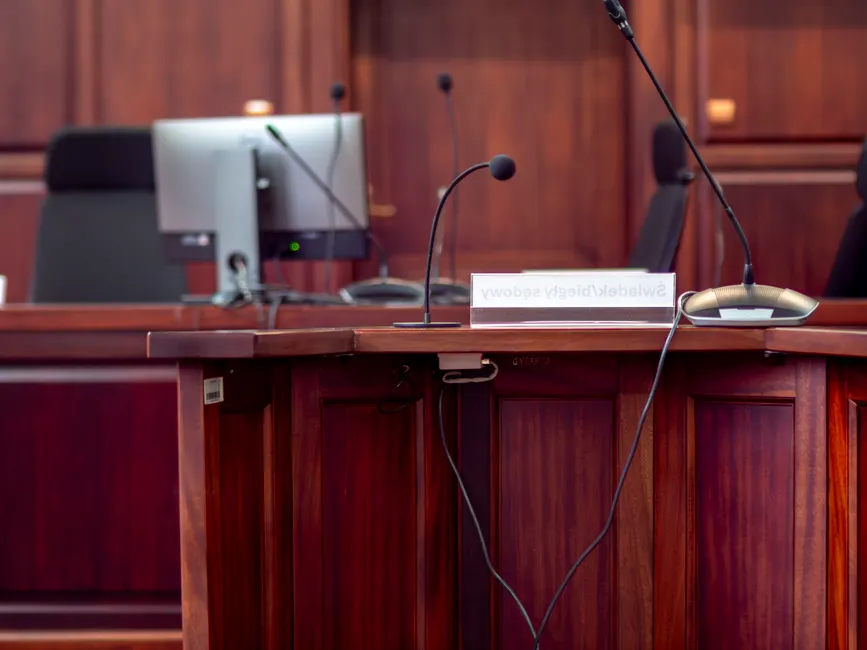
Meta's global director of core policy, Benjamin Good, faced detailed questioning at Australia's Royal Commission on Antisemitism and Social Cohesion on 6 July 2026, as counsel assisting Richard Lancaster pressed the company on whether its January 2025 moderation rollback had opened the door to more antisemitic content on its platforms.
The commission — formally established on 9 January 2026 in response to the Bondi terrorist attack of 14 December 2025 — has been examining the intersection of social media governance and the rise of antisemitism in Australia since its first public hearing in Sydney on 4 May 2026. The session on 6 July put Meta's policy architecture under direct scrutiny for the first time.
The 2025 Policy Shift and Its Consequences
Meta announced in January 2025 that it would reduce proactive content moderation, eliminate third-party factcheckers, and confine its enforcement to illegal content and what it described as "very serious violations." Mark Zuckerberg framed the change as a deliberate trade-off: "we're going to catch less bad stuff, but we'll also reduce the number of innocent people's posts and accounts that we accidentally take down," according to The Guardian.
Lancaster told the inquiry the commission had received complaints that the changes had, in practice, allowed more antisemitic material to circulate. He also pointed out that witnesses who had already given evidence to the royal commission were subsequently targeted on Facebook — a concrete illustration of the harm alleged rather than an abstraction.
What Meta's Internal Framework Actually Permits
The hearing surfaced excerpts from Meta's internal FAQ documentation that lay out the company's content taxonomy in unambiguous terms. Offensive characterisations such as "gay people are sinners" are permitted. False generalisations including "immigrants are criminals" and "white people are all Nazis" are allowed. The document draws a line between "Black people are more violent than whites" — acceptable under Meta's rules — and "black people are all drug dealers," which is not, on the basis that the latter attributes specific criminal behaviour rather than a generalised trait.
The FAQ states plainly: "It is not Meta's role to police offensiveness."
That distinction — between offence and specific incitement to harm — is the fulcrum of Meta's entire post-2025 enforcement posture. It is also the point the royal commission is most directly interrogating.
Good's Defence: Over-Enforcement as a Real Cost
Good did not dispute the internal documents. His defence rested on the costs of the alternative. The "gold standard," he told the commission, is to remove hateful content before anyone sees it — but aggressive proactive enforcement creates its own harm: the wrongful removal of legitimate speech. He cited Jewish communities as a case in point, noting that members had seen their own content taken down when speaking out against atrocities during times of crisis, and that posts condemning Hamas — a listed terrorist organisation — had been inadvertently removed. He called that a "very bad outcome."
Good also told the inquiry that Meta's metric on the prevalence of hateful conduct policy violations has held at 0.02% of content since 2022, a figure he offered as evidence of systemic stability across the policy transition.
That 0.02% figure will likely receive scrutiny. Prevalence metrics of this kind measure detected violations against total content — they are bounded by what enforcement systems are calibrated to catch. If proactive detection is reduced, the denominator grows and violations that previously would have been flagged may simply go uncounted.
Broader Commission Context
The 6 July session sits inside a run of technically dense hearings at the commission. On 2 July, the inquiry heard expert testimony that far-right actors are deploying coded language and memes specifically engineered to evade automated detection systems, according to ABC News. A day later, the commission examined Australia's regulatory framework for social media platforms and was told that a mandated duty-of-care regime — the mechanism that would impose legal obligations on platforms analogous to those on broadcasters — remains years from implementation, per ABC News.
That regulatory gap is the structural problem underlying the Meta testimony. Good's evidence, whatever its merits, was ultimately that Meta self-regulates within a policy framework of its own design. The commission's terms of reference — and the political moment that created it — suggest Australian policymakers are no longer content with that arrangement. Whether the final report translates that dissatisfaction into enforceable recommendations is the question the remaining hearings will shape.