Khamenei's Body Arrives in Qom as Iran's Six-Day State Funeral Moves Toward Mashhad Burial
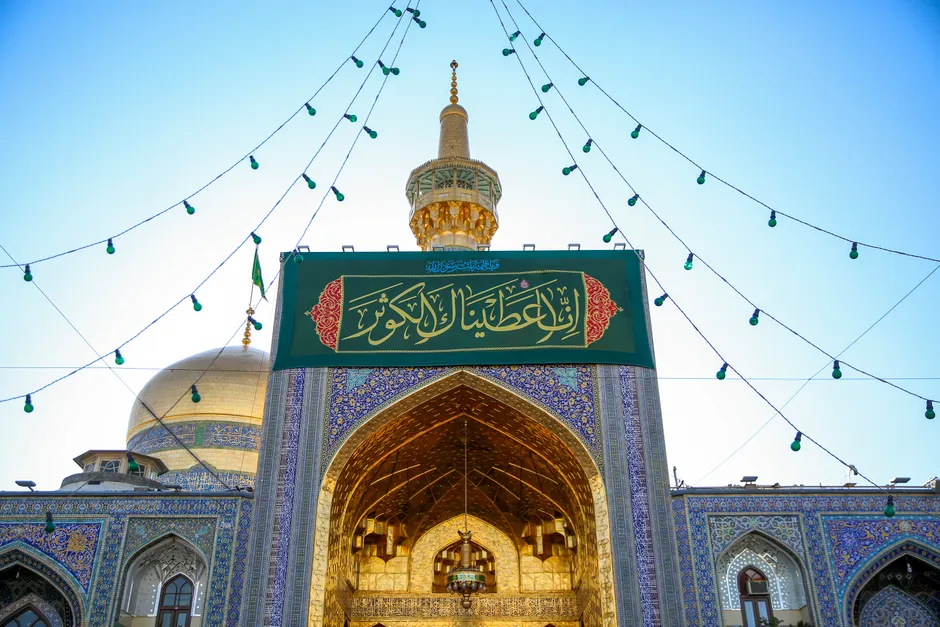
Ayatollah Ali Khamenei's body arrived in the holy city of Qom on July 6, 2026, carried by helicopter in footage broadcast on state television channel IRIB, as Iran's multi-city funeral sequence moved into its penultimate stages before a scheduled burial at the shrine of Imam Reza in Mashhad. A funeral procession through Qom is set for Tuesday, July 7, with interment in Mashhad on Thursday.
Khamenei was killed on February 28 in a US-Israeli strike that also took the lives of four family members, including his 14-month-old granddaughter, according to Iranian state media. The strike also killed Ali Larijani, then-head of the supreme national security council, in a separate airstrike in March. The funerary ceremonies — organized as a six-day event spanning Tehran, Qom, Iraq, and Mashhad, according to Press TV — represent the largest state mourning apparatus Iran has activated since the 1989 death of the Islamic Republic's founder, Ayatollah Ruhollah Khomeini. Iranian state television described the street turnout in those terms directly.
Three Days in Tehran
The Tehran leg of the proceedings drew millions into the streets across three successive days. A truck bearing Khamenei's coffins moved through central Tehran to Azadi Square. Emergency services chief Jafar Miadfar told state news agency IRNA that more than 34,000 participants received medical treatment during the events; no fatalities were recorded.
The senior official roster at the Tehran procession carried its own significance. Foreign Minister Abbas Araghchi, judiciary chief Gholamhossein Mohseni Ejei, and Quds Force head Esmail Qaani were all present. Mohammad Bagher Zolghadr, who took over as head of the supreme national security council after Larijani's death, made his first confirmed public appearance. Former president Mahmoud Ahmadinejad also attended — his first public appearance since the war began, notable given the deep personal rupture that developed between him and Khamenei during the latter years of his 2005–2013 presidency. President Masoud Pezeshkian attended and posted on X that Iran would "continue the path of Iran's honour, progress and glory."
Pakistan's Interior Minister traveled to Tehran for the ceremonies, according to IRNA, reflecting the diplomatic weight Iran sought to project even amid active conflict.
The New Supreme Leader's Absence
One figure conspicuously absent from all public proceedings is Mojtaba Khamenei, who was appointed Supreme Leader approximately one week after his father's assassination and has not appeared in public since before that appointment. Mohammad Eslami, a research fellow at Tehran University, told Al Jazeera that Mojtaba's absence reflects the security calculus of an ongoing war and the fragility of ceasefire negotiations between Iran and the United States and Israel.
That explanation is plausible but incomplete. A new Supreme Leader who has yet to establish the kind of public legitimacy his father accumulated over more than three decades faces a compounded vulnerability: both physical, given that his father was killed in a precision strike, and political, given that his appointment bypassed the customary deliberative process within the Assembly of Experts. His continued invisibility during what is, by any measure, a defining moment of national mourning will itself become a data point — for domestic hardliners assessing his authority, for foreign intelligence services tracking the regime's internal coherence, and for the populations inside Iran whose relationship to the Islamic Republic has always been contested.
Processions Across the Shia Axis
The Iraq component of the funeral adds a regional dimension. Processions were organized in both Najaf and Karbala — the two most sacred cities in Shia Islam — with Khamenei's body to travel a 6-kilometer route in Najaf and a 5.8-kilometer route in Karbala. Press TV reported that 150 ambulances were pre-positioned for those processions. The inclusion of the Iraqi shrine cities signals that Tehran is framing Khamenei's death not merely as a national loss but as an event within the broader Shia world — a frame useful both for solidarity messaging and for sustaining the networks of influence Iran has cultivated in Iraq over decades.
Burial at the shrine of Imam Reza in Mashhad, the holiest site in Shia Iran, closes that narrative arc. Khomeini was buried in Tehran; Khamenei's interment in Mashhad places him within the sacred geography of the faith in a way that will carry weight for the clerical establishment and for the millions of pilgrims who visit the shrine annually.
The immediate diplomatic and strategic questions — the state of the ceasefire talks, the composition of the new leadership structure around Mojtaba Khamenei, Iran's military posture as the war-phase gives way (if it does) to negotiation — remain unresolved. The funeral sequence provides a temporary ritual frame, but when that frame closes on Thursday, the pressures underneath it will reassert themselves.


