Europe Confronts the Limits of American Arms Supply as NATO Meets in Ankara
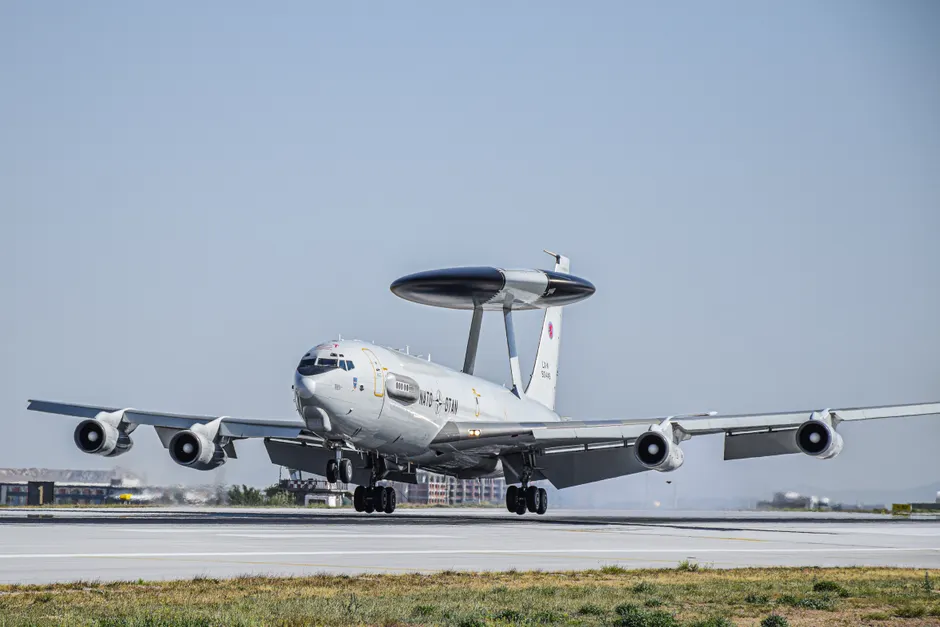
NATO leaders gathered in Ankara on July 7-8, 2026 amid growing acknowledgment that the US defence industrial base may not be able to deliver weapons already pledged to allies Europarl. The summit, which produced a declaration affirming an "ironclad commitment" to collective defence Reuters, unfolded against a backdrop of depleted American stockpiles, delayed deliveries, and a Ukrainian battlefield exposing the consequences in real time.
The proximate cause is straightforward: two wars have drawn down US munitions faster than production lines can replace them. The conflicts in Ukraine and Iran have left American stockpiles depleted, according to reporting that traced delayed or cancelled deliveries of Tomahawk cruise missiles, HIMARS mobile rocket artillery, and PAC-3 interceptors to European buyers The Guardian. The US expended more than 850 Tomahawks during the Iran war ISS, and by April 2026 had used roughly half its PAC-3 inventory in that same conflict The Guardian. Those are precisely the systems European militaries have come to rely on for layered air defence, and the Pentagon itself flagged the depletion problem more than a year earlier, in its Q3 2025 Operation Atlantic Resolve report, which described aid to Ukraine as having partially exhausted stockpiles and triggering an "urgent need" for expanded production DoD.
The human cost of the shortfall is not abstract. A Russian bombardment killed at least 21 people and injured dozens across Ukraine on July 6, the eve of the summit The Guardian. President Volodymyr Zelenskyy said Kyiv could not intercept roughly 23 ballistic missiles for want of sufficient interceptor stocks, and called on the Ankara gathering to deliver "strong decisions" on air defence support. The timing put NATO's internal debate about industrial capacity on a collision course with an immediate operational failure on the alliance's periphery.
One European diplomat, speaking anonymously, distilled the dynamic bluntly: dwindling stocks from Iran and Ukraine, a shift of American defence resources toward Asia, and interceptors routed first to Israel have left European allies at the back of the queue. "We know that we are not customer number one," the diplomat said. That framing captures a structural reality rather than a policy failure — Washington is managing simultaneous demand from Kyiv, Tel Aviv, Indo-Pacific partners, and its own force posture, with a production base still calibrated to peacetime assumptions.
European capitals have been careful not to convert frustration into open confrontation with the Trump administration. The reluctance reflects a calculation that a public rupture over arms deliveries risks compounding damage already done by disputes over Iran policy and Greenland, both of which allies sought to smooth over on the sidelines in Ankara Reuters. Secretary of Defense Pete Hegseth has overseen a policy in which the administration is pressing allies to raise defence spending to 5% of GDP for a second consecutive year, with an expectation that a substantial share of that spending flow toward American-made equipment The Guardian. Secretary General Mark Rutte had previewed the summit as one focused on "delivery," and the alliance's own preparatory documents, including the 2025 Annual Report, anticipated allies presenting credible paths to that 5% target NATO.
The tension is evident: allies are being asked to spend more on US arms even as the US struggles to fulfil existing orders. An administration official previewed "billions of dollars in announcements" on co-production arrangements, new factories, and production lines split between Europe and the United States, an effort apparently intended to address the bottleneck by localising manufacturing rather than relying solely on US export capacity. Whether that solves the near-term problem is a separate question from whether it satisfies the longer-term one, since questions persist about whether future European investments in next-generation American systems will be honoured at all, given the current record on existing contracts.
Structural factors compound the immediate crunch. EU armed forces operate more than 150 distinct weapons systems, compared with a few dozen in the US inventory Europarl, a fragmentation that has long complicated interoperability and made European reliance on a handful of common American platforms, Patriot and HIMARS chief among them, more consequential when those supply lines falter. The European Parliament's 2026 resolution on common security and defence policy accordingly stressed EU-NATO cooperation on weapons procurement as a priority, though co-production timelines measured in years offer little to Ukrainian air defenders facing missile barrages now.
The Ankara declaration's "ironclad commitment" language sits uneasily alongside NATO's acknowledged capacity gap. Alliance unity in communiqué form has rarely been in doubt; what Ankara tested was whether that unity translates into deliverable hardware. Reuters reported that the broader defence spending push is already straining budgets across a 32-member alliance Reuters, meaning European governments face rising bills for equipment that may arrive late, if at all, even as the war on NATO's eastern flank continues to demonstrate the cost of insufficient interceptor stocks in real time.


