High Court Ruling in Harry's ANL Case Lands Amid Fraught UK Visit

A High Court ruling in Prince Harry's long-running case against Associated Newspapers Limited (ANL), publisher of the Daily Mail, was expected at approximately 2pm BST on 7 July 2026, arriving in the middle of a UK visit already strained by disputes over security and royal accommodation The Guardian.
The case, formally styled Lawrence, Sussex and others -v- Associated Newspapers on the judiciary website, centres on allegations of unlawful information-gathering: voicemail interception, landline tapping, and "blagging" — obtaining private data by deception — allegedly carried out by private investigators, freelance journalists, and ANL staff judiciary.uk. Harry claims 14 articles published by ANL between 2001 and 2013, most concerning his relationships prior to meeting Meghan, were the product of such methods. ANL denies wrongdoing and continues to defend the claim.
The duke is not litigating alone. Elton John, David Furnish, and Baroness Doreen Lawrence — whose 18-year-old son Stephen was murdered in a racist attack in south London in 1993 — are among the co-claimants, alongside Sadie Frost, named as the seventh claimant in earlier judiciary filings judiciary.uk. The litigation has generated a paper trail stretching back years: an Approved Judgment on 10 October 2025 ([2025] EWHC 2573 (KB)), an earlier one in July 2025 ([2025] EWHC 1716 (KB)), and a January 2026 transmission direction order. It follows a separate, earlier ANL dispute Meghan herself brought, which produced a 2020 High Court judgment ([2020] EWHC 2160 (Ch)) in her favour on different facts. A previous phase specific to Harry alone — The Duke of Sussex -v- Associated Newspapers Limited — saw a 2023 vacation order dismiss a summary judgment application and require Harry to pay costs, a reminder that this litigation has not run uniformly in the claimants' favour.
This ANL suit is now Harry's only remaining active legal case in the UK People, closing out a chapter of tabloid litigation he has pursued since stepping back from royal duties six years ago.
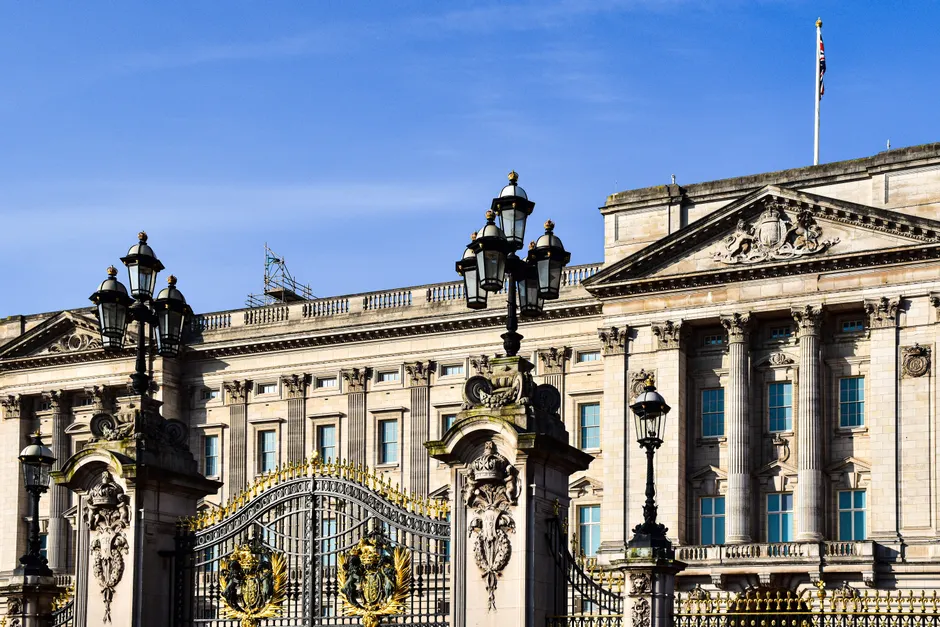
Harry arrived in London alone on 6 July for what was reported as a four-day visit timed partly to mark "One Year to Go" before the 2027 Invictus Games in Birmingham, where he serves as Founder and Patron of the Invictus Games Foundation Nine.com.au. Meghan and their children, Archie, 7, and Lilibet, 5, stayed in California, citing security concerns. Buckingham Palace has said Harry can no longer stay at a royal residence during the visit, after he had hoped to spend one night at King Charles's official residence — a request the Palace declined amid the broader, unresolved dispute over his UK police protection.
Whether Harry will see his father at all this week is unclear. Charles, 77 and still undergoing cancer treatment, has audiences and engagements scheduled daily. Harry had reportedly hoped to reunite his children with the King for the first time in four years. The two last met face to face in September 2025 at Clarence House — itself the first such meeting since February 2024, an eighteen-month gap that speaks to how thin the channel of communication between father and son has become since Harry's departure from royal duties.
That estrangement has been aired publicly and repeatedly. Since relocating to California, Harry has levelled accusations at Charles, Camilla, William, and Catherine through the Oprah Winfrey interview, the Netflix documentary, subsequent interviews, and his memoir Spare, framing his exit around what he has called the "toxicity" of royal life and alleged racism directed at Meghan. His relationship with William remains strained.
The convergence of dates here is not incidental to the story so much as it is the story: a legal verdict against the paper that has chronicled his private life for two decades falls in the same week as a visit meant to showcase reconciliation, both with the monarchy and with a cause — wounded servicemen and women — that has defined his public identity since 2014. Whichever way the ANL judgment lands, it will settle only one thread of a rupture that runs through family, press, and state security apparatus simultaneously.
The security dispute matters beyond optics. Publicly funded protection for a former working royal domiciled abroad sits at the intersection of Home Office policy, royal household discretion, and the duke's own risk profile — an area where courts, government, and palace have each staked out positions in recent years without full resolution. That the accommodation question resurfaced now, rather than being quietly settled ahead of the visit, suggests the underlying relationship has not thawed as much as the Invictus anniversary messaging might imply.
What the ruling does resolve, at least provisionally, is a narrower legal question: whether ANL's journalism in the 2000s and early 2010s crossed from aggressive reporting into unlawful intrusion. For Harry, Elton John, Furnish, and Lawrence, that answer carries weight independent of the family drama layered on top of it — it goes to how British tabloids operated during a period Lord Justice Leveson's 2012 inquiry examined in depth, and to whether accountability for that era remains legally reachable more than a decade on.