DeepSeek Reportedly Developing Its Own Inference Chip, Reuters Says

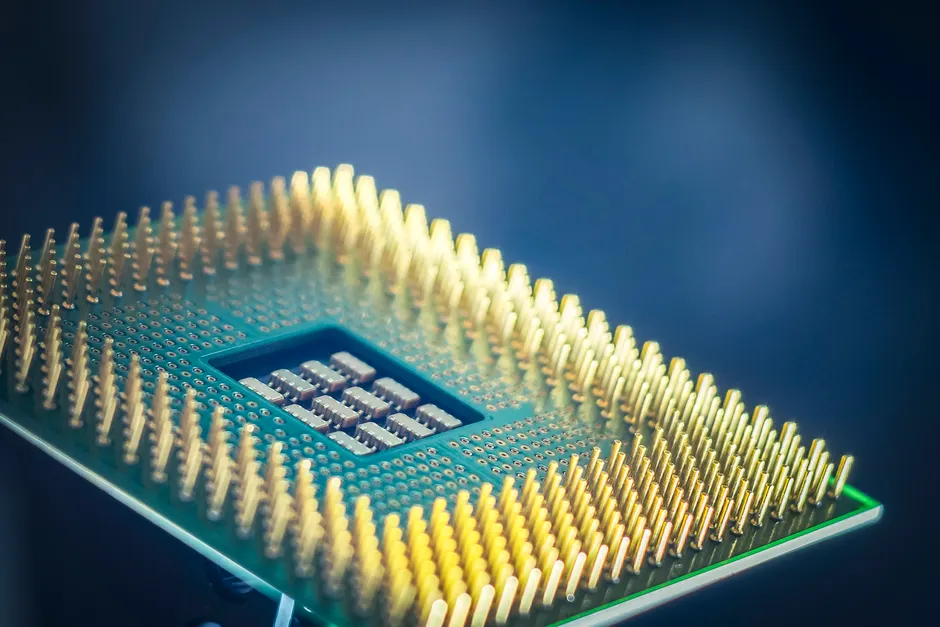
DeepSeek is developing its own AI chip for inference workloads, according to a Reuters exclusive citing multiple sources familiar with the matter Reuters. The Hangzhou-based AI lab is reportedly already in talks with manufacturing partners and has quietly begun hiring engineers to staff the effort Engadget.
The chip is designed specifically for inference — running an already-trained model rather than training new ones — a workload distinct from, and generally less compute-intensive than, the training runs that made DeepSeek's name in early 2025 Engadget. The stated goal is to reduce dependence on third-party silicon from Huawei and Nvidia, the two vendors that have supplied the bulk of DeepSeek's compute to date.
That dependence has been a running theme in DeepSeek's public trajectory over the past eighteen months, and the details matter because they've shifted repeatedly. In June 2025, Reuters reported that DeepSeek held Nvidia H100 chips procured after the US had already banned their sale to China, and that a US official said the company had aided China's military while evading export controls Reuters. Two months later, DeepSeek released an upgraded model with explicit domestic chip support, an early signal of hedging toward China's homegrown semiconductor ecosystem Reuters.
By February 2026, the picture had flipped again: a Chinese official said DeepSeek's newest model at the time had actually been trained on Nvidia's most advanced chip despite the US export ban Reuters, and within days Reuters reported the company was withholding that model from US chipmakers, including Nvidia, for performance optimization purposes — a departure from standard industry practice of early access for hardware tuning Reuters. Then in April, DeepSeek unveiled V4, a model tailored specifically for Huawei's Ascend chips — China's most credible domestic alternative to Nvidia for AI workloads — marking the company's first major release in a year Reuters. That launch drew a muted market reaction, with Reuters noting stiff competition from rival Chinese models Kimi and Qwen in a fast-moving field Reuters.
Read against that sequence, an in-house inference chip looks less like a single strategic pivot and more like the next step in a pattern of hedging across the compute stack — Nvidia when available, Huawei Ascend when politically expedient, and now silicon of its own design. Building an inference-specific ASIC is a materially smaller lift than fabricating a training-class chip: inference workloads tolerate lower precision, simpler memory hierarchies, and more modest interconnect bandwidth, which is why Google's TPU line, Amazon's Inferentia, and a wave of other custom accelerators started life on the inference side before (if ever) tackling training. DeepSeek positioning itself this way is consistent with a company optimizing for cost-per-query at scale rather than chasing frontier training FLOPs.
The manufacturing question is the one to watch. Reuters' sourcing indicates talks are underway with fabrication partners, but the report as summarized does not specify foundry, process node, or whether TSMC, Samsung, or a domestic Chinese foundry such as SMIC is involved. Export controls on advanced lithography equipment mean any China-based fabrication of a competitive inference chip would almost certainly be capped below the leading edge nodes Nvidia and TSMC currently ship, which has direct implications for the chip's power efficiency and die yield regardless of DeepSeek's architectural choices.
Worth flagging: DeepSeek operates under intensified scrutiny from Washington following the June 2025 assertion that its chip acquisitions aided Chinese military applications, and any custom silicon effort will be read by US policymakers through that lens rather than a purely commercial one. A company designing its own AI accelerator while under existing scrutiny for chip procurement raises the stakes of export-control enforcement in ways a pure-software model release did not.
For the broader industry, the move fits a trajectory that has been building since the original DeepSeek-R1 disclosure demonstrated a capable open-source model built at a fraction of the reported cost of Western frontier systems Engadget. Vertical integration — controlling both the model and the silicon it runs on — has been the strategy of Google, Amazon, and increasingly OpenAI's hardware partnerships. DeepSeek pursuing the same path suggests the economics of large-scale inference are pushing every serious AI lab toward custom silicon, regardless of geography or export regime. Whether DeepSeek can execute on chip design with the same speed and low-cost efficiency it brought to model training remains an open question, and one that will likely take fabrication timelines — measured in years, not product cycles — to answer.