The July 8 "Global Sunlight" Moment: A Recurring Alignment, Not a One-Day Anomaly
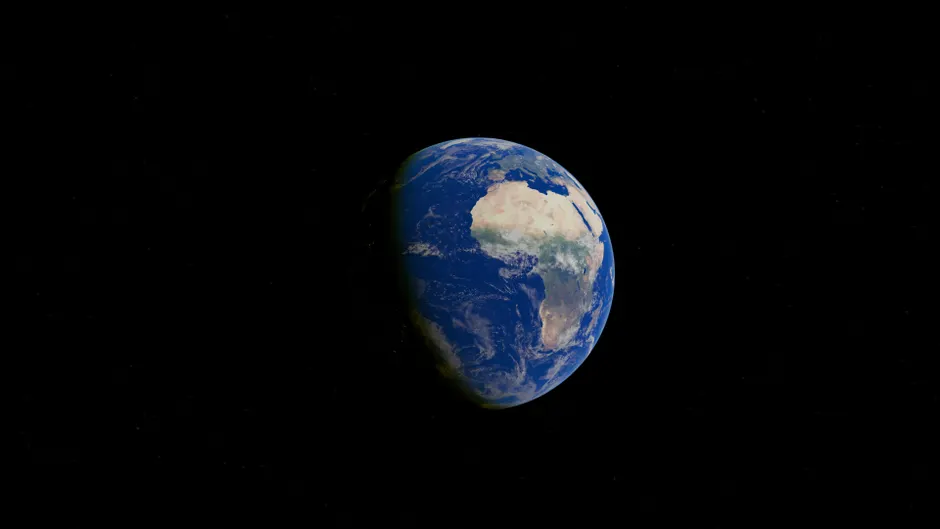
At approximately 11:10 GMT on July 8, 2026, roughly 8.2 billion people — about 99% of the world's population — will be in daylight or twilight simultaneously, according to a report from Al Jazeera. The alignment peaks for roughly one minute before Earth's rotation shifts the terminator line again.
At that peak, full daylight reaches North America, South America, Europe, Africa, and most of Asia. Australia, New Zealand, parts of Southeast Asia, and Antarctica remain dark. Al Jazeera's breakdown of the population split is granular: about 6.9 billion people (83%) sit in full daylight, 581 million (7%) in civil twilight, 498 million (6%) in nautical twilight, 249 million (3%) in astronomical twilight, and 83 million (1%) in full night.
The date itself is something of an accident of internet history rather than an astronomical singularity. The July 8 framing traces back to a 2022 Reddit post that specified 11:15 UTC as the moment and claimed the alignment was unique to that day. It wasn't. Time and Date, the astronomy and timekeeping reference site, fact-checked the claim and found that similar sunlight coverage recurs daily for roughly a two-month window — from about May 18 to July 17 — bracketing the June solstice (timeanddate.com). That fact-check, along with a companion piece examining the original Reddit claim and its 11:15 UTC timestamp (timeanddate.com), has circulated for several years now without fully displacing the July 8 shorthand in popular reporting.
Why does the maximum-coverage figure land after the solstice rather than on it? The mechanics come down to population geography, not orbital mechanics. Following the June solstice, the sun's subsolar point begins its southward drift. That shift trims daylight hours in the sparsely populated far north — Arctic Canada, Siberia, northern Scandinavia — while extending daylight into densely populated equatorial and near-equatorial regions, notably Indonesia and the Philippines. Al Jazeera's reporting attributes roughly 10 million additional people entering daylight or twilight to this redistribution, which is what nudges the global percentage to its late-June/early-July local maximum rather than peaking precisely at the solstice itself.
Notably, the Al Jazeera piece running this week cites no named astronomer or geographer. Its sourcing rests entirely on the 2022 Reddit post and the Time and Date fact-check — an unusual sourcing pattern for a claim that has now been recirculated by outlets including National Geographic, whose 2023 write-up carried the headline "This Saturday, 99% of people on Earth will get sun at the same time" (nationalgeographic.com), and The Washington Post, whose July 2023 piece framed the same figure around that year's specific Saturday date (washingtonpost.com). EarthSky's 2023 coverage was more precise on the underlying science, explicitly noting that the phenomenon recurs across "multiple dates, not only July 8" (earthsky.org).
The recurring media cycle around this figure is itself worth noting. Each July, a version of the same story resurfaces — sometimes tied to a Wednesday, sometimes a Saturday, depending on the calendar year — with outlets recycling the viral framing even after the underlying claim has been repeatedly corrected. Time and Date's own Day and Night World Map tool allows users to verify the terminator's position directly; it can render the July 8, 2026 alignment at 00:17 UTC and a comparable configuration for July 6, 2026 at 13:09 UTC (timeanddate.com), underscoring that the 11:10-11:15 GMT window is one of several near-daily moments producing comparable coverage, not a singular annual event.
None of this diminishes the underlying geographic fact: population distribution genuinely clusters such that a narrow band of longitude, when lit, can put roughly 99% of humanity in daylight or twilight at once. That's a real and mildly interesting artifact of how unevenly humans are distributed across latitudes — dense in temperate and tropical zones, sparse in the polar and Southern Hemisphere extremes where Australia, New Zealand, and Antarctica sit in darkness during this window. The persistence of the July 8-specific framing, despite years of fact-checking, says less about astronomy than about how a plausible-sounding statistic with a fixed date travels further than the more accurate but less tidy version: that this happens, in some form, most days for two months a year.