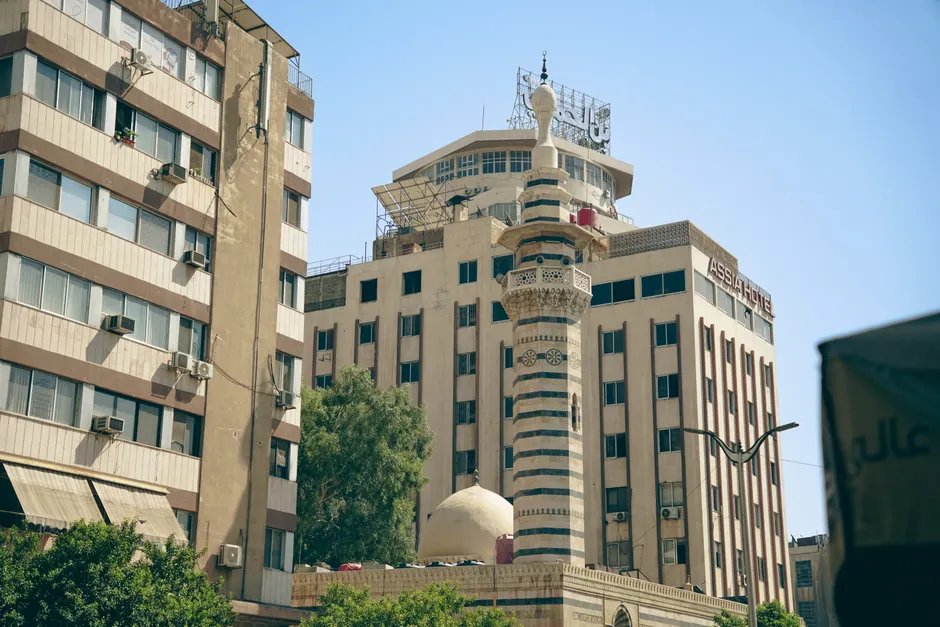
Damascus Locks Down After Twin Bombings Rattle Macron Visit
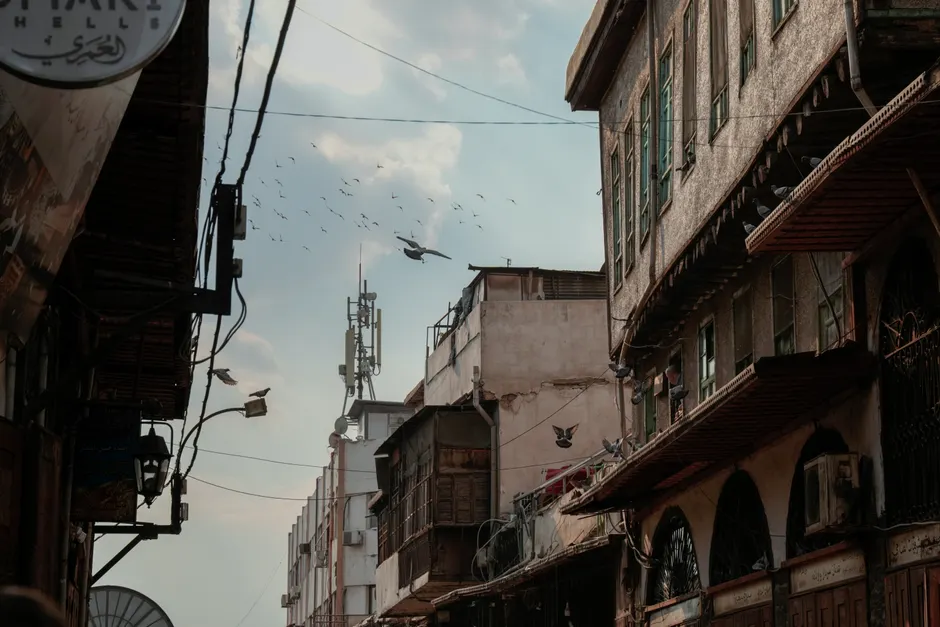
Syrian authorities have moved to blanket Damascus with heightened security measures after a twin bombing on July 7 killed at least one person and wounded 36, the second deadly attack in the capital in five days and the first to coincide with a foreign head-of-state visit since the fall of Bashar al-Assad Al Jazeera.
The bombing struck near the Ministry of Tourism at approximately 10:15am local time (07:15 GMT), according to Syrian state media, which reported two improvised devices — one concealed in a roadside rubbish bin, the other rigged inside a parked car SANA. Reuters reported that security forces were in the process of attempting to defuse the devices when they detonated, a detail that would explain the presence of personnel at close range Reuters. The blast site sat close to the hotel where French President Emmanuel Macron had spent the night, though within Syrian government's account, outside the designated security perimeter for the French delegation Al Jazeera. Syrian security personnel were photographed inspecting a burned vehicle near the Four Seasons Hotel in the attack's aftermath Asharq Al-Awsat.
Interior Ministry spokesperson Nureddin al-Baba said the explosions posed "no direct threat" to Macron, and confirmed investigators had already developed an initial lead on those responsible. No group had claimed responsibility for the attack as of publication.
The bombing forced the disruption of Macron's scheduled meeting with Syrian President Ahmed al-Sharaa, part of a trip that began with Macron's arrival in Damascus on July 6 — the first visit by an EU head of state to Syria since Assad's removal Reuters. Despite the disruption, French shipping group CMA CGM signed a deal with Syria during the visit, suggesting the commercial and diplomatic agenda proceeded around the security incident rather than being abandoned Reuters.
The attack follows a July 2 cafe bombing in central Damascus that Syria's interior ministry said killed nine people and wounded 20 Reuters, though Al Jazeera's later reporting puts the toll at 10 dead with dozens wounded Al Jazeera. SANA's English-language homepage now describes "one dead, 36 injured" as the final toll specifically for the July 7 blasts, framing the two incidents as a discrete pattern of what it terms terrorist attacks rather than a single continuing event SANA.
In response, Syria's Ministry of Interior has rolled out heavily armed patrols across Damascus, re-established checkpoints at critical intersections, extended exclusion zones fortified with concrete blast walls, and imposed mandatory vehicle searches at government buildings, judicial institutions and foreign diplomatic sites Al Jazeera. Damascus Governor Maher Marwan al-Idlibi framed the paradox plainly: security had generally improved through the post-Assad transition, he said, but the more stability Syria attains, the more actors emerge seeking to undermine it.
An anonymous member of Syria's security apparatus offered a more pointed account, telling Al Jazeera that General Intelligence forces have been seizing large quantities of explosive materials and armed drones linked to the Islamic Revolutionary Guard Corps on a near-daily basis. The same source said the most active terror cells operating in central and southern Syria trace back to IRGC networks, and specifically attributed the July 7 bombing to a Palestinian-Syrian individual connected to Iranian-backed cells. This claim has not been independently corroborated and no formal charge has followed from Damascus.
The diplomatic reaction has been swift and largely unified in condemnation. Türkiye's Presidential Communications Director Burhanettin Duran denounced the bombing via the Turkish platform NSosyal, stating that "all terrorist acts" threaten regional stability SANA. Arab states issued similarly strong condemnations of the attack near the Ministry of Tourism SANA, while UN Secretary-General António Guterres had already voiced deep concern days earlier over the July 2 blast near the Presidential Palace, reiterating his standing rejection of attacks on civilians SANA. Syrian and Jordanian interior ministers reportedly met on July 8 to discuss security cooperation, and Somalia issued a statement of solidarity the same day, according to SANA's homepage reporting SANA.
The attribution to IRGC-linked networks, if it holds up under investigation, would fit into a broader contest over Syria's post-Assad orientation. Tehran lost its primary regional foothold when Assad fell, and a sustained campaign of low-signature bombings against the new government would be one of the few asymmetric tools left to actors invested in destabilizing Damascus's realignment toward Ankara, the Gulf states and now, with Macron's visit, Western Europe. The timing of the July 7 blast — during the first EU head-of-state visit since the transition, and reportedly as bomb-disposal teams worked the devices — invites scrutiny of whether the intended audience was the visiting French delegation, the Syrian government's security credibility, or both. Al-Baba's insistence that Macron faced no direct threat may be as much a diplomatic necessity as a factual assessment, given how much Damascus has invested in demonstrating it can host Western leaders safely eighteen months after Assad's fall.
What remains unresolved is whether Damascus's identified "initial lead" will produce a public accounting, or whether — as with many attacks attributed informally to IRGC proxies across the region — the trail goes cold amid competing security-service narratives.