xAI Opens Colossus Supercomputer Access to Anthropic in Major Compute Partnership

xAI Opens Colossus Supercomputer Access to Anthropic in Major Compute Partnership
xAI has announced a compute partnership with Anthropic, providing the AI safety-focused company access to its Colossus supercomputer infrastructure. The agreement marks a significant cross-industry collaboration between Elon Musk's AI venture and one of the leading players in large language model development.
Colossus Infrastructure Capabilities
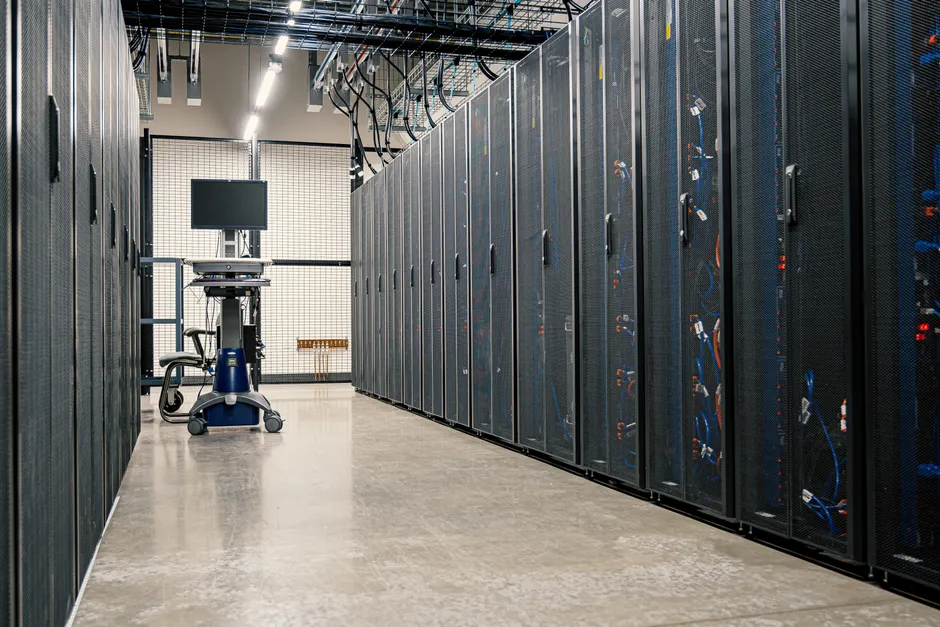
The partnership centers on xAI's Colossus supercomputer, which currently operates jobs across more than 150,000 GPUs while maintaining 99% uptime. xAI reports the system was constructed in four months, considerably faster than initial projections of 24 months for completion.
The infrastructure represents one of the largest contiguous GPU deployments in commercial AI training. xAI has outlined expansion plans to scale Colossus to 1 million GPUs, which would position it among the most substantial compute resources available for AI model development and inference workloads.
Colossus utilizes a high-bandwidth interconnect architecture designed to handle the communication patterns typical of large-scale transformer training. The system's 99% uptime metric across such a large GPU count indicates sophisticated fault tolerance and workload management capabilities, addressing one of the primary operational challenges in massive parallel computing environments.
Partnership Implications for AI Development
Anthropic's access to this compute infrastructure could accelerate development timelines for the company's Claude model family and constitutional AI research initiatives. The partnership provides Anthropic with an alternative to the traditional cloud provider model, potentially offering more direct control over training schedules and resource allocation.
For xAI, the collaboration represents a pathway to monetize the substantial capital investment in Colossus while the system scales beyond internal training requirements. Compute partnerships have become increasingly common as infrastructure costs for frontier AI models continue to rise, with companies seeking to optimize utilization across their GPU installations.
The arrangement also reflects broader industry dynamics around compute access and control. As training requirements for state-of-the-art models push into the hundreds of billions or trillions of parameters, access to large-scale, reliable infrastructure becomes a competitive differentiator.
Technical Architecture and Scale Considerations
Operating 150,000 GPUs as a cohesive training system requires addressing several technical challenges. Power delivery at this scale typically demands megawatts of capacity with redundant distribution systems. Cooling infrastructure must handle the thermal output while maintaining optimal operating temperatures across the entire installation.
Network topology becomes critical at this scale, as gradient synchronization across distributed training workloads can create communication bottlenecks. Modern implementations typically employ hierarchical network designs with high-radix switches and multiple planes to maintain bandwidth availability during peak synchronization phases.
The four-month construction timeline suggests xAI leveraged existing data center infrastructure and supply chain relationships to accelerate deployment. Traditional supercomputer installations of this magnitude often require 18-24 months due to facility preparation, equipment procurement, and system integration complexity.
Looking at the broader trajectory here, this partnership reflects a pattern we have seen before in the industry's evolution. During the early cloud computing buildout in the 2000s, companies with excess infrastructure capacity began offering services to competitors and collaborators alike. Amazon's decision to open AWS beyond internal use, Google's infrastructure partnerships, and Microsoft's hybrid cloud strategies all followed similar paths of converting internal capability into external revenue streams.
Industry Context and Competitive Landscape
The announcement comes as compute access increasingly determines which organizations can develop and deploy frontier AI models. Traditional cloud providers continue to face allocation constraints for high-end GPUs, particularly H100 and successor architectures optimized for AI workloads.
xAI's approach of building dedicated infrastructure specifically for AI training allows for optimization decisions that general-purpose cloud providers cannot easily implement. Custom network topologies, specialized cooling systems, and workload-specific resource allocation policies can deliver performance advantages for large-scale model training.
The partnership also highlights the evolving relationship between AI research organizations and infrastructure providers. Rather than relying exclusively on established cloud platforms, companies are increasingly exploring direct partnerships, co-location arrangements, and dedicated infrastructure agreements.
Future Scaling and Strategic Direction
xAI's stated goal of expanding Colossus to 1 million GPUs represents a significant infrastructure commitment. At current GPU pricing and power requirements, such an installation would require substantial ongoing operational investment and facility expansion.
The economics of such scale depend heavily on utilization rates and the ability to secure long-term compute partnerships beyond the Anthropic agreement. Additional partnerships with other AI developers, research institutions, or enterprise customers would help justify the infrastructure expansion.
From a technical perspective, managing training workloads across 1 million GPUs will require advances in distributed training frameworks, fault tolerance mechanisms, and workload orchestration systems. The complexity scales non-linearly, as communication overhead and failure modes become increasingly challenging to manage.
The Anthropic partnership provides xAI with practical experience in multi-tenant operations and workload isolation, capabilities essential for operating a large-scale compute platform serving multiple customers with varying security and performance requirements.
As AI model development costs continue rising and compute requirements push toward exascale systems, partnerships like this may become standard practice. The collaboration between xAI and Anthropic demonstrates how infrastructure providers and model developers can structure mutually beneficial arrangements in an increasingly resource-intensive field.