Iran Buries Khamenei in Mashhad After Week of Mass Funeral Rites
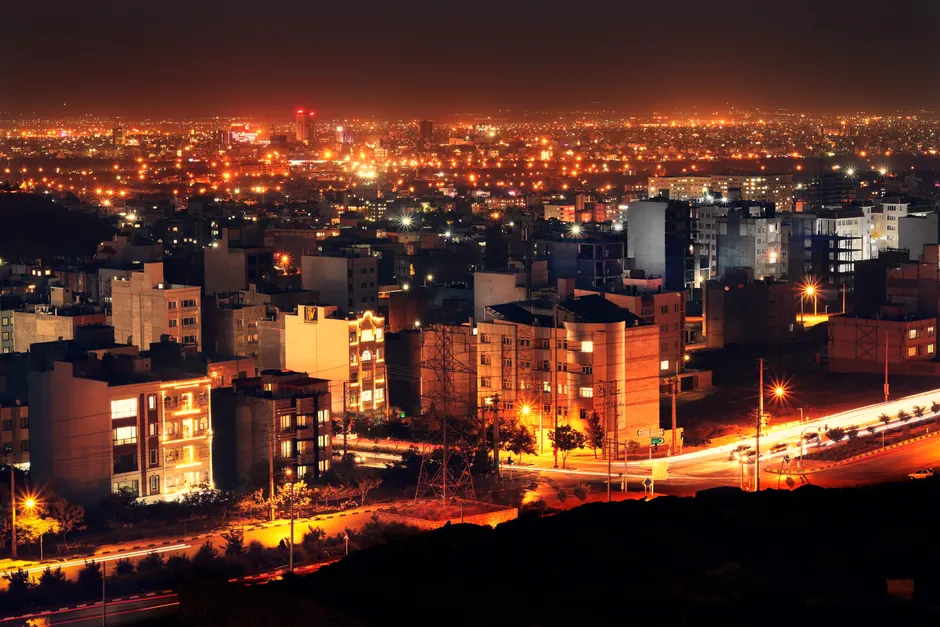
Ali Khamenei's remains landed at Mashhad international airport on Thursday, footage carried by the state news agency IRNA showed, the final stop in a week-long funeral cycle that began with his killing alongside several relatives in the US-Israeli strikes on Tehran on February 28. Burial at the shrine of Imam Reza — the site he had requested through Mohammad Mohammadi Golpayegani, head of his office — was pushed back from an earlier slot to 2:30pm local time (11:00 GMT), Iranian state television reported, after crowds in Iraq ran far larger than organizers had planned for. Al Jazeera
The scale of the mourning has been difficult to reconcile with any recent precedent. Iraq's Popular Mobilisation Forces, the Hashd al-Shaabi, put attendance at the Najaf procession alone above 2.3 million — a figure IRNA had already reported a day earlier — and Tasnim and Press TV described the Tehran gathering as the largest public assembly in the country's modern history. Whether those tallies withstand independent verification is, as with most crowd estimates tied to state media in authoritarian settings, an open question; no neutral count exists. What is documented is the itinerary: remains of Khamenei and four family members killed with him were paraded through Tehran and Qom, then through Najaf and Kerbala in Iraq, before the transfer to Mashhad. Reuters
The Tehran procession, the opening rite in the sequence, ran from roughly 6am to 5pm local time on July 4, according to Iranian state television cited by Reuters. Qom's ceremonies followed on the Tuesday of that week. The compressed but sprawling schedule — five cities across two countries — was designed in part around the religious calendar: IRNA reported the final funeral ritual was timed to coincide with the eve of the martyrdom anniversary of Imam Sajjad, the fourth Shia imam, and that the full sequence of farewell, procession and burial was withheld until ten days into Muharram had passed. IRNA
Security concerns shadowed the entire week. Iran warned Washington and Israel against strikes timed to the funeral processions, Reuters reported on July 2, and overnight attacks on the Tehran-Mashhad railway line knocked it out of service ahead of the burial — though Iranian officials told Al Jazeera's Resul Serdar Atas in Tehran that the strike had not forced any delay to the ceremony itself. The juxtaposition is notable: a government burying its supreme leader while conducting a funeral procession under live threat of further strikes from the same adversaries responsible for his death.
The most conspicuous absence has been Mojtaba Khamenei, who succeeded his father as supreme leader but has not appeared publicly since assuming the position. Officials have said he was wounded in the strikes that killed his father, though the severity of his injuries has not been disclosed, and he was absent from every leg of the funeral processions — Tehran, Qom, Najaf, Kerbala, and now Mashhad. For a clerical establishment whose legitimacy rests heavily on visible continuity and public ritual, a new supreme leader's total absence from his predecessor's burial is a conspicuous gap, one Iranian state media has offered no clear explanation for.
Anger at Washington has been a constant undercurrent rather than a footnote. Mourners in Mashhad were recorded chanting vows against President Trump, including "I swear by the blood of the supreme leader, Trump, we will kill you," language consistent with chants Reuters documented during the Tehran procession days earlier. Trump himself has acknowledged the funeral's disruptive effect on diplomacy, telling reporters that peace talks with Iran had been delayed a week by the ceremonies — an unusual admission that negotiations were sufficiently advanced, or at least sufficiently live, to be paused rather than abandoned outright.
The funeral's dual audience is worth noting. Domestically, the state has used the week to stage what it calls proof of mass loyalty at a moment when succession, battlefield losses, and the killing of the country's most powerful figure in four decades could just as easily have exposed fragility. Internationally, IRNA's own framing — that the ceremonies would "display Iran's global" standing — signals an attempt to convert a funeral into a demonstration of regional reach, leaning on the Hashd al-Shaabi turnout in Najaf and Kerbala to show that Tehran's transnational Shia networks remain intact even after the strike that killed its leader.
None of this resolves the immediate question hanging over Tehran: who is actually in charge. A wounded, unseen successor and a paused negotiation track leave open whether the funeral marks closure or merely a pause before the next phase of confrontation with Washington and Jerusalem.


