SpaceX Deployed 1,589 Starlink Satellites in First Half of 2026, Extending Launch-Cadence Lead Over Kuiper
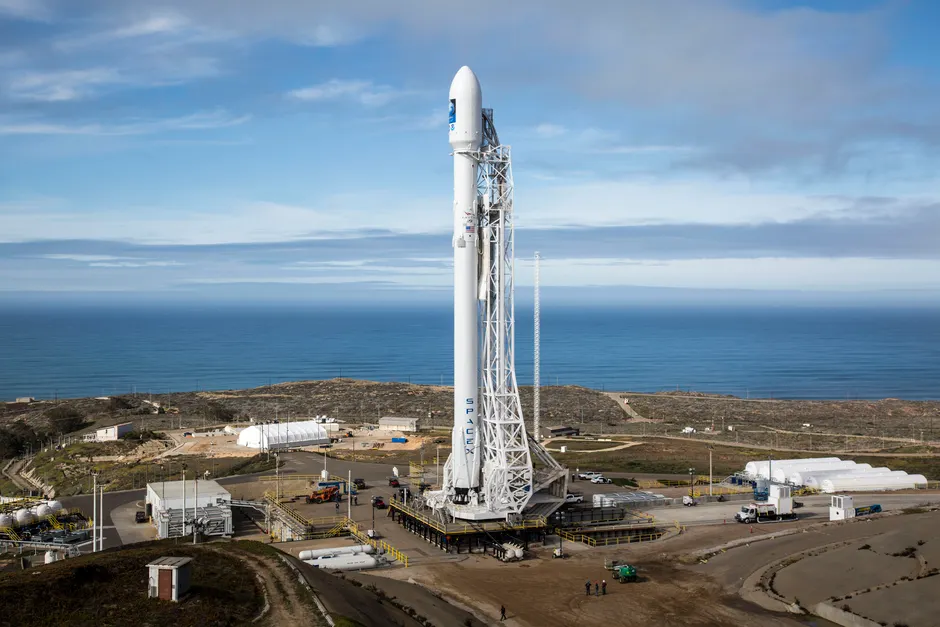
SpaceX launched 1,589 Starlink satellites in the first six months of 2026, up from 1,489 in the same period a year earlier, according to launch data compiled by Jonathan McDowell's satellite tracker and reported by The Verge. The figures were not accompanied by a SpaceX press release; they derive from The Verge's own tallying of McDowell's publicly maintained tracker at planet4589.org, which logs individual Starlink missions and satellite counts as they occur.
The H1 2026 total builds on a record year: SpaceX deployed 3,180 Starlink satellites across all of 2025, itself a record for the constellation, per The Verge. Cumulative launches now exceed 12,400 satellites since the constellation's start, with close to 11,000 still operational — the gap reflecting deorbits, failures and the routine attrition built into a low-Earth-orbit (LEO) constellation designed for a five-to-seven-year satellite lifespan.
The broadcasting trade outlet Advanced Television independently confirmed the half-year record framing on July 7, 2026, reporting that SpaceX had broken its own half-year launch benchmarks Advanced Television.
Cadence, mission by mission
SpaceX's own launch manifest fills in the operational detail behind the aggregate numbers. Falcon 9 flew Starlink 10-47 out of Cape Canaveral on May 24, 2026 — Memorial Day in the US — carrying 29 V2 Mini Optimized satellites Spaceflight Now. SpaceX's site separately documents missions sl-17-37 (May 26, 24 satellites), sl-17-47 (June 3, 24 satellites), sl-17-44 (June 11, 24 satellites), and sl-10-50 (July 5, 29 satellites), all Falcon 9 flights to LEO SpaceX. As of this writing, SpaceX's launches page lists further Starlink missions scheduled for July 13 from Vandenberg's SLC-4E and July 14 from Florida's SLC-40 SpaceX, suggesting the cadence set in H1 is continuing rather than tapering into Q3.
The batch sizes — 24 or 29 satellites per Falcon 9 flight depending on configuration and orbital shell — are consistent with the V2 Mini variant that has dominated deployments since 2023. Third-generation Starlink hardware, promising reduced latency and gigabit-class throughput, is expected to begin entering service sometime in 2026, though The Verge's December 2025 reporting on that timeline predates the H1 launch tally and has not yet been updated with confirmation of an actual service date The Verge.
Kuiper's gap widens, on paper
Amazon's Project Kuiper, the most direct commercial rival to Starlink in LEO broadband, has deployed roughly 400 satellites over 15 months as of mid-2026, against a planned constellation of 3,232 The Verge. That puts Kuiper at roughly 12 percent of its target constellation size after more than a year of active deployment, compared with SpaceX fielding nearly 11,000 functioning satellites from a build-out that began in 2019.
The comparison is a useful proxy for launch-cadence capacity rather than a like-for-like measure of network readiness — Kuiper's coverage and service commitments are structured differently, and Amazon has never claimed to match SpaceX satellite-for-satellite in the near term. Still, the raw deployment gap is the clearest available signal of how much vertical integration in launch (Falcon 9 reusability, in SpaceX's case) matters to constellation build-out speed, since Amazon depends on a mix of external launch providers including its own Blue Origin affiliate and United Launch Alliance.
The broader context here is that LEO broadband has quietly become a launch-cadence business as much as a satellite-design one. SpaceX's ability to fly the same Falcon 9 booster dozens of times has let it treat Starlink deployment as a scheduling problem rather than a manufacturing bottleneck, and the H1 2026 numbers extend a trend that has held for several consecutive years now. Whether Kuiper can close that gap once its own launch cadence matures, and whether third-generation Starlink hardware delivers the latency gains SpaceX has promised, are the two threads worth watching through the rest of 2026. In this author's view, the more interesting long-term question is not which constellation wins a satellite count but whether either can sustain the deorbit-and-replace cycle at this scale without meaningfully increasing orbital debris risk or ground-based astronomy interference, concerns regulators and astronomers have raised with increasing frequency as constellation size has grown.
For now, the immediate story is operational: two more Starlink missions are on SpaceX's public manifest for mid-July, and nothing in the current data suggests the company is slowing down.


