Democratic AG Candidate Vows to Probe $110M SpaceX Broadband Deal in Texas
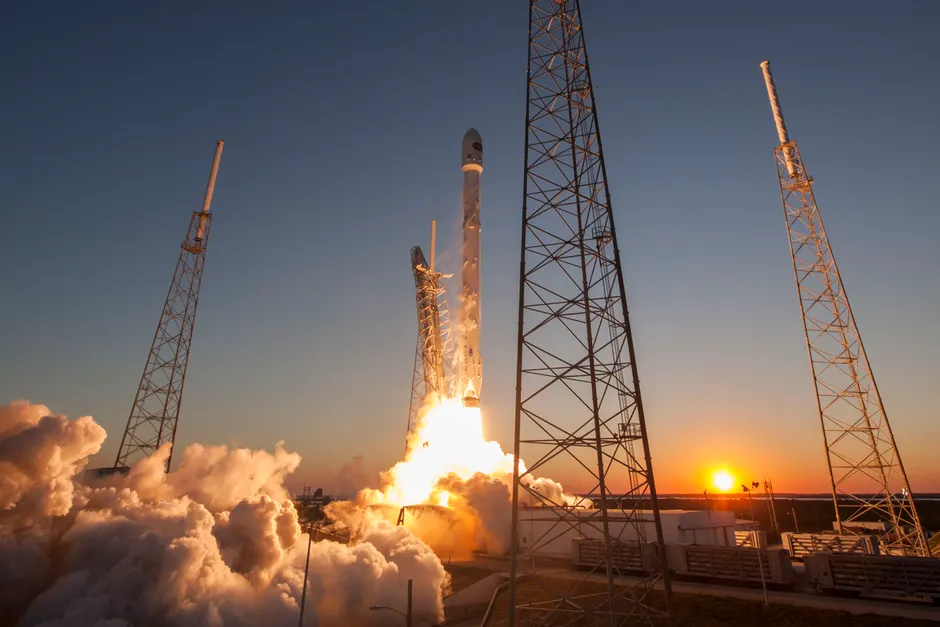
Nathan Johnson, the Texas Democrat who won the party's attorney general primary runoff in May 2026, told the Dallas Morning News he would investigate SpaceX's Starlink division if elected, over a state broadband grant that funneled $110 million in taxpayer funds to the company The Guardian. Johnson, a state senator representing Senate District 16 since January 2019, said "it sure looks like" corruption was involved in the award Ballotpedia.
The grant in question came out of Texas's broadband development office (BDO), the state agency tasked with distributing funds meant to expand rural internet access. Johnson said Starlink received 99% of the available grant funds in the relevant funding round, a distribution he called lopsided. "Public confidence in the bidding process has been undermined," he said, according to the Guardian's account of his remarks.
The awards were signed off by Republican Governor Greg Abbott, whose office is reported to have revised the BDO's grant rules to favor low-Earth-orbit satellite providers — the technical category that includes Starlink's satellite constellation — over the terrestrial fiber competitors that dominate most rural broadband builds. At a Texas Senate hearing in June 2026, the BDO conceded that the rule changes came at Abbott's request KUT. BDO director Bryant Clayton testified that the governor's office had asked the agency to benchmark its proposed structure against other states, telling senators Texas was "out of step with other nearby states."
That framing — bringing Texas into line with peer states' treatment of satellite broadband — is the administration's stated rationale for the rule change. It has not satisfied critics. Eight companies offering ground-based fiber service sent a joint letter complaining they had effectively been cut out of the revised application process once the criteria shifted toward satellite providers. State Senate committee chair Charles Schwertner, a Republican, told colleagues that "favoritism and transparency are real big concerns that have been brought to my office" regarding how the grants were structured.
Elon Musk, SpaceX's founder, has made prior monetary contributions to Abbott's campaigns, according to OpenSecrets donor records OpenSecrets. Johnson's campaign has pointed to that donor history as part of the reason he believes the grant process merits scrutiny, though no evidence beyond the disclosed contributions and the rule changes has been presented publicly to date. SpaceX's Starlink subsidiary already had a physical foothold in the state before the grant dispute: it opened a satellite manufacturing facility in Texas in 2023, according to the governor's own aerospace industry report Texas Governor's Office.
Johnson's call for investigation lands amid a broader reshuffling of Texas's statewide law enforcement leadership. Incumbent Attorney General Ken Paxton, a Republican, was nominated by his party to run for the US Senate in the November 2026 midterms, vacating the AG post he has held through multiple controversies of his own. That vacancy is what makes Johnson's candidacy — and his specific pledge — consequential beyond a single grant dispute: whoever wins in November inherits subpoena power and a state agency positioned to scrutinize exactly this kind of contract.
Johnson has also promised, dating to his primary campaign, to overhaul the AG's office more broadly and to work with the state comptroller on audits of how government contracts are awarded generally, not just in broadband. The Starlink grant gives that pledge a concrete first target, one with an easily quantifiable dollar figure and a paper trail running through a state senate hearing record.
The politics here cut across the usual partisan alignment in one respect worth noting: the pushback on Abbott's rule change has come not only from a Democratic AG candidate but from a Republican committee chair, Schwertner, and from fiber providers who are not natural Democratic constituencies. That the complaint spans party lines suggests the underlying grievance — that revised bidding criteria favored one company's technology category before applications were even scored — may have more institutional traction in Austin than a purely partisan broadside would.
Whether Johnson's promised investigation ever materializes depends entirely on the November election outcome, and Texas AG races have historically broken Republican for decades. Paxton's exit removes an incumbent from the ballot but not the structural advantage Republicans have held in statewide races. Still, the BDO's own admission that Abbott's office directed the rule changes gives Johnson's campaign a documented record to run on, independent of whatever he might uncover if he actually takes office. That distinction — a testified fact versus a hypothetical inquiry — is likely to shape how the story develops between now and the general election.


