Fujimori Signals Bid to Restore Peru-Mexico Ties Ahead of Inauguration
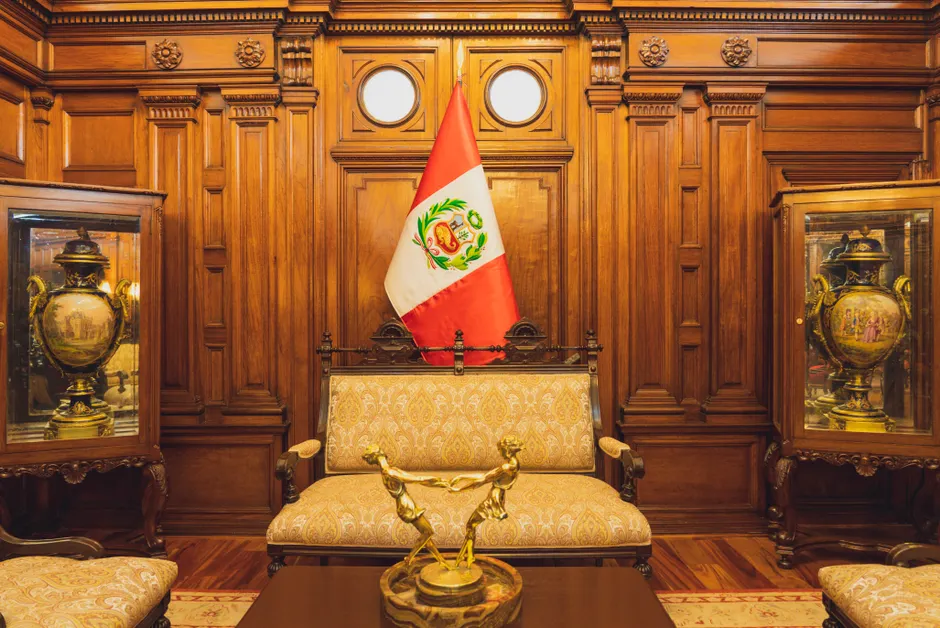
Peru's President-elect Keiko Fujimori said she intends to restore diplomatic relations with Mexico, a rupture dating to November 2025. "On my part, there will be every intention to restore relations between Peru and Mexico," she told reporters as she left a public event in Lima Al Jazeera.
The remark, delivered on the record rather than through a formal statement or interview, was the first substantive signal from Fujimori's camp on how she plans to handle a diplomatic file that has sat frozen for eight months. Peru severed ties with Mexico after Mexico City granted political asylum to former Peruvian Prime Minister Betssy Chavez, a decision Lima's outgoing government treated as an unacceptable intervention in its domestic legal affairs. Peru went further than a routine downgrade, declaring Mexican President Claudia Sheinbaum persona non grata and barring her from Peruvian territory — a step rarely taken against a sitting head of state from a country with which one otherwise maintains normal trade and consular relations.
Sheinbaum, for her part, has framed the rupture around a different figure: former Peruvian President Pedro Castillo, who has been in pretrial detention since his December 2022 attempt to dissolve Congress and rule by decree. "We are going to wait," Sheinbaum told reporters when asked about Fujimori's overture, adding that Peru broke off relations "because we said that President Castillo is being held illegally. That is our point of view" Al Jazeera. Sheinbaum said she had not yet spoken directly with the president-elect.
That framing matters. Mexico's position has consistently rested on the Castillo case, invoking the doctrine of diplomatic asylum and, by extension, questions about due process in Peru's judiciary — an argument Lima has rejected as external meddling in a matter already adjudicated domestically. The Chavez asylum grant was simply the immediate trigger; the underlying dispute is about how far a foreign government can go in characterizing another state's prosecution of a former head of government as illegitimate. Bloomberg's reporting on the exchange similarly framed both leaders as "signaling steps" toward repair rather than announcing any concrete agreement Bloomberg, and wire distribution by AFP carried the same on-the-ground quote from Lima AFP via NAMPA, with Bangladesh's BSS also picking up the statement BSS — an indication of how far this relatively narrow bilateral spat has traveled through global wire services.
Fujimori won Peru's presidential runoff on June 7, 2026, her fourth attempt at the office and her first successful one, following unsuccessful runs against Ollanta Humala in 2011, Pedro Kuczynski in 2016, and Castillo himself in 2021. She is scheduled to be sworn in on July 28, 2026, Peru's Independence Day — timing that gives her roughly three weeks to translate this stated intention into an actual restoration of ties before she formally holds the powers to do so. She is the daughter of former President Alberto Fujimori, who died in September 2024 after a long battle with cancer, an event she announced on social media alongside her siblings Hiro, Sachie, and Kenji.
The diplomatic calculus facing Fujimori is not simple goodwill. Restoring relations with Mexico would require some resolution — or at least de-escalation — of the underlying disagreement over Castillo's detention, since Sheinbaum has given no indication Mexico will abandon its position that the prosecution amounts to illegal confinement. Fujimori, whose own political base includes constituencies deeply invested in Castillo's continued prosecution, would need to normalize relations without appearing to concede ground on that question. Her past runs against both Kuczynski and Castillo, and her family's own history with Peru's judiciary — Alberto Fujimori was convicted of human rights abuses and corruption before his eventual pardon and death — give her particular sensitivity to how foreign commentary on domestic prosecutions can be read domestically.
Sheinbaum's cautious "we are going to wait" suggests Mexico intends to let the incoming administration make the first formal move before committing to any reciprocal gesture, such as lifting the persona non grata designation's mirror-image restrictions or resuming ambassadorial exchange. Given that Fujimori does not take office until July 28, any substantive restoration — reopening embassies, reinstating ambassadors, resuming asylum-related dialogue — would likely wait until after her inauguration, leaving the current exchange as an opening gambit rather than a settled outcome. Whether the rapprochement holds may depend less on personal rapport between the two leaders than on whether Lima's new government finds language on the Castillo case that satisfies Mexico without unsettling Fujimori's own coalition.


