Pokémon Go Turns 10: Nearly 2,000 Players Fill Times Square as Scopely Closes the Loop on a 2015 Trailer
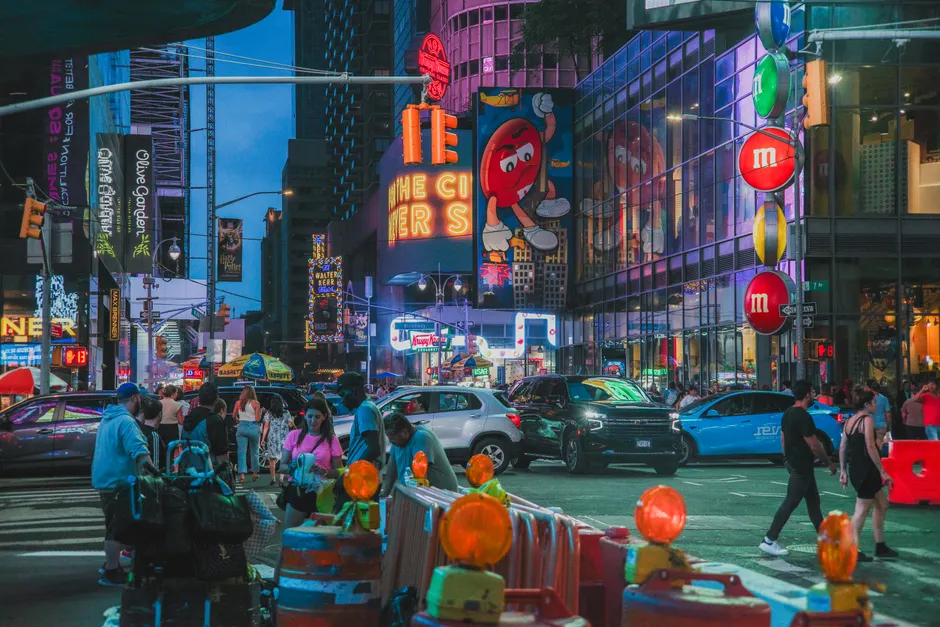
Nearly 2,000 players, many of them Pokémon Go influencers, packed into Times Square on Thursday evening to battle a Mewtwo that Mega Evolved on command as the district's billboards went dark and then relit in sync with the raid The Verge. The event capped the game's 10th anniversary, officially dated July 6, 2026 Pokémon GO, and served as a marquee moment ahead of Pokémon GO Fest 2026: Global, whose Day 1 was scheduled for July 11, 2026 Niantic Campfire.
Scopely VP of product Michael Steranka, who joined Niantic in 2017 specifically to help coordinate that year's disastrous Chicago Go Fest, said the Times Square gathering fulfilled the vision laid out in Niantic's original 2015 launch trailer, which depicted crowds teaming up to catch a Mewtwo The Verge. Steranka told The Verge that hosting more than a thousand people in a single local raid battle was "just a pipe dream" when the game was first conceived a decade ago.
That framing carries weight given the game's operational history. The inaugural Go Fest, held in Chicago's Grant Park in 2017, was undone by network overloads and software failures severe enough that Niantic publicly took the blame and issued refunds Niantic. Steranka's presence at both bookends — the 2017 failure and the 2026 Times Square execution — gives the anniversary event a specific engineering subtext: server architecture, matchmaking at scale, and geofenced raid synchronization that simply did not hold up under load nine years ago now supports thousands of concurrent participants triggering a synchronized AR spectacle across a dense urban grid with live billboard integration.
Ownership context matters here too. Scopely acquired Niantic's games business ahead of this anniversary push The Verge, meaning the 10th-anniversary programming — Times Square, Go Fest Global, and the in-person satellite events — represents Scopely's first major live-operations showcase for a title it now owns rather than merely licenses. Scopely's own figures put lifetime downloads north of 800 million and 2025 revenue at $1 billion for the game alone The Verge, numbers that frame the anniversary less as nostalgia programming and more as a live demonstration of retained monetization capacity in a decade-old mobile title.
The content: Mega Mewtwo and a distributed festival footprint
Mega Mewtwo X and Mega Mewtwo Y made their in-game debuts during Go Fest 2026, appearing in Super Mega Raids as part of the anniversary rollout Pokémon GO and later at Gyms alongside other five-star Raid Bosses during the Global event Pokémon GO. The tied-in Road of Legends event let trainers use an Elite TM to obtain Spacial Rend or Roar of Time for a limited window Pokémon GO, and Mewtwo itself returned to standard raid rotation during the in-person Tokyo and Copenhagen legs of Go Fest Pokémon GO Tokyo Pokémon GO Copenhagen.
Niantic and Scopely spread the anniversary across a genuinely global footprint rather than concentrating it on New York. In-person ticketed events ran in Tokyo, Copenhagen, and Chicago Niantic, while free Community Celebrations meetups were staged in San Francisco, Antwerp, and New York City through the Campfire platform Niantic Campfire — SF Niantic Campfire — Antwerp. Tokyo's leg carried its own commercial tie-in, marking the launch of the Red Pokémon Jet under a partnership between ANA and Pokémon GO Pokémon GO. A separate 10th Anniversary Party event, distinct from the Go Fest circuit, ran on Saturday, July 4, 2026, starting at 10:00 AM Pokémon GO.
Taken together, the distributed structure — flagship city events, satellite meetups, an airline partnership, and a synchronized in-app raid mechanic timed to a Times Square lighting cue — reflects a live-service operation considerably more mature than the one that buckled in Grant Park in 2017. Chicago's failure was fundamentally an infrastructure problem: too many devices, too little headroom, no graceful degradation. Times Square's execution depended on the opposite: coordinated backend load management across a raid with participation numbers Steranka himself frames as previously unthinkable.
The durability of an AR mobile game a decade past launch, still commanding billion-dollar annual revenue and drawing thousand-plus crowds to a single city block, says something about the staying power of location-based gaming as a category once written off after its initial 2016 hype cycle faded. Anyone who spent a summer chasing a Vaporeon lure with a teenager glued to their phone will recognize the pattern: the format proved less a fad and more infrastructure for how a generation socializes around place. Where Scopely takes that operational muscle next — beyond raid synchronization and airline tie-ins — is the open question the anniversary leaves on the table.