S&P 500 Near Record as Chip Rally Offsets Iran Deal Collapse
Markets claw back after Trump's Iran comments rattle risk
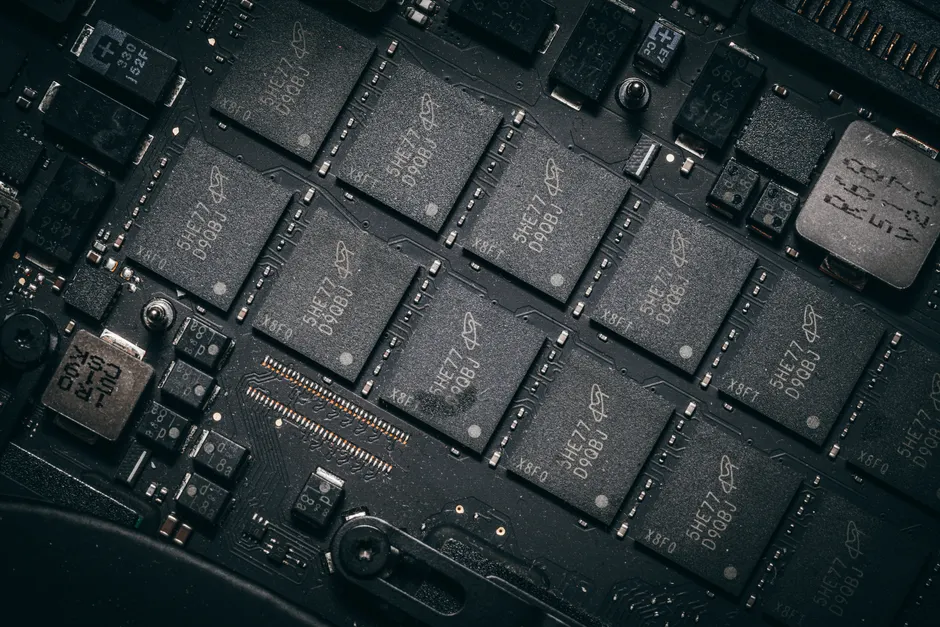
The S&P 500 closed lower on July 8, 2026, after President Donald Trump said an interim deal aimed at ending the war with Iran was "over," a remark that sent oil prices climbing and pulled equity futures down in the same session Reuters. The index recovered the next day. On July 9, the Nasdaq ended sharply higher as a rally in chip stocks offset lingering concern over the Iran situation Reuters.
The net effect of that two-day swing left the broader tape largely intact. As of July 9, the S&P 500 was up roughly 10% year-to-date and sat less than 1% below its most recent record close, set on June 2, 2026 Reuters. For a market that took a geopolitical jolt mid-week, that's a narrow gap to make up — and it says something about how quickly dip-buyers have been showing up whenever headline risk knocks the index off its highs.
This is not an isolated pattern. On July 2, the Dow Jones Industrial Average rose more than 1% to a record closing high after softer-than-expected U.S. jobs data fed expectations that the Federal Reserve has more room to ease Reuters. Four days later, on July 6, the S&P 500 and Nasdaq closed sharply higher on a rally in Broadcom shares Reuters. Add the July 9 chip-led bounce and the through-line for the month is a market willing to shrug off macro shocks so long as semiconductor names keep printing gains.
Oil is the transmission mechanism worth watching here. Trump's comment on the collapsed interim deal pushed crude higher on July 8 as traders priced in renewed supply risk from the region Reuters. Oil then retreated as part of the July 9 rebound Reuters. That inverse relationship — crude spiking on escalation risk, equities recovering as that risk gets discounted a day later — is the standard playbook for how these episodes have traded through 2026. It doesn't mean the underlying tension is resolved; it means the market's pricing of tail risk on any given Iran headline has gotten shorter in duration.
An unusually crowded IPO pipeline
Away from the daily index moves, the SEC's EDGAR docket has been busy with some of the largest private technology names of the cycle. Cerebras Systems filed an S-1 registration statement in April 2026 SEC filing. SpaceX filed its own S-1 on May 20, 2026 SEC filing. Quantum computing firm Quantinuum has since filed an S-1/A amendment during 2026 SEC filing. Separately, an issuer registered under CIK 0002120882 filed Amendment No. 2 to its Form F-1, disclosing that its common shares last traded at ₩2,425,000 on the KRX KOSPI Market on July 3, 2026 SEC filing — an F-1 being the registration form used by foreign private issuers, which points to a Korean-listed company pursuing a U.S. cross-listing or offering alongside its existing KOSPI quotation.
The overlap between the equity market's chip-driven resilience and a pipeline stacked with compute, AI hardware, and adjacent-technology filers is not coincidental in the sense that both are downstream of the same capital-formation cycle. Investors bidding up Broadcom on a single trading session and underwriters simultaneously pushing Cerebras and Quantinuum through SEC review are drawing on the same pool of demand for exposure to AI infrastructure. Whether that demand proves durable once macro noise — Iran, rates, jobs data — stops cooperating is the open question every one of these registrants is implicitly betting on with its pricing and timing decisions.
For anyone tracking primary issuance, the amendment stage is where the real signal sits. An S-1/A or a second F-1 amendment typically reflects SEC comment-letter resolution on items like related-party disclosures, use-of-proceeds specificity, or risk-factor language — not simply a paperwork update. Quantinuum's S-1/A and the F-1 Amendment No. 2 from the KOSPI-listed filer both suggest deals that are further along in the review queue than a first-filing headline would imply, though neither filing confirms a pricing date or an exchange listing.
None of this changes the near-term calculus for the broader index. The S&P 500's proximity to its June 2 record, despite an oil-driven wobble on Iran, tells a story about a market that has priced in a lot of forgiveness for geopolitical shocks as long as the AI-capex trade keeps working. What happens if a chip-sector selloff coincides with the next Iran headline, rather than offsetting it, is the scenario worth keeping on the radar.


