Hungary's Parliament Removes President Sulyok, Ending Cohabitation Standoff
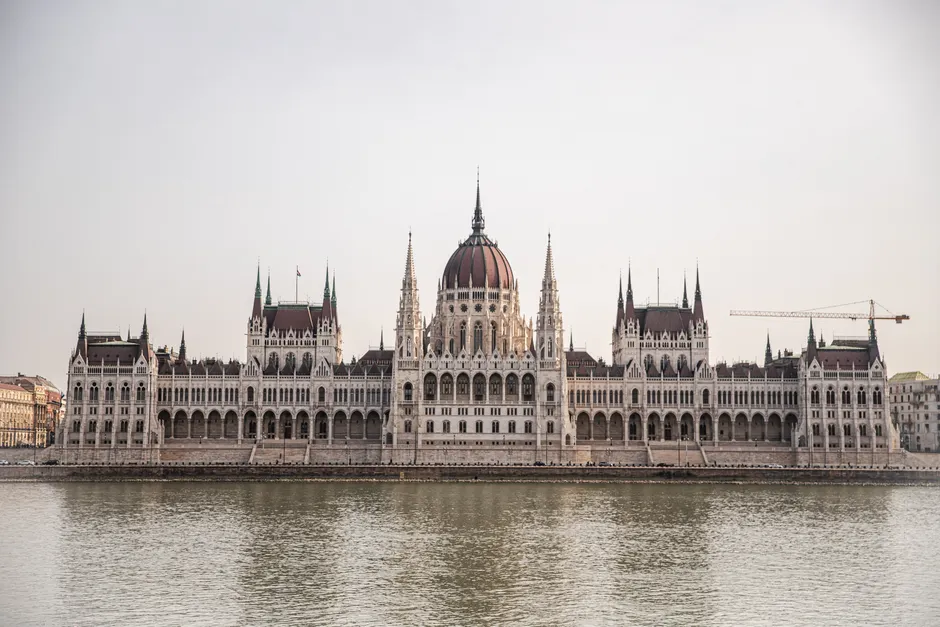
Parliament ousts Sulyok, closing an unprecedented six-week constitutional fight
Hungary's National Assembly voted on July 13, 2026 to remove President Tamás Sulyok from office, adopting the 17th amendment to the Alaptörvény (Fundamental Law) that strips him of the presidency euronews.com. The government's own news portal confirmed the same day that the amendment had passed kormany.hu. The vote closes a process that Prime Minister Péter Magyar initiated roughly six weeks earlier, when he moved to amend the constitution specifically to force Sulyok out AP News.
The mechanics matter here. Removing a sitting president in Hungary requires amending the Fundamental Law itself rather than invoking an impeachment clause tailored to the office — a structural quirk that made Magyar's campaign both more cumbersome and, once it succeeded, more consequential, since it alters the constitutional text rather than simply ending one man's term. Le Monde reported on July 8 that the removal procedure was already contested by that point, with critics arguing the government was bending constitutional machinery to a political end Le Monde.
Sulyok's tenure had spanned a turbulent electoral cycle. He was serving as köztársasági elnök (President of the Republic) through a series of parliamentary sessions in early and mid-2026, as documented in Hungarian parliamentary records dated January through June parlament.hu. On March 13 he issued a formal tájékoztató — a presidential notification confirming his signature on pending legislation — copied to the Speaker of the National Assembly parlament.hu. Two days later, on March 15 — Hungary's national holiday — he awarded state honors, the Magyar Érdemrend and Magyar Érdemkereszt, on the proposal of then-Prime Minister Viktor Orbán kormany.hu.
That March ceremony captured the presidency at what would prove its final high-water mark under the old political order. Weeks later, on April 12, polling closed in Hungary's parliamentary elections, and Sulyok issued a press statement from the Sándor-Palota — his official seat at 1014 Budapest, Szent György tér 1 — marking the moment sandorpalota.hu. The election produced a change of government: Péter Magyar became prime minister that April Al Jazeera. Sulyok nonetheless delivered the customary head-of-state address at the inaugural session of the new National Assembly on May 9 sandorpalota.hu — the same day, notably, that Magyar told parliament, "I will serve — not rule over Hungary" BBC.
The juxtaposition is worth sitting with. A president installed under the prior parliamentary majority remained in office months into a new premier's term, still exercising the notification and signing functions of the presidency as late as the end of May, per parliamentary records from May 27 showing Forsthoffer Ágnes as Speaker parlament.hu. That overlap — an opposition-era head of state coexisting with a newly empowered government — is precisely the kind of cohabitation that tends to generate friction in semi-presidential and parliamentary systems alike, particularly where the presidency retains levers over legislative timing.
Those levers appear to be at the center of the dispute. In a January 5 press interaction, Orbán, then still prime minister, told journalists that the date of parliamentary elections rested with the President of the Republic and that "power remained with President Sulyok Tamás" kormany.hu. That framing — the presidency as a repository of residual authority even as a new government took shape — helps explain why Magyar treated the office as a target once in power rather than a formality to be worked around. Removing Sulyok via constitutional amendment, rather than waiting out his term, suggests the new government judged the president's remaining powers, or his willingness to use them, incompatible with its agenda.
Symbolically, Magyar had already signaled a break with the prior administration's style: upon taking office he opened Orbán's former offices to the public Le Monde. The Sulyok removal reads as the harder-edged counterpart to that gesture — an assertion that the new government's mandate extends to reshaping the institutions it inherited, not merely their optics.
What follows is unresolved in the available record. The 17th amendment terminates Sulyok's position, but neither kormany.hu's announcement nor the parliamentary sources address succession mechanics, an interim head of state, or the timeline for a successor. Given how contested the removal procedure already was by early July, according to Le Monde's reporting, the manner of filling the vacancy is likely to draw as much scrutiny as the ouster itself.


