US Launches Seven-Hour Strike Wave on Iran, Reimposes Naval Blockade as IRGC Claims Gulf Retaliation

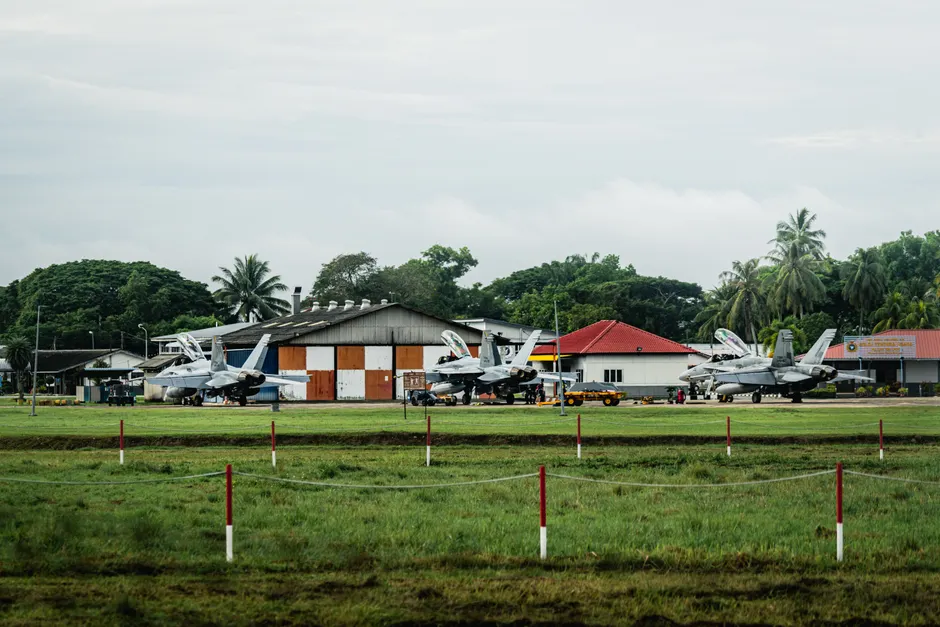
The United States struck dozens of military targets along Iran's southern coast and near the Strait of Hormuz in a seven-hour operation that CENTCOM said concluded at 10pm EDT Tuesday, 02:00 GMT Wednesday, involving fighter aircraft, drones, and naval vessels Al Jazeera. CENTCOM described the targets as "dozens of military targets near the Strait of Hormuz and Iranian coastal areas," part of a campaign that has now run through multiple rounds since early July.
The strikes followed a US naval blockade of Iranian ports that took effect at 20:00 GMT Tuesday, July 14 — a measure CENTCOM said responds to Iranian attacks on commercial shipping in the Strait AP News. The blockade is structured to protect vessels transiting the Omani shipping corridor while targeting any ship with an Iran connection, and includes a system of charging vessels for safe passage through the strait Spectrum News. CENTCOM has roughly 21 naval vessels positioned in the region, according to reporting from Washington Al Jazeera.
Iranian state media reported explosions across Bandar Abbas, Qeshm, Hengam, Sirik, and Bushehr, where air defence systems were activated. Al Jazeera's Tohid Asadi reported a bottled water facility in Dehloran, in western Ilam province, was reportedly hit, while Iranian sources said projectiles struck soldiers' accommodation at a military base in Bampur in Sistan and Baluchestan province. A CENTCOM release from July 14 listed strikes on military targets across Bushehr, Chah Bahar, Jask, Konarak, Abu Musa, and Bandar Abbas CENTCOM.
The scale of the campaign has escalated steadily through July. CENTCOM said it hit over 80 targets on July 7, roughly 90 targets in strikes conducted July 7-8, and approximately 140 targets with precision munitions launched from land- and sea-based aircraft and drones in a subsequent round CENTCOM. A separate release described aircraft and cruise missiles used in another wave of strikes on July 12 CENTCOM.
Iran's response has come through the Islamic Revolutionary Guard Corps, which claimed overnight attacks on US military assets in Bahrain, Kuwait, and Jordan. The IRGC said it inflicted heavy damage on the US Fifth Fleet headquarters, support facilities, and fuel tanks in Bahrain, and on a logistics hub at Mina Abdullah in Kuwait, and claimed to have destroyed shelters housing F-15, F-16, and F-35 fighter jets along with several MQ-9 drones Al Jazeera. Iran's state broadcaster Press TV separately reported IRGC missile strikes on Bahrain facilities including the Fifth Fleet headquarters Press TV, and IRNA reported retaliatory missile and drone strikes on US bases in Jordan IRNA. None of these Iranian claims have been independently verified by US officials.
Jordan's military confirmed it intercepted and shot down three Iranian ballistic missiles that entered its airspace early Wednesday. Earlier in the month, Press TV reported the IRGC struck 85 US military targets in Bahrain and Kuwait, calling it "initial" retaliation for an alleged US violation of the Islamabad agreement, and IRGC-linked sources said Iran would close the Strait of Hormuz and double its target list against any renewed American attack. The IRGC Navy also claimed on July 14 that it struck two tankers it alleged were misled by the US into crossing mined waters in the strait Press TV.
This exchange comes less than a month after Washington and Tehran signed a memorandum of understanding extending an April ceasefire, itself a product of a war that began February 28 with Israeli and US strikes on Iran. That original campaign included Operation Midnight Hammer, which the Pentagon has described as significantly damaging three Iranian nuclear sites, including a strike on the Fordow Fuel Enrichment Plant using 30,000-pound GBU-57 "massive ordnance penetrator" bombs — an operation officials called "15 years in the making" Defense.gov.
President Trump told Fox News the strikes "will continue until I say enough," naming power plants and bridges as potential future targets, and adding "I'll save the energy targets for last, but ultimately we'll hit energy targets" Al Jazeera. He has separately insisted the Strait of Hormuz will remain open AP News. US officials have said Washington is demanding Iran publicly commit to halting attacks on Hormuz shipping as a precondition for de-escalation Reuters.
The pattern that has emerged since the April ceasefire — memorandum, brief lull, then a rapid climb from roughly 80 to 140 targets per US strike wave within a week — suggests a conflict that has repeatedly found off-ramps only to reopen them. The naval blockade's fee-for-passage structure and the "energy targets last" framing from Trump both point toward an American strategy of graduated escalation rather than a single decisive blow, leaving open how much further either side is prepared to climb before returning to the negotiating table that produced the earlier truce.