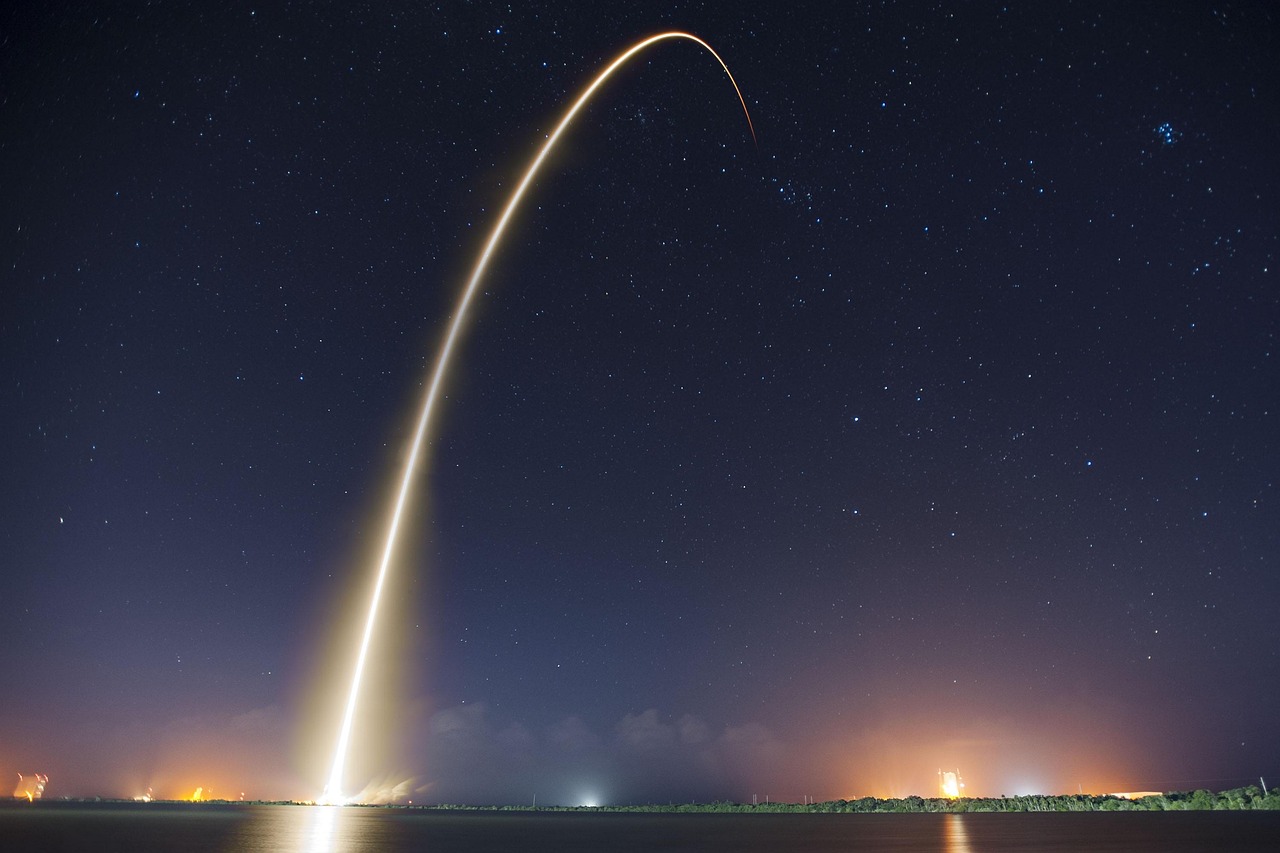
SpaceX Prepares Starship Flight 13 — First Test Since Record IPO

SpaceX is preparing Starship's thirteenth flight test, targeted for launch on Thursday, July 16, 2026, from Pad 2 at Starbase in Boca Chica, Texas. The 90-minute launch window opens at 5:45 p.m. local time (15:45 PT), according to the company's dedicated mission page (SpaceX). This marks SpaceX's first Starship flight since its initial public offering in June 2026 (Bloomberg).
The previous Starship test, Flight 12, launched on May 22, 2026 after a one-day delay. SpaceX halted that countdown at T-minus-40 seconds on May 21 when engineers identified a hydraulic pin issue (Bloomberg). The next window opened at 5:30 p.m. local time the following day, and the vehicle lifted off successfully, deploying 20 dummy Starlink satellites. Flight 12 was described as a Starship V3 launch (Bloomberg).
Flight 13 is listed as "Expended" on SpaceX's launches page (SpaceX), indicating the vehicle will not be recovered. This sits in tension with the iterative reusability architecture that Starship is designed to prove out over successive test campaigns, and it signals that SpaceX is still accepting vehicle loss on certain flights to gather data on other mission objectives — likely upper-stage performance, payload integration, or trajectory validation.
The broader context here is that Starship Flight 13 arrives less than a month after SpaceX entered the Nasdaq-100 index (Reuters), and roughly three weeks after Raymond James set a Wall Street-high price target of $800 on the stock. With public market investors now holding exposure to SpaceX's development roadmap, the technical outcome of each Starship flight carries direct implications for sentiment around the valuation.
SpaceX's IPO trajectory was itself a moving target. In January 2026, the company was weighing a mid-June offering aiming to raise up to $50 billion at a valuation near $1.5 trillion (Reuters). By the time the offering priced, SpaceX had scaled up: it sold 555.6 million shares at $135 each, raising a record $75 billion and valuing the company at $1.75 trillion (Reuters) (Reuters).
The post-IPO trading was volatile. On June 23, shares swung from an intraday low of $147.11 — during a broader Nasdaq selloff — to a high of $164.30, a 6% intraday move, before closing at $156.11, up nearly 1% on the day (Reuters) (LA Times). The LA Times characterized the session as a sell-off following the IPO.
Looking at what this means for the stock's current position, the gap between the $135 IPO price and the Raymond James $800 target is wide enough that any Starship flight anomaly — or, conversely, a clean expendable flight that validates the V3 architecture — will feed directly into the debate over whether SpaceX's $1.75 trillion valuation is grounded in near-term launch economics or in long-horizon optionality on Mars, lunar logistics, and Starlink scaling. Starship is the delivery vehicle for that optionality; each test flight is a data point the market will increasingly price.
Separately from the Starship campaign, SpaceX has a Starlink mission scheduled on a Falcon 9 from SLC-4E in California on July 20, 2026, with droneship recovery (SpaceX). That mission, while routine by Falcon 9 standards, will be watched for cadence consistency in the post-IPO window — SpaceX's ability to maintain high flight rates across both vehicle families is a key part of the bull case embedded in the Raymond James target.
For investors and analysts tracking SpaceX, Flight 13's technical readouts — whatever they are — will be the first direct Starship performance data point available to public markets. The last such test (Flight 12) occurred while the company was still private. The comparison to Flight 12's dummy Starlink deployment will be immediate: if Flight 13 advances payload integration or trajectory parameters, it strengthens the case that Starship is converging toward operational Starlink delivery. If it surfaces new failure modes, the market will have to reconcile that with a valuation that already assumes a high degree of execution.