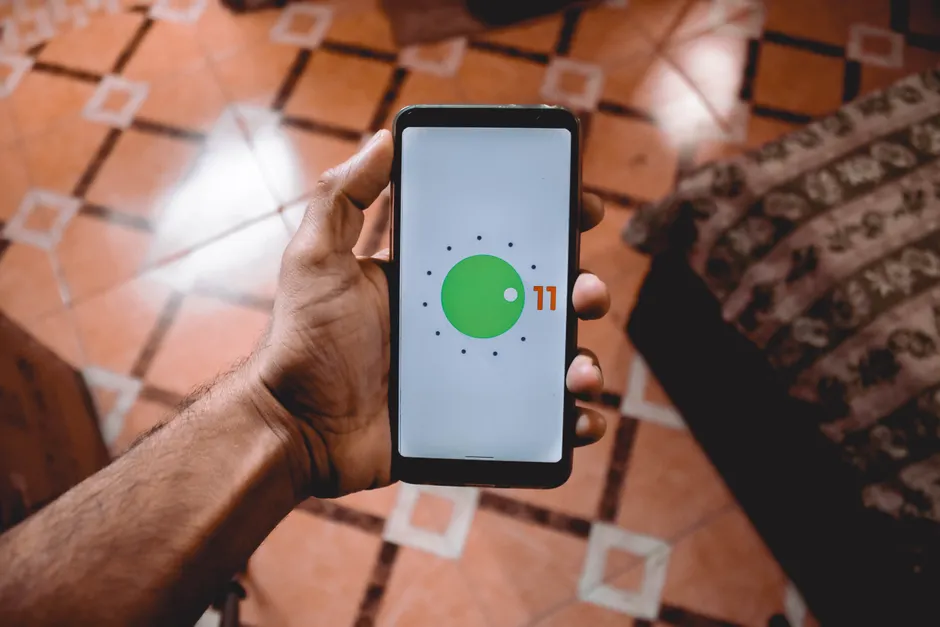
EU Issues DMA Decisions Requiring Google to Open Android AI Assistant Access and Share Search Data

The European Union has issued two Digital Markets Act enforcement decisions against Google, one requiring the company to give rival AI assistants on Android the same system-level capabilities and data access as its own Gemini assistant, and the other mandating that Google share Google Search data, including click, query, and ranking signals, with competing search engines and AI services. European Commission Executive Vice President for Tech Sovereignty, Security, and Democracy Henna Virkkunen announced the decisions on July 16, 2026 (The Verge).
The Android interoperability decision, docketed as DMA.100220, requires Google to extend to rival AI assistants the ability to interact with apps, respond to voice commands like "Hey Google," and use phone hardware. The final decision in this case will set out binding measures that Alphabet must implement regarding Android interoperability. A case summary published April 27, 2026 confirmed the Commission's intent to establish these binding requirements.
The second decision, docketed as DMA.100209, covers Google Search data sharing. It requires Google to share search data, including click, query, and ranking signals, with competing search engines and AI services. Notably, the EU considers AI chatbots to effectively function as search engines in some cases and has included them within the scope of this data-sharing mandate (The Verge). The Commission has stated there will be limits on how shared search data can be used under the measure.
Google retains a safety vetting role under the framework. The company will be able to vet which services receive deeper access to Android to ensure safety and security are not compromised, as part of the EU's enforcement structure (The Verge).
Unlike a financial penalty, these DMA enforcement proceedings require Google to change how it operates to bring its services in line with the regulation. The measures were developed through extensive engagement between the company and regulators (The Verge). The European Commission will adopt final decisions in both DMA.100220 and DMA.100209 by July 27, 2026.
The Commission has been building toward these decisions across the first half of 2026. A factsheet published May 11, 2026 detailed how DMA enforcement is delivering new interoperability and data portability features on smartphones, framing the Google measures within a broader push to open gatekeeper-controlled platforms.
The first decision, on Android AI assistant interoperability, cuts to a core competitive question: whether the assistant that ships deeply integrated with an operating system, with privileged access to hardware and app-level interactions, holds an insurmountable advantage over rivals that must operate as standard apps. Gemini's integration lets it invoke system features, respond to wake-word triggers, and reach into application interfaces. The DMA decision effectively requires Google to extend that same integration surface to competitors, subject to security vetting.
The practical implementation will be the hard part. Opening assistant-level system access to third parties raises legitimate security questions. Google's ability to vet services for safety before granting deeper access is a meaningful concession, though it also gives Google a gatekeeping role over its own competitors, which the Commission will presumably monitor closely.
The Search data-sharing decision reaches further in some respects. By classifying AI chatbots as functioning like search engines in certain use cases, the EU has expanded the universe of data recipients beyond traditional search competitors. Click and ranking signals are the raw material of relevance systems, and requiring Google to share them with AI chatbot providers effectively lowers one of the highest barriers to entry in the search-adjacent space.
The usage limits the Commission has signaled will be worth watching closely. Data shared under the DMA framework could be used to train competing models or improve competing relevance systems, but the boundaries of permissible use will determine whether this is genuinely market-opening or a narrow compliance exercise. The July 27 final decision deadline will set the binding specifics.
Taken together, the two decisions target the two most defensible positions Google holds in the AI and search ecosystem: the default assistant on the dominant mobile operating system in Europe, and the proprietary search data that underpins relevance ranking. The DMA was designed to address exactly this kind of gatekeeper advantage, and these proceedings represent the regulation moving from framework to concrete operational requirements. Whether rival assistants and AI services can meaningfully leverage these access points depends on implementation details that will only become clear once the final decisions are adopted.