EU Orders Google to Open Android AI Assistant Access to Rivals Under DMA
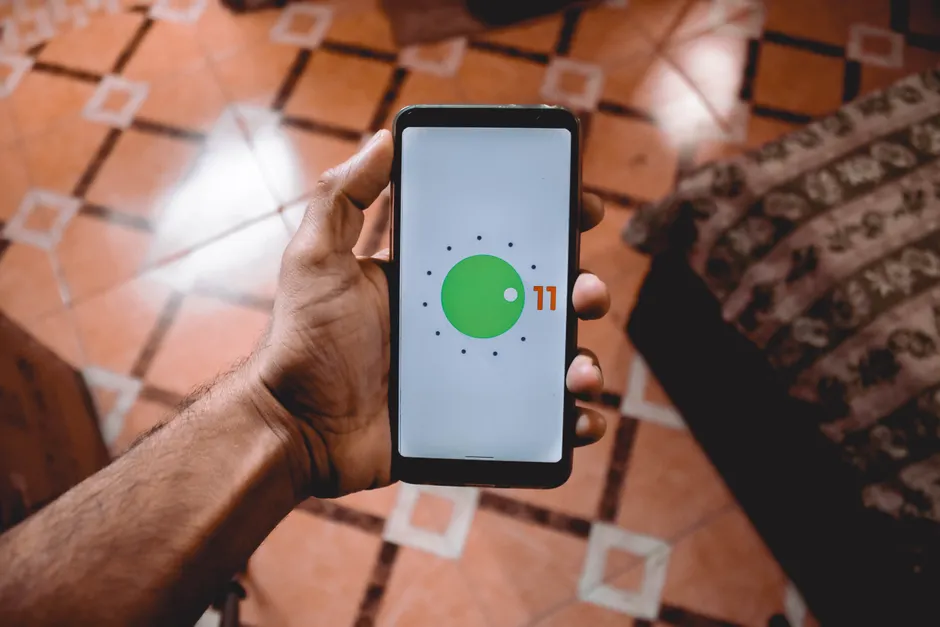
The European Commission has ordered Google to provide rival AI assistants the same system features and data access on Android that it grants its own Gemini assistant, with a compliance deadline of July 2027 The Verge. Gemini is already deeply integrated into Android and frequently ships preinstalled as the default AI assistant on many devices The Verge.
The Commission issued a parallel directive to Apple, requiring that third-party assistants receive comparable access to key systems, features, and data as Siri AI under the Digital Markets Act The Verge. Apple announced that Siri AI would not launch in Europe, citing the DMA as the reason The Verge. Apple requested 18 months to build a DMA-compliant version of Siri AI with gradually rolling interoperability; the Commission rejected that proposal The Verge. Apple had no public timeline for when or whether it plans to bring Siri AI to the EU as of The Verge's July 16 report The Verge.
The two companies have staked out divergent regulatory strategies. The Verge characterized Google's approach as "shipping first and negotiating with regulators later," in contrast to Apple's The Verge. Google has publicly argued that opening its systems under the DMA risks compromising users' safety, security, and privacy The Verge. Apple argued that giving third-party assistants comparable DMA-mandated access to Siri AI's systems "would be irresponsible" and would create unacceptable privacy and security risks The Verge.
The AI assistant orders arrive against a dense regulatory backdrop. The European Commission published its first statutory review of the DMA on 28 April 2026. In April 2026, the European Parliament called for stronger enforcement of the DMA amid external pushback. Google, for its part, stated in a November 2025 blog post that since 2019, there have been over 100 EU regulations targeting the digital economy. In a March 2025 post, Google acknowledged that the DMA is designed to regulate large platforms like Google, Apple, and Meta, and boost competition, while arguing that the EU's competition rules are hurting consumers and businesses.
The Commission has been actively probing Alphabet's DMA compliance across other surfaces. It opened non-compliance investigations into Alphabet's rules on steering in Google Play in March 2024 and sent two sets of preliminary findings to Alphabet for failing to comply with the DMA regarding two services. The six DMA-designated gatekeepers, designated on 6 September 2023, were required to submit updated compliance reports by 7 March 2025.
The enforcement pressure is compounded by a major courtroom loss for Google. On 2 July 2026, the European Court of Justice dismissed Google's appeal against a €4.1 billion EU antitrust fine related to its Android mobile operating system, backing findings that Google's Android practices shut out competitors Reuters. The fine, originally €4.34 billion, was reduced by an earlier 2022 EU court ruling. The legal battle lasted eight years from the initial fine to the final ECJ appeal ruling. Google has been found guilty of antitrust breaches in three separate EU cases and fined over €8 billion in total.
The broader context here is a regulatory architecture maturing in real time against the fastest-moving platform shift the industry has seen in a decade. The DMA's gatekeeper framework was designed before generative AI assistants became a primary interface layer on mobile operating systems. The Commission is now extending interoperability obligations that began with browser engines and app stores into the deepest integration points of the OS, where an assistant's value depends heavily on privileged access to system data and low-level capabilities. The July 2027 deadline gives Google a year to architect access controls that satisfy regulators without degrading the performance advantages Gemini derives from its native integration. For rival assistants, the order is a prerequisite for meaningful competition, not a guarantee of it; system-level access removes a structural barrier but does not create a competitive product.
In this author's view, the divergence between Google and Apple is less a philosophical disagreement than a commercial calculation. Google's "ship first" strategy preserves Gemini's installed-base advantage during the multi-year regulatory process, accepting the risk of future fines as a cost of maintaining distribution. Apple's withholding of Siri AI from the EU sacrifices European market presence entirely to avoid building an interoperability architecture it does not want to support on its home turf. Both bets are defensible, but they carry asymmetric downside. Google's approach keeps it in the EU market and accumulating usage data even if it ultimately must open access, while Apple's voluntary absence cedes the European AI assistant space to competitors with no guarantee of reentry. The Commission's rejection of Apple's 18-month timeline signals that regulators are not willing to let compliance pacing be set by the regulated, a posture that tightens the screws on both companies even as their strategic calculations diverge.


