US Strikes Iran for Sixth Consecutive Night as Strait of Hormuz Remains Shut
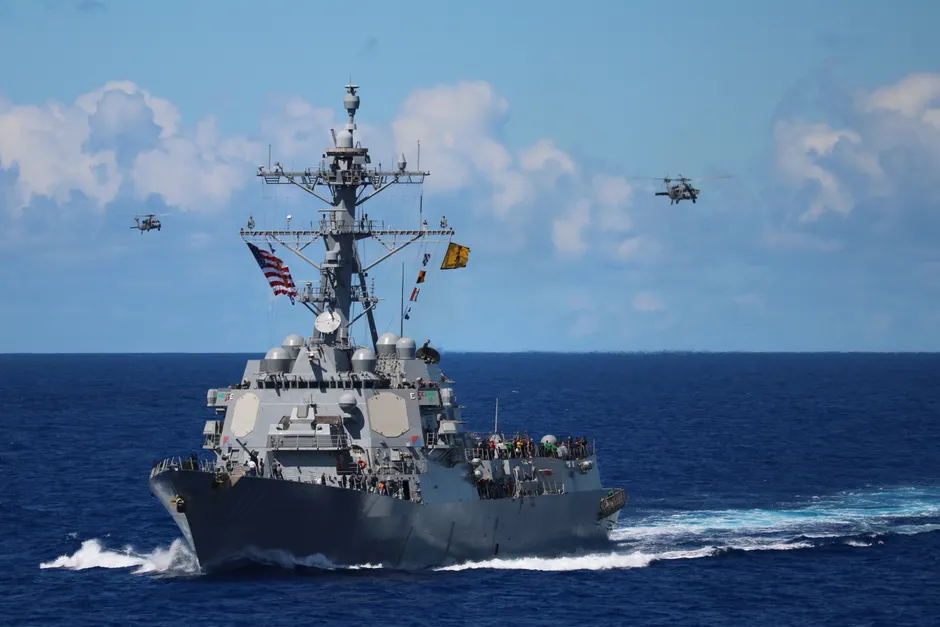
The United States launched strikes against Iran for a sixth consecutive night on July 16, 2026, with US Central Command stating the attacks were intended to "further degrade Iranian military capabilities" (BBC).
Iranian state media reported that US missiles struck near the Gulf island of Qeshm, close to the Strait of Hormuz, as well as Bandar Abbas and Bushehr. The US described a six-hour wave of strikes on multiple locations in the strait itself. Separately, Tehran claimed it had struck US military bases in Jordan, Kuwait, and Bahrain.
The Strait of Hormuz has remained shut, according to the BBC's editorial reporting, which states that "Tehran effectively blocked" the waterway in response to US-Israeli strikes. Reuters reported on July 12, 2026, that Iran had declared the strait closed, and multiple Reuters articles from July 15–16 explicitly state that "Iran said late on Saturday it had closed the Strait of Hormuz" (Reuters). Reuters also reported on July 16 that Iran wants all ships transiting the strait to use a channel close to Iranian shores (Reuters).
Iran's own messaging on the strait has been contradictory across recent months. The Iranian Foreign Ministry published a statement on its English-language website in March 2026 asserting that "the Strait of Hormuz is not closed" and that "maritime traffic in the Strait of Hormuz has not been" stopped. IRNA reported in June that Iran's military command declared the strait fully closed, then days later reported the Foreign Ministry officially rejecting closure claims as false. On July 3, Iran's military command declared the strait closed again, citing violations of a memorandum of understanding. The IRGC Navy issued a statement warning vessels not to approach the strait. Iran's Parliament Speaker said passage would be free of charge for only 60 days and that Iran would not back down from its rights in the waterway.
The Foreign Ministry's Permanent Mission in Geneva published a document on May 28, 2026, titled "The Strait of Hormuz — Legal Aspects of the New Arrangements in Light of Aggression and Fundamental Change of Circumstances," framing Iran's position in legal terms. Iran's Ambassador to the UN declared that "the only viable solution in the Strait of Hormuz is a permanent end to the war, the lifting of the maritime blockade, and the restoration of" unspecified conditions, in response to a US-Bahrain draft resolution. A memorandum of understanding between the United States and Iran was published on an Iranian consulate website around June 18, 2026, including discussion of the strait.
Despite the sustained military campaign, diplomatic channels remain open. White House press secretary Karoline Leavitt said on Thursday that President Trump remained open to talks with Iran and confirmed "we're talking to them." Leavitt also said Iran has expressed it still wants to make a deal with the US. Trump himself warned that Iran had "better behave" or face further military action should it not return to negotiations.
On the Iranian side, top negotiator Mohammad Bagher Ghalibaf told state media that Tehran had "no reason" to abide by any agreement that did not benefit the country. Ghalibaf also said Iran's national security depended on maintaining what he described as "Iranian arrangements" in the Strait of Hormuz.
The broader context here is a confrontation in which military escalation and diplomatic outreach are running in parallel rather than sequence. Six consecutive nights of US strikes have not closed the door to negotiations, and Iran's retaliatory claims against US regional bases have coexisted with its stated interest in a deal. The gap between battlefield rhetoric and backchannel diplomacy is wide, but it has not collapsed.
The Strait of Hormuz sits at the center of this tension. Iran's internal oscillation between declaring the strait closed, denying its closure, and imposing conditional transit arrangements reflects a deliberate strategy of calibrated ambiguity. By controlling what ships pass and how, Tehran retains leverage without triggering a full maritime confrontation that could draw in external naval powers. The demand that all vessels use a channel close to Iranian shores is a tangible assertion of that control.
Iran's legal framing through the Geneva document and UN statements suggests Tehran is building a case that its actions constitute a legitimate response to changed circumstances rather than an unlawful blockade. Whether that argument gains traction in international forums is a separate question from whether it succeeds operationally in deterring further US strikes. Ghalibaf's insistence on "Iranian arrangements" signals that any negotiated settlement will need to address Tehran's perceived sovereign rights in the strait directly, not merely its nuclear program or military posture.
The memorandum of understanding published in June indicates that both sides have already agreed to terms on the strait at some level. The subsequent Iranian military closures, framed as responses to violations of that MOU, suggest the agreement's enforcement mechanism is itself under dispute. With Trump pressing for a return to negotiations and Iran demanding terms that benefit its position, the MOU may serve as both the floor for talks and the fault line for further escalation.


