US Strikes Iran for Eighth Consecutive Night as Strait of Hormuz Conflict Escalates

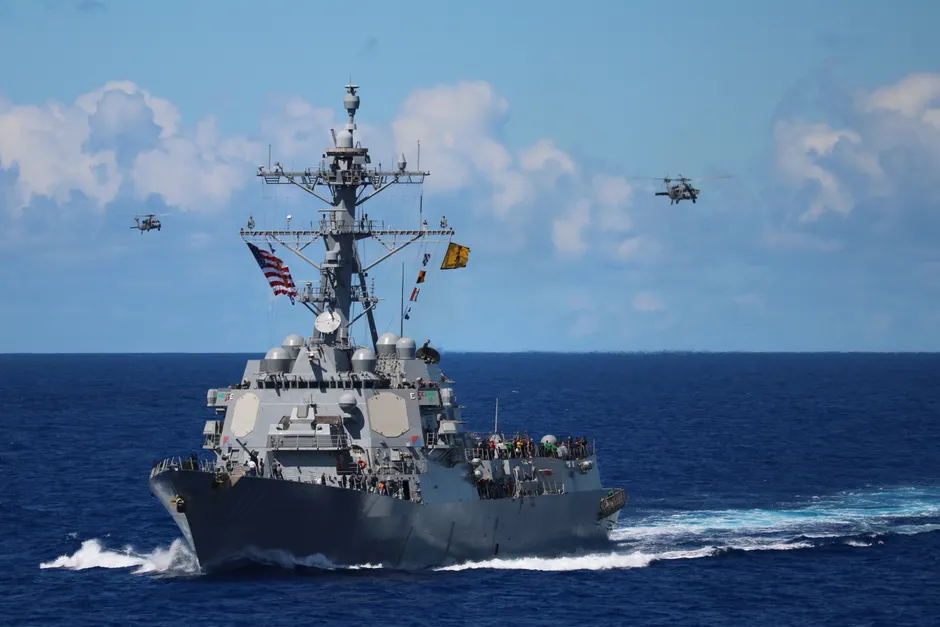
The United States launched its eighth consecutive night of attacks on Iran on July 19, 2026, with US Central Command stating the new strikes aim to further degrade Iran's ability to choke the Strait of Hormuz. Iran returned fire the same night, extending a cycle of reciprocal strikes that has intensified without interruption since mid-July (Al Jazeera).
The latest American strikes targeted Iran's Revolutionary Guard, described by the US as retaliation for an attack that killed American personnel. A strike also hit Hormozgan province in southern Iran on July 18, with Iranian state media confirming enemy strikes in the coastal province, which borders the Strait of Hormuz (AP News; Reuters). US officials vowed to "swiftly punish" Tehran, signaling no letup in the operational tempo (CNN).
The current campaign's scale is substantial. CENTCOM reported striking approximately 140 Iranian military targets during the week of July 6–11, on top of roughly 90 targets hit on July 7–8 and over 80 struck with precision weapons on July 7 alone. A July 12 wave hit dozens of targets, followed by another on July 13 (CENTCOM; CENTCOM; CENTCOM; CENTCOM). By July 11, the US stated it had hit hundreds of Iranian targets cumulative (Reuters). CENTCOM also released video on July 12 purporting to show Iran attacking commercial vessels transiting the Strait (CENTCOM).
Iran declared the Strait of Hormuz closed on or about July 11, 2026, after expanding attacks on Gulf states in response to US strikes. By July 16, Iran had resumed its blockade of the waterway, and the United States had blockaded Iranian ports. Iran warned that the Strait is a "red line" and stated it would retaliate against Trump's strike threats. Reuters reported that Iran also threatened to block additional vital sea lanes (Reuters; Reuters; CNBC Africa).
The conflict has spilled beyond the two belligerents. Kuwait suffered infrastructure damage on July 18 amid the US-Iran exchanges over the Strait (Britannica). The US and Iran have now exchanged fire for three consecutive weekends, beginning around July 11 (NPR via VPM).
The roots of the current escalation trace back to a prior cycle earlier in the year. In June 2025, President Trump ordered precision strikes against Iranian nuclear facilities (White House). By March 2026, the White House characterized Iran's blockade of the Strait as an "oil shock" (White House). The military operation was designated "Operation Epic Fury" in an April 2026 White House release, which also announced that Iran had agreed to a ceasefire and to reopen the Strait of Hormuz. At that time, the Trump administration was negotiating a broader peace agreement with Iran (White House).
That April ceasefire has clearly not held. Trump had earlier posted an ultimatum on Truth Social demanding that Iran "FULLY OPEN, WITHOUT THREAT, the Strait of Hormuz" within 48 hours or face strikes. He subsequently declared "The Hormuz Strait is OPEN, and will remain OPEN, with or without Iran" and referenced "THE IRANIAN BLOCKADE," and later announced "The Deal with the Islamic Republic of Iran is now complete" and authorized "the toll free opening of the Strait of Hormuz." Each declaration was followed by renewed hostilities rather than durable de-escalation.
The diplomatic scaffolding around the conflict includes a May 2026 agreement in which US and Chinese leaders jointly stated that Iran cannot obtain a nuclear weapon and jointly called for the reopening of the Strait of Hormuz (White House). In February 2026, Trump signed an executive order reaffirming the national emergency with respect to Iran and another establishing a process to impose tariffs on countries linked to Iranian threats.
The broader context here is the collapse of a fragile ceasefire framework that was never structurally enforced. The April agreement lacked verification mechanisms or third-party monitoring, and Iran's resumption of the Hormuz blockade on July 11 effectively nullified the political commitments made three months earlier. The mutual port blockades, the expansion of attacks to Gulf states, and the infrastructure damage in Kuwait all suggest the conflict is widening geographically rather than converging toward resolution. With China having aligned rhetorically with the US position on Hormuz access but taking no publicly reported operational role, the diplomatic lane for de-escalation remains narrow. The eighth night of strikes indicates that neither side has exhausted its appetite for escalation, and the Strait of Hormuz, through which roughly one-fifth of global oil consumption transits, remains the conflict's gravitational center.