Samsung and Google Deepen AI Integration at Galaxy Unpacked: Gemini Expands to 40 Apps, Native iPhone Migration Comes to Android 17

Google expanded Gemini's AI task automation from a handful of apps to 40, announcing the change at Samsung's Galaxy Unpacked event alongside new foldables, wearables, and a deeper push to put Gemini on every screen in Samsung's hardware ecosystem. The expanded automation lets Gemini shop, make dinner reservations, book travel experiences, and buy tickets on the user's behalf. Gemini can now also accept complex images as prompts and understand what is displayed on the device screen, broadening the range of contexts in which the assistant can act. Engadget
The task automation feature is accessible on the Galaxy Z Flip 8 via the Flex Window by long-pressing the power button, a hardware shortcut that puts the assistant one gesture away from the cover display. On the Galaxy Watch 9, users raise their wrist to activate Gemini and ask questions. The wrist-raise interaction model is notable because it removes the need for a wake word or tactile input on a device where screen real estate is minimal.
Samsung's new foldables will ship with Gemini Notebook pre-installed. Formerly known as NotebookLM, Gemini Notebook functions as a deep research tool that organizes sources from the web, videos, and chats into a single information repository. It can transform that aggregated material into slide decks, videos, flash cards, and podcasts. A "Collections" capability extends it into a larger workspace for managing multiple source sets and outputs. Engadget; Digital Trends
Google is bundling a six-month trial of Google AI Pro with every Galaxy Z Fold 8 Ultra, Fold 8, and Flip 8. The trial gives new device owners access to Google's premium AI subscription tier for half a year, after which it converts to a paid plan. The mechanics mirror the approach Google has taken on its own Pixel hardware: use the device sale as a distribution channel for a recurring AI subscription.
Beyond the phone, Samsung and Google revealed two additional frame designs for their upcoming Android XR smart glasses line, which is slated to launch in fall 2026. The smart glasses represent the most forward-looking hardware in the announcement, and the addition of new frame options signals that the product line is moving toward a consumer-ready form factor rather than remaining in a developer-kit phase.
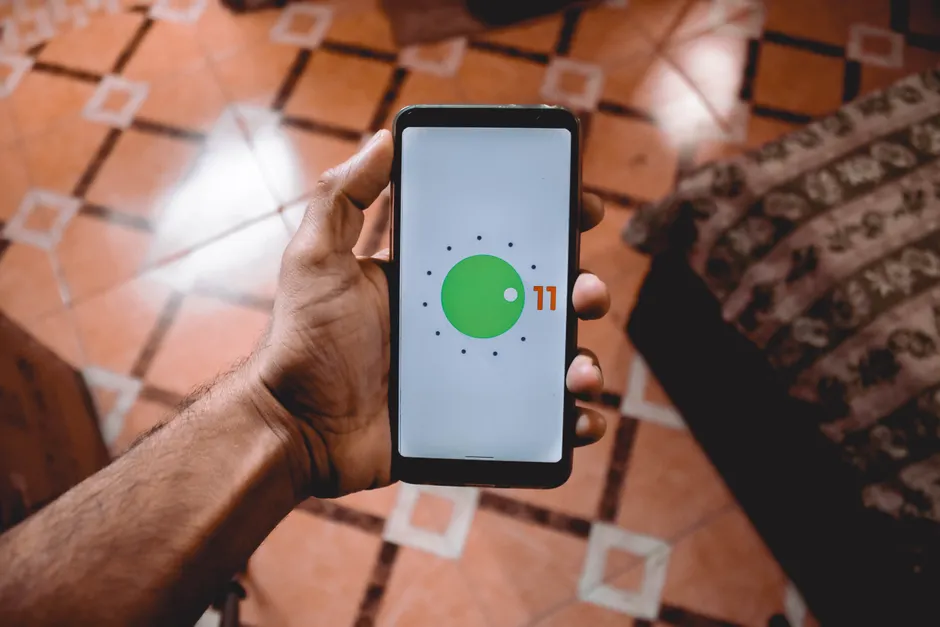
Google also introduced a native iPhone-to-Android migration experience built directly into Android 17. The feature eliminates the need for a separate transfer app and can move photos, videos, contacts, messages, calendar entries, Google Accounts, passwords, WiFi credentials, and eSIM data from an iPhone to an Android device. The native migration has started rolling out to select Pixel models and will be initially available on the Galaxy Z Fold 8 Ultra, Fold 8, and Flip 8. Engadget
The Galaxy Unpacked event, held on or around July 22, 2026, showcased the Galaxy Z Fold 8 Ultra, Galaxy Z Fold 8, Galaxy Z Flip 8, Galaxy Watch Ultra 2, and Galaxy Watch 9. Samsung Newsroom
In the weeks leading up to the event, Samsung made several supporting announcements. On July 21, 2026, the company launched Health Assistant Beta, described as its first fully integrated AI-powered personal health assistant. On July 15, Samsung introduced Flex Titanium Technology for foldable displays. On July 8, the company began mass production of the PM1763 SSD, optimized for next-generation AI infrastructure. And on June 30, Samsung and KDDI announced the completion of an AI-powered network optimization trial on a commercial 5G Standalone network in Japan. Samsung Newsroom
Looking at what this means in practice, the Unpacked announcements amount to a coordinated strategy to embed Gemini across every tier of Samsung's device portfolio: phones, watches, and glasses. The 40-app task automation expansion is the most functionally consequential piece. When an assistant can transact across that many surfaces, the question shifts from "can it understand me?" to "do I want it acting on my behalf?" Google and Samsung are betting that the answer is yes, at least enough to justify a six-month subscription trial that converts to recurring revenue.
The native iPhone migration in Android 17 is the quieter but structurally important move. Reducing switching friction at the OS level, without requiring users to download a separate app, has historically been one of the most effective levers for platform share. Google is making that path easier at a moment when it is also asking new Android users to adopt Gemini as a daily assistant.
The broader context here is a familiar industry dynamic: a platform provider and a hardware OEM aligning on AI as the differentiating layer. What differs from earlier attempts at deep assistant integration is the scope of action. Gemini is not just answering questions or setting timers. It is being positioned as a transactional agent that can spend money, and that raises a different set of trust and security considerations than voice search ever did.
The fall launch of the Android XR smart glasses will be the next concrete checkpoint. If the glasses ship with the same Gemini capabilities demonstrated on the foldables, Google will have an assistant spanning wrist, phone, and eyewear, each with a distinct interaction model optimized for its form factor. That is the architecture of a persistent, multi-modal AI presence, not a single app running on a single device. Whether consumers want that presence is a separate question, but the building blocks are being laid with deliberate breadth.