Penske Automotive Group: Corporate Structure and the Mitsui Connection
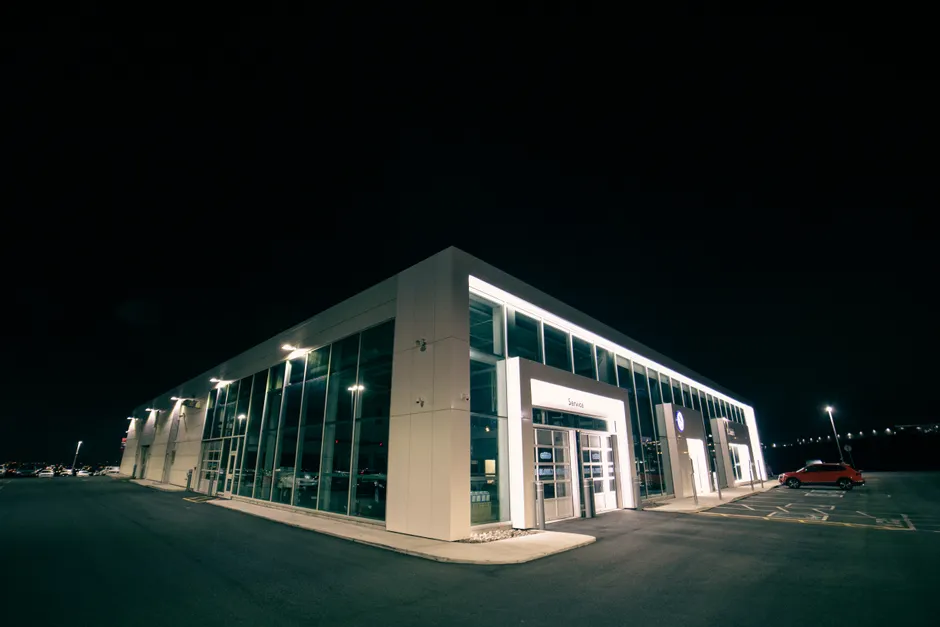
Penske Automotive Group, Inc. trades on the New York Stock Exchange under the ticker symbol PAG and is headquartered in Bloomfield Hills, Michigan. The company is listed among Penske Corp.'s portfolio of operating businesses on the Penske corporate website (Penske Corp.). Separately, Japan's Mitsui & Co. includes Penske Automotive Group within the Automotives segment of its integrated reporting, appearing in both its 2024 and 2025 annual reports (Mitsui AR2024).
These two corporate relationships define PAG's ownership and strategic architecture. Penske Corp. serves as the parent holding entity whose listed subsidiaries include not only the automotive retail operation but also logistics, truck leasing, and racing interests. Mitsui's inclusion of PAG in its Automotives segment reflects the Japanese sogo shosha's equity stake and strategic positioning in U.S. auto retail, a relationship that has persisted across multiple reporting cycles.
The verified facts available are structural rather than transactional. They confirm corporate affiliations, listing venue, headquarters location, and segment classification within Mitsui's portfolio. The original reporting from The Wall Street Journal referenced a near-$4 billion bid to take Penske Automotive private, a deal involving both Penske Corp. and Mitsui. The specific terms, pricing, financing structure, and timeline of that proposal are not captured in the verified facts available here, and any characterization beyond the corporate relationships documented above would require sourcing not presently in hand.
What the verified facts do establish is the framework within which such a transaction would operate. PAG is a publicly traded subsidiary of Penske Corp., with Mitsui holding a position sufficient to warrant segment-level disclosure in its integrated reports. That dual relationship is the structural prerequisite for a joint take-private effort: Penske Corp. controls the parent-level governance, while Mitsui's segment-level exposure gives it both economic interest and strategic rationale for participation.
For market participants, the key question is how a take-private structure would navigate the intersection of Penske Corp.'s controlling position, Mitsui's equity interest, and PAG's public float. The verified facts confirm all three exist; they do not specify the relative sizes, the proposed transaction mechanics, or the regulatory pathway. A going-private transaction at the reported scale would require a merger agreement, minority shareholder protections, and likely Schedule 13E-3 filings with the SEC. Whether the bid has advanced to any of these procedural stages cannot be determined from the verified facts.
Mitsui's classification of PAG within its Automotives segment is consistent with a strategic rather than purely financial holding. Sogo shosha stakes in overseas automotive operations typically reflect long-term commercial partnerships, parts supply chains, and distribution agreements, not passive portfolio investments. A take-private bid involving both the parent and a strategic partner would, in this context, represent a consolidation of control rather than an exit by either party. The economics would turn on the premium offered to public shareholders relative to PAG's trading levels and the financing arrangements between Penske Corp. and Mitsui.
PAG's listing on the NYSE and its Bloomfield Hills headquarters place it squarely within the U.S. auto retail sector, a space that has seen margin expansion driven by fixed-cost discipline, service-and-parts revenue, and the post-pandemic normalization of new vehicle supply. Auto retailers trading publicly have attracted PE and strategic interest in cycles when valuations lag underlying earnings power. The verified facts do not include PAG's financial metrics, trading multiples, or recent performance, so any assessment of whether a near-$4 billion bid reflects a premium or discount to intrinsic value would be speculative.
The broader context here is that auto retail consolidation has been a recurring theme, and take-private transactions in the sector have historically targeted operators with strong dealership portfolios, real estate portfolios, and aftersales revenue streams. PAG's position within Penske Corp.'s broader transportation and logistics empire, combined with Mitsui's strategic stake, creates a natural path to privatization that avoids the friction of a hostile or third-party acquisition.
What remains undocumented in the verified facts is the current status of any bid: whether a formal offer has been made, whether a special committee of independent directors has been formed, what the per-share price implies relative to recent trading, and what the financing commitments look like. Investors monitoring PAG should watch for regulatory filings, particularly 8-K disclosures of material definitive agreements and 13E-3 transaction statements, which would mark the formal transition from reported intent to executed deal. Until then, the structural relationships are confirmed; the transaction itself is not.