Apple's Updated MacBook Neo to Move to A19 Pro with 12GB RAM
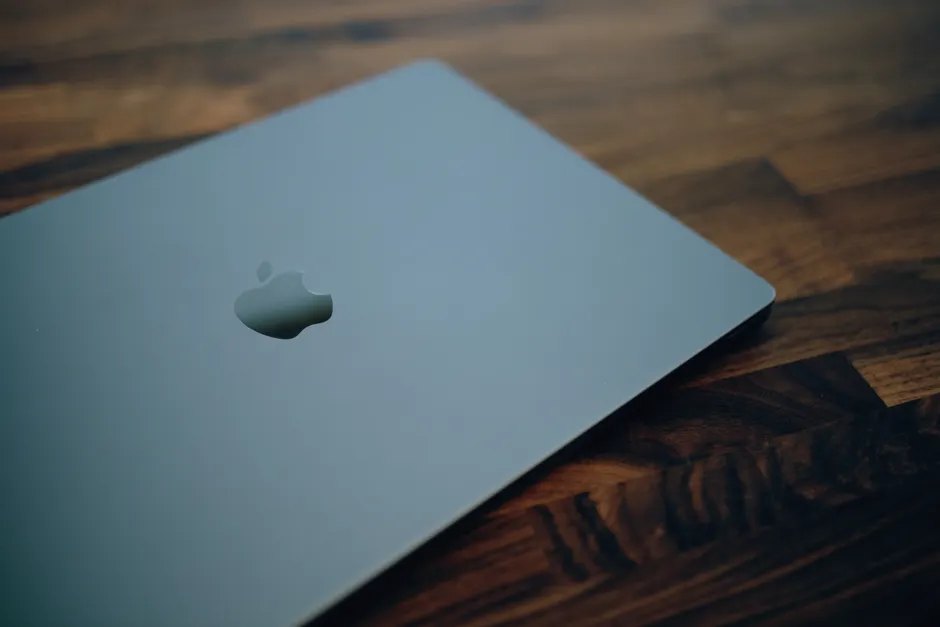
Apple is developing an updated MacBook Neo that will move from the A18 Pro to the A19 Pro processor and increase RAM from 8GB to a possible 12GB, according to Bloomberg's Mark Gurman, reported by The Verge.
The A19 Pro already ships in the iPhone 17 Pro, iPhone 17 Pro Max, and iPhone Air. Its migration into the MacBook Neo follows the same silicon-sharing pattern Apple established with the original Neo, which used the A18 Pro carried over from the iPhone 16 Pro. Apple's strategy of repurposing its phone-class chips in lightweight Macs means each Neo refresh is effectively gated by the prior iPhone cycle's silicon.
The RAM increase to 12GB, if it holds, is the more structurally interesting detail. The current MacBook Neo's 8GB ceiling has been a genuine constraint for workloads that push beyond lightweight productivity: browser-heavy sessions with dozens of tabs, on-device inference for smaller ML models, and any creative pipeline involving layered image editing. Twelve gigabytes would not close the gap with Apple's M-series Macs, but it would widen the Neo's usable envelope, particularly for memory-pressure-sensitive tasks.
Apple may also discontinue the lowest-priced 256GB storage tier of the MacBook Neo, per Gurman's reporting. If the entry-level configuration is cut, the Neo's effective starting price rises regardless of any sticker-price increase on remaining tiers. And those remaining tiers are likely to cost more in any case: ongoing component shortages are expected to push the updated Neo's pricing higher than the original model.
The combination of a dropped entry tier, higher BOM pressure from component scarcity, and a RAM bump means the updated MacBook Neo could land at a meaningfully higher price point than its predecessor. How Apple stages that pricing across regions and configurations remains an open question.
Looking at the broader silicon trajectory, the A18-to-A19 Pro shift for the Neo tracks a one-generation-behind cadence relative to Apple's flagship phones. That cadence is a design choice with tradeoffs. Phone-class SoCs carry thermal and power envelopes tuned for battery-powered mobile devices, not sustained laptop workloads. The Neo's chassis likely provides more thermal headroom than an iPhone, but the A19 Pro's performance characteristics in a Mac context will depend heavily on how much sustained power Apple allows the chip to draw, and whether the cooling solution can dissipate the resulting heat over long sessions. The 12GB of RAM, paired with whatever memory bandwidth the A19 Pro delivers in this configuration, will matter more for day-to-day responsiveness than peak benchmark numbers.
For developers and technically minded users, the question is whether the updated Neo can serve as a credible primary machine for lighter development work, or whether it remains a secondary device constrained by its phone-derived architecture. Twelve gigabytes of RAM gets closer to the floor for a workable development environment, particularly with Xcode, container runtimes, or local model inference in the mix. The original 8GB configuration was tight enough that swap usage would spike under moderate multitasking pressure, and the unified memory architecture meant that swap hit the same NAND pool as user storage, creating a wear-and-write-amplification dynamic worth monitoring over the device's lifespan.
The storage tier question adds another dimension. Dropping the 256GB option would push buyers to 512GB at minimum, which is the more realistic floor for a macOS development or creative environment in 2026, given the footprint of Xcode, Docker images, and ML model weights. In that sense, removing the 256GB SKU could be read as Apple aligning the Neo's configuration ladder with how the machine is actually being used, rather than as a pure margin play. Both readings can coexist.
Component shortages affecting pricing is not a Neo-specific story; it is a supply-chain condition that has rippled across consumer electronics manufacturing throughout 2026. The practical effect for prospective buyers is that the updated Neo will likely launch at a higher price than the model it replaces, and the gap between the Neo and Apple's M-series MacBook Air may narrow. If the Neo's price creeps close enough to an M-series Air, the value calculus gets harder to justify, since the M-series chips are purpose-built for laptop thermal and power profiles rather than adapted from phone silicon.
None of this is confirmed by Apple, and the specifics of pricing, storage configurations, and even the 12GB RAM figure remain in the realm of Gurman's supply-chain reporting rather than official specification sheets. What is clear from the reporting is that Apple intends to refresh the MacBook Neo with a generational silicon bump, more memory, and a potentially trimmed configuration ladder, at a time when component costs are working against the entry-level price points that made the original Neo attractive.
For the technically inclined buyer weighing a purchase in the coming months, the updated Neo's positioning between phone-class and laptop-class silicon remains its defining characteristic. The A19 Pro and 12GB of RAM improve that position, but they do not fundamentally change it.