Anduril Industries Raises $5 Billion Series H at $61 Billion Valuation

Anduril Industries Raises $5 Billion Series H at $61 Billion Valuation
Defense technology company Anduril Industries has closed a $5 billion Series H funding round led by Thrive Capital, bringing the company's post-money valuation to $61 billion according to the company's announcement. The funding marks one of the largest venture capital raises in the defense technology sector and positions Anduril among the most highly valued private companies in the United States.
The Series H represents a substantial leap from Anduril's previous known funding milestone. The company previously raised $450 million in Series D funding at a $4.6 billion valuation, meaning this latest round values the company at more than 13 times its prior valuation. While the timeline between these funding events remains unclear from available disclosures, the magnitude of the valuation increase reflects the accelerated investor interest in defense technology platforms.
Capital Deployment and Manufacturing Scale
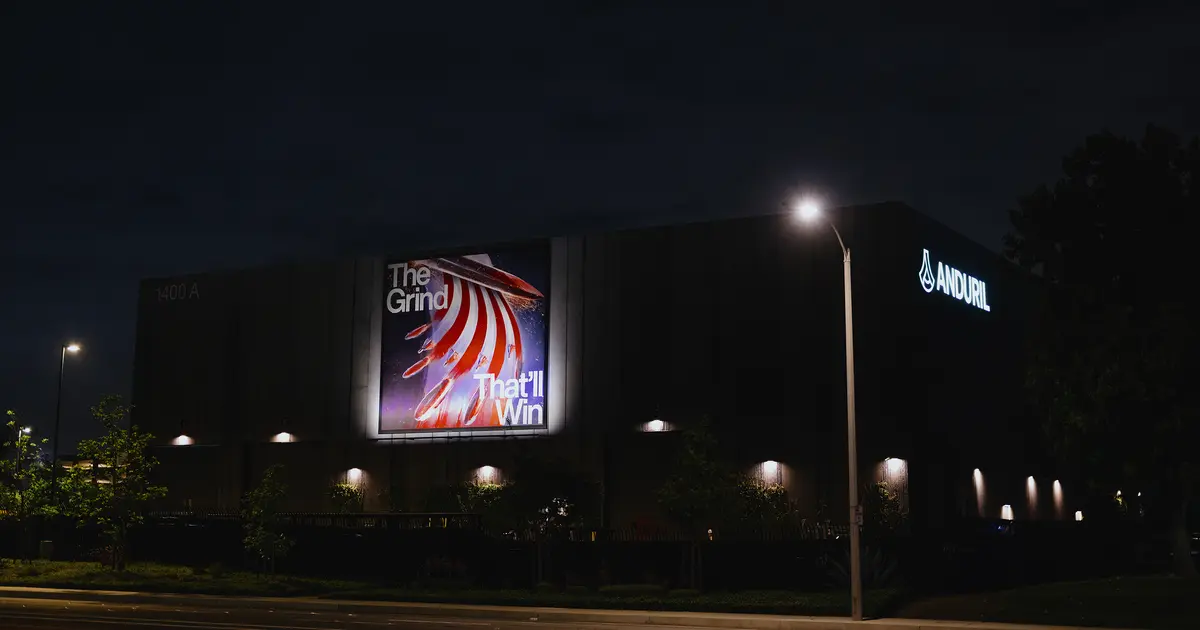
The $5 billion injection comes as Anduril continues expanding its autonomous systems manufacturing capabilities and software-defined defense platforms. The company has been scaling production of its Lattice AI operating system, which powers autonomous air, land, and maritime systems for military applications. Manufacturing capacity has become a critical bottleneck across the defense technology sector as demand for autonomous systems accelerates from both US military branches and allied nations.
Anduril's approach centers on software-first architecture that can be deployed across multiple hardware platforms, from small drones to larger autonomous vehicles. This model allows for rapid iteration and deployment compared to traditional defense contractors that rely on decades-long development cycles for specialized hardware systems.
Market Context and Competitive Positioning
The defense technology sector has attracted unprecedented venture capital attention as geopolitical tensions drive military modernization priorities. Traditional defense primes like Lockheed Martin, Raytheon, and Northrop Grumman face competition from venture-backed companies that can move faster on emerging technologies like artificial intelligence, autonomous systems, and space-based platforms.
Anduril competes directly with companies including Palantir Technologies in the defense software space, though Anduril's focus on autonomous hardware systems creates a distinct market position. The company also competes with traditional aerospace and defense contractors for major military contracts, though its software-defined approach allows for different pricing models and deployment timelines.
The broader defense technology funding environment has seen several major rounds in recent years as investors recognize the sector's combination of large government contracts, recurring revenue models, and strategic importance. Companies like SpaceX, Shield AI, and Rebellion Defense have all raised significant capital as the Pentagon prioritizes technology modernization.
Autonomous Systems and AI Integration
Anduril's core technology platform integrates computer vision, machine learning, and autonomous decision-making capabilities into modular systems that can operate across domains. The company's Lattice OS provides a unified interface for managing multiple autonomous systems simultaneously, allowing operators to coordinate complex missions with minimal human intervention.
The technology stack includes real-time sensor fusion, threat detection algorithms, and autonomous response capabilities that can operate in contested environments where traditional communication links may be compromised. This edge computing approach reduces latency requirements and allows systems to maintain operational capability even when disconnected from centralized command structures.
Looking at the broader trajectory here, the defense sector's embrace of autonomous systems represents a fundamental shift in military capabilities. We have seen this pattern before, when the commercial internet protocols developed in the 1990s eventually became the backbone of military communications infrastructure. The same technologies that enable consumer applications—computer vision, machine learning, and distributed computing—are now reshaping military capabilities with implications that extend far beyond traditional defense applications.
Manufacturing and Production Scale
The substantial funding round positions Anduril to address one of the most critical challenges facing defense technology companies: scaling manufacturing to meet demand. Unlike software companies that can scale through cloud infrastructure, autonomous systems require physical manufacturing capabilities that demand significant capital investment.
Anduril has been building manufacturing facilities designed for rapid production of autonomous systems, contrasting with traditional defense manufacturing that optimizes for small-batch, high-precision production over decades. The company's manufacturing approach emphasizes modularity and standardization to achieve economies of scale while maintaining the flexibility to adapt systems for different mission requirements.
Strategic Implications and Market Impact
The $61 billion valuation reflects investor confidence in Anduril's position within the defense modernization cycle, but it also creates substantial performance expectations. The company must demonstrate that its technology platform can capture significant market share from established defense contractors while proving the operational effectiveness of its autonomous systems in real-world military applications.
For the broader defense technology ecosystem, Anduril's valuation milestone establishes a new benchmark for venture-backed defense companies. The funding round validates the investment thesis that software-defined defense systems can capture substantial value from the multi-hundred-billion-dollar global defense market.
The capital infusion also positions Anduril to pursue larger military contracts that require substantial manufacturing commitments and multi-year delivery timelines. Traditional defense contractors often use their balance sheet strength as a competitive advantage in contract negotiations, and this funding round provides Anduril with comparable financial resources.
Future Development Priorities
With $5 billion in new capital, Anduril can accelerate development across multiple technology areas simultaneously. The company's roadmap likely includes expanded autonomous air systems, maritime platforms, and ground-based defense systems. Integration capabilities between different autonomous systems will become increasingly important as military operations require coordination across domains.
The funding also enables Anduril to compete for larger military contracts that require substantial upfront investment and manufacturing commitments. These contracts often span multiple years and require companies to deliver systems at scale, creating barriers to entry that smaller defense technology companies cannot overcome without significant capital resources.
The Series H funding positions Anduril as a major player in the defense technology transformation that is reshaping military capabilities worldwide. Whether the company can deliver on the operational promises embedded in its $61 billion valuation will depend on its ability to prove autonomous systems effectiveness in real-world military applications while scaling manufacturing to meet accelerating demand.