Americans Support AI Safety Rules While Rejecting Local Data Centers, Gallup Surveys Show

Americans Support AI Safety Rules While Rejecting Local Data Centers, Gallup Surveys Show
Americans express strong support for artificial intelligence safety regulations while simultaneously opposing the infrastructure needed to support AI development in their own communities, according to new polling data from Gallup that reveals a classic "not in my backyard" dynamic around emerging technology.
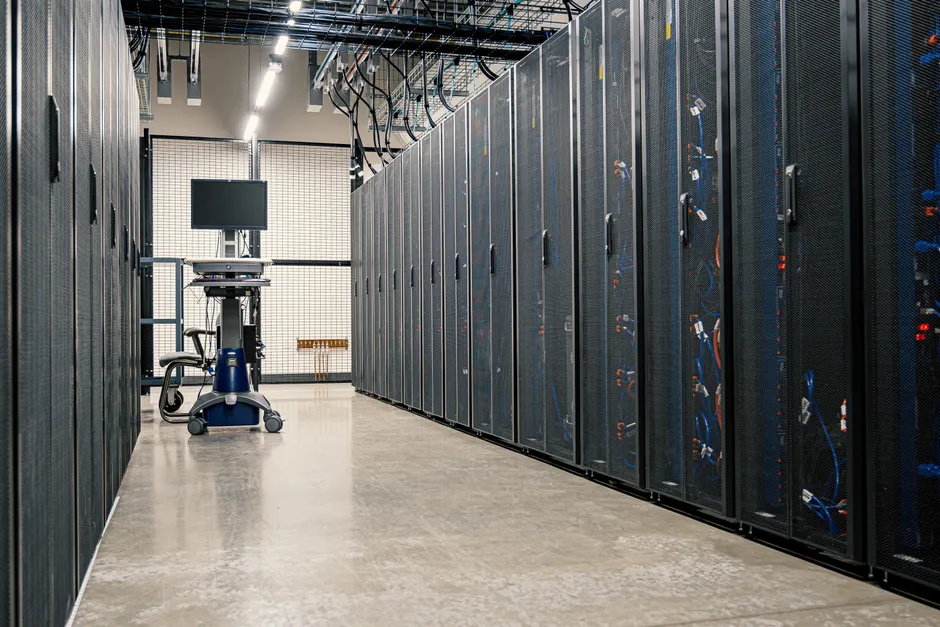
The polling firm's March 2024 survey—the first time Gallup has asked about data center construction—found 71% of Americans oppose AI data center construction in their local area, with 48% strongly opposed. This resistance comes even as separate Gallup research shows Americans favor maintaining safety rules for AI technology, independent testing of AI systems, and collaboration with allies on AI development.
Infrastructure Opposition Mirrors Historical Patterns
The 71% opposition to local AI data centers closely parallels the 53% of Americans who oppose nuclear energy plant construction in their area, despite broader national support for nuclear energy reaching 61% in 2024—just one percentage point shy of the 2010 record high tracked by Gallup since 1994.
This split between national policy preferences and local infrastructure acceptance follows a familiar pattern in American technology adoption. We have seen this dynamic before, when cellular towers faced widespread local opposition in the 1990s despite growing demand for mobile service, and when fiber optic deployments encountered neighborhood resistance even as consumers demanded faster internet speeds. The tension reflects Americans' ability to simultaneously embrace technology's benefits while rejecting its physical manifestations in their immediate environment.
The nuclear comparison proves particularly relevant as the AI industry increasingly turns to nuclear power to meet data centers' massive energy requirements. Major technology companies have announced plans to revive shuttered nuclear plants and develop small modular reactors specifically to power AI infrastructure, creating a dual infrastructure challenge where both the computing facilities and their power sources face local resistance.
Economic Benefits Versus Community Concerns
Among the minority who favor AI data center construction in their area, economic benefits represent the primary motivation, according to Gallup's findings. Data centers typically bring substantial capital investment, construction jobs, and ongoing employment to local communities, along with significant property tax revenue for local governments.
However, the strong opposition suggests these economic arguments have not overcome community concerns about AI data centers. Unlike traditional manufacturing or service facilities, data centers operate with minimal ongoing employment relative to their economic footprint, often requiring only dozens of technical staff to manage facilities worth hundreds of millions of dollars.
The infrastructure demands also distinguish AI data centers from previous technology deployments. Modern AI training and inference workloads require unprecedented power density—often 10 to 100 times higher than traditional enterprise data centers—placing extraordinary strain on local electrical grids. Water cooling systems for these facilities can consume millions of gallons daily, raising concerns in water-stressed regions.
Energy Policy Contradictions
The polling data reveals apparent contradictions in American energy preferences that complicate AI infrastructure planning. While 56% support increased research and development funding for next-generation nuclear energy and 72% favor more funding for wind and solar development according to ecoAmerica's 2024 survey, local opposition to both nuclear plants and data centers creates practical barriers to implementing these preferences.
Nuclear energy support has rebounded significantly from 2016, when a majority of Americans expressed opposition to nuclear energy use—the only time that occurred since Gallup began tracking the question. The current 61% support level includes 29% who strongly favor nuclear energy and 32% who somewhat favor it.
Energy availability concerns have moderated from recent peaks but remain elevated. Thirty-five percent of Americans worry "a great deal" about energy availability and affordability, down from a near-record high of 47% in 2022 but well above the trend low of 22%.
Regulatory Preferences and Safety Priorities
The disconnect between AI safety preferences and infrastructure acceptance creates challenges for policymakers attempting to balance innovation with public concerns. Americans' support for AI safety rules, independent testing, and international collaboration suggests broad comfort with regulatory oversight of AI development, even as they reject the physical infrastructure required for that development.
This dynamic places particular pressure on federal and state governments to develop incentive structures that can overcome local opposition. Traditional approaches like property tax abatements and job creation targets may prove insufficient given data centers' limited employment profiles and communities' apparent skepticism about AI technology's local impacts.
The timing proves particularly challenging for the AI industry, which faces intense competition to scale computing capacity for training larger models and serving growing inference demands. Extended permitting processes and community opposition could advantage companies with existing data center footprints or international operations less constrained by local approval requirements.
Looking ahead, the polling suggests that AI infrastructure deployment will require more sophisticated community engagement strategies than previous technology waves. The combination of strong safety preferences with infrastructure opposition indicates Americans want AI development to proceed carefully and transparently, but not necessarily in their immediate vicinity—a stance that may ultimately slow the pace of domestic AI capability development relative to international competitors operating under different regulatory and community dynamics.