Iran Vows Retaliation After Ukrainian Drone Strike Kills Iranian Sailor in the Caspian Sea

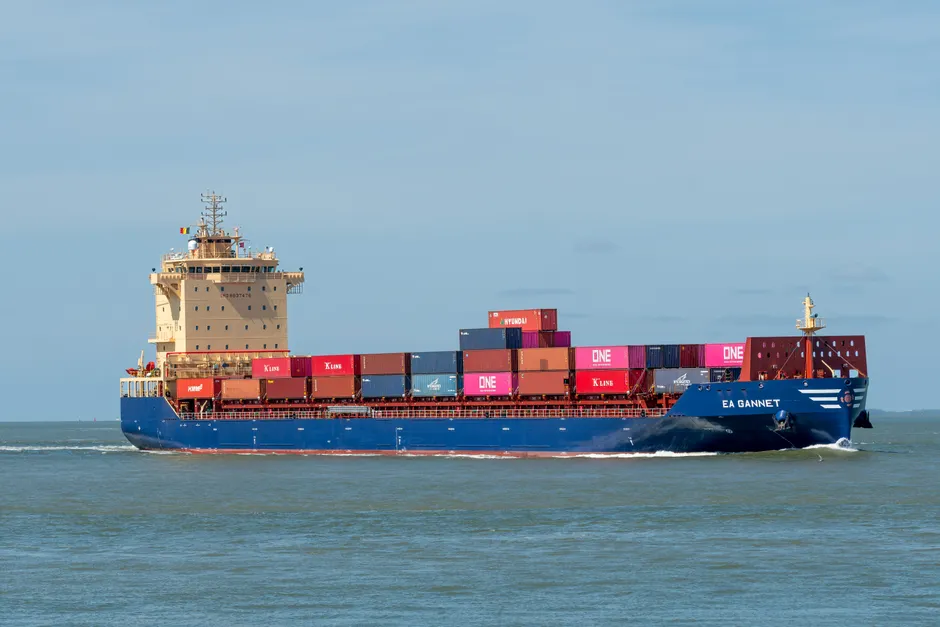
Iran has warned Ukraine that a drone strike on an Iranian-flagged commercial vessel in the Caspian Sea on July 25, 2026, which killed one sailor and injured several others, "cannot go unanswered," escalating a crisis that now directly entangles Tehran in the Russia-Ukraine war's maritime theater.
Iranian Foreign Minister Abbas Araghchi issued the warning in a social media post on Sunday, July 26, and reinforced it in phone calls with EU foreign policy chief Kaja Kallas and Russian Foreign Minister Sergey Lavrov. He called the Ukrainian attack a violation of the United Nations Charter. Al Jazeera
Ukraine said it had targeted a Russian warship and vessels used for transporting Iranian-linked military cargo in the Caspian Sea. President Volodymyr Zelenskyy posted on X that Ukraine had achieved "very strong results" with long-range strikes, including against vessels involved in military cargo shipments connected to Iran and a warship. He accused Russia of supplying Iran with military support, citing what he described as active Russian satellite surveillance of Gulf states and U.S. military facilities since the beginning of July 2026. Al Jazeera
Anadolu Agency characterized the July 25 attack as a drone strike. Iran's state news agency IRNA described the targeted vessel as "Iranian-flagged" and reported the incident occurred "early Saturday." Anadolu Agency; IRNA
Iran's Foreign Ministry stated that Iran "has never intervened in the conflict between Russia and Ukraine." Tehran summoned Ukraine's charge d'affaires in protest, formally characterizing the strike as a "hostile and criminal act." Senior Iranian lawmaker Ebrahim Azizi, head of parliament's National Security and Foreign Policy Commission, posted on X warning that Ukraine could face retaliation and calling the attack "miscalculated." Al Jazeera
Araghchi accused Israel of provoking the attack, claiming Ukraine struck the Iranian vessel "at Israel's behest," according to the Times of Israel. He said Israel was attempting to "drag Europe into its war." Times of Israel
Russian Foreign Minister Lavrov offered condolences over the sailor's death in a statement on the Russian Foreign Ministry's website. Araghchi thanked local authorities in Russia's Astrakhan region for assisting the crew and stressed the need to "put an end to such adventures by the Kyiv regime." He also informed Lavrov of "continuing diplomatic efforts aimed at de-escalating tension in the Middle East." Al Jazeera
The strike and Iran's response mark a notable widening of the conflict's geographic footprint. The Caspian Sea, bordered by Russia, Iran, Kazakhstan, Azerbaijan, and Turkmenistan, has until now been largely peripheral to the active combat zones of the Russia-Ukraine war. Ukraine's assertion that it targeted vessels linked to Iranian military cargo transports dovetails with Kyiv's longstanding argument that Tehran has materially supported Moscow's war effort, despite Iran's explicit denial of involvement. The competing claims present a direct factual dispute: Iran maintains the struck vessel was a commercial ship, while Ukraine frames the same target as part of a military supply chain.
Araghchi's decision to engage both Kaja Kallas and Sergey Lavrov in the same diplomatic sequence signals Tehran's effort to manage the crisis across two audiences simultaneously. The call with Lavrov consolidated the Iranian-Russian position and produced a coordinated condolence-and-condemnation response. The call with Kallas suggests Iran is testing whether European capitals will distance themselves from a Ukrainian operation that struck a non-belligerent state's flagged vessel in a body of water with no direct connection to the Black Sea theater.
The framing of Israel as the provocateur serves multiple purposes for Tehran. It deflects direct bilateral tension with Kyiv by inserting a third party, reinforces Iran's narrative that Israel is broadening the scope of regional and now European conflicts, and positions Iran as a victim of proxy manipulation rather than an active conflict participant. Whether European capitals accept that framing is another matter entirely.
Iran's stated retaliation has not been specified in kind, timing, or target. The phrase "cannot go unanswered" is a rhetorical commitment, not an operational one. But the combination of a formal diplomatic protest, a parliamentary warning from the National Security and Foreign Policy Commission, and public statements from the foreign minister establishes a clear escalatory trajectory. Iran now has a concrete casus belli, a fatality, and a violated-flag claim to work with.
The broader context here is that Ukraine has demonstrated the reach to conduct long-range strikes in the Caspian Sea, a capability with implications beyond this single engagement. If Tehran retaliates directly against Ukrainian assets or personnel, the Russia-Ukraine war would acquire a second state-level adversary for Iran, alongside its ongoing regional confrontation with Israel. That convergence, should it materialize, would further complicate European diplomacy and place additional pressure on the question of whether Iran's military relationship with Russia is as passive as Tehran insists.