Pro-Palestine Protesters Challenge Queensland's Slogan Ban in High Court
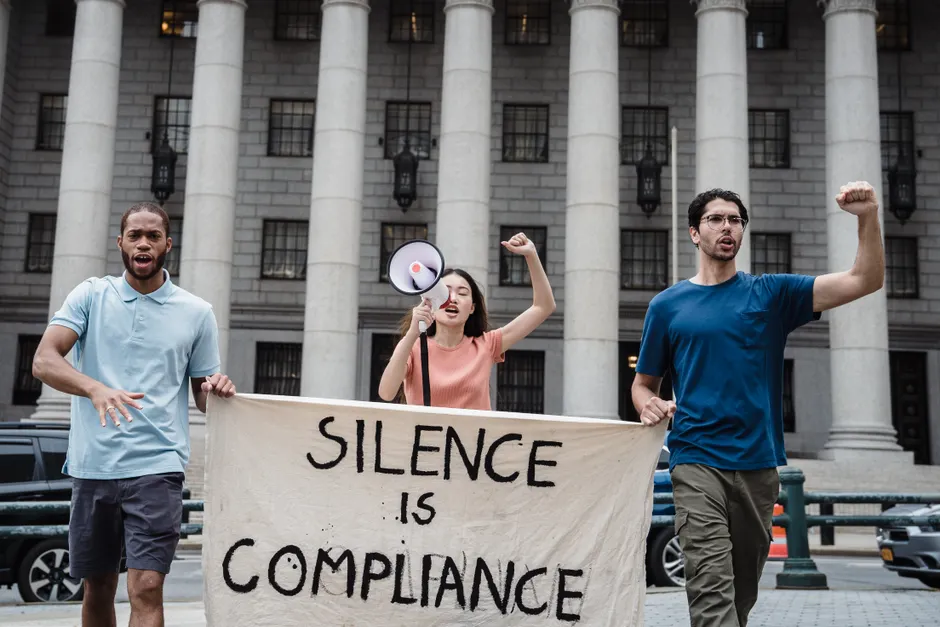
Seven pro-Palestine protesters have filed a constitutional challenge in the High Court of Australia against Queensland's criminal ban on the phrases "from the river to the sea" and "globalise the intifada," legislation that has resulted in more than 30 arrests since taking effect in March 2026 The Guardian.
The lawsuit, filed on behalf of the seven plaintiffs, alleges that the ban is a direct, content-based restriction on political speech that effectively targets the pro-Palestine movement. The challenge rests on two principal constitutional grounds: first, that the law imposes a burden on the implied freedom of political communication protected by the Australian Constitution without serving a legitimate purpose; and second, that it creates inequality and discrimination by outlawing the expression of particular perspectives in political discourse The Guardian.
The lead applicant is Remah Naji, a member of the Justice for Palestine group, joined by six other protesters. Four of the seven plaintiffs — Stephen Heydt, Ed Carroll, Sam Watson and Kathryn Dennehy — were arrested and charged with breaching the law at rallies in April and June 2026 The Guardian. Those arrested allege they were searched by police and detained in a police watch house for up to eight hours The Guardian. Watson had previously participated in the Global Samud flotilla The Guardian.
The Queensland legislation, formally titled the Fighting Antisemitism and Keeping Guns out of the Hands… Act 2026 (2026 Act No. 4), was introduced as Bill No. 8 of 2026 in the Queensland Parliament Queensland Legislation. Section 7 of the Act inserted section 52DA into the Criminal Code Act 1899, which criminalises reciting, distributing, publishing or displaying either banned expression where it might reasonably be expected to cause a member of the public to feel menaced, harassed or offended The Guardian. The offence carries a maximum penalty of two years' imprisonment. Notably, the provision requires no actual victim to exist; the test is purely hypothetical — whether a reasonable person might experience those effects The Guardian.
Section 8 of the same Act also replaced section 206 of the Criminal Code Act 1899, which had dealt with offering violence to officiating ministers of religion Queensland Legislation. The in-force version of the Criminal Code Act 1899 as at 16 July 2026 confirms the ban in section 52DA Queensland Legislation.
Queensland's Liberal National Party government passed the laws in response to the Bondi terrorist attack in December 2025 The Guardian. Premier David Crisafulli justified the ban by stating the phrases are antisemitic and constitute "the hatred that allowed what came on to the shores of Bondi" The Guardian.
The enforcement record since March has been extensive. More than 30 people have been arrested and charged under the laws The Guardian. Among the earliest charged was a Jewish man wearing a shirt reading "Jews for a free Palestine from the river to the sea" The Guardian. In April 2026, ABC News reported that 70-year-old peace activist Jim Dowling had been arrested and charged for displaying a "From the River to the Sea" banner, with a court appearance scheduled for 14 April 2026 ABC News. SBS News reported that more than 20 people were arrested across two Brisbane protests over a single weekend opposing the ban SBS News.
The constitutional architecture at issue here is Australia's implied freedom of political communication, a doctrine developed by the High Court rather than enshrined in constitutional text. The doctrine does not function as a broad free-speech guarantee comparable to the First Amendment of the United States Constitution; it operates as a structural constraint on legislative and executive power, invalidating laws that impermissibly burden political communication unless they serve a legitimate purpose and are proportionate to that purpose. The plaintiffs' contention that the Queensland ban lacks a legitimate purpose targets the second limb of that analytical framework. The University of Queensland Law Journal has published an academic analysis by Derick MJ Luong titled "FROM THE RIVER TO THE SEA: WILL THE CONSTITUTION ALLOW IT?" examining precisely the constitutional validity question the litigation now poses in earnest UQ Law Journal.
Several features of the legislation compound the constitutional vulnerability the plaintiffs identify. The ban is content-based and viewpoint-specific, targeting two particular expressions tied to a single political movement. The absence of any requirement that an actual victim exist lowers the threshold for prosecution considerably and broadens the scope of police discretion. And the inclusion of "offended" in the test, alongside "menaced" and "harassed," means the threshold for criminal liability may be triggered by subjective offence rather than objective threat, a distinction the High Court has scrutinised in prior implied-freedom jurisprudence.
The broader context here involves the intersection of counterterrorism responses and free-expression protections in a jurisdiction lacking a statutory bill of rights. Queensland passed the legislation under the political pressure of a mass-casualty event, bundling the slogan ban into a broader statute whose short title references both antisemitism and firearms control. That legislative packaging reflects a strategy of embedding speech restrictions within a security-oriented frame, which may strengthen the government's argument that the ban serves a legitimate protective purpose. The plaintiffs will need to demonstrate that the connection between two protest slogans and a terrorist attack is insufficiently direct to satisfy the proportionality requirements the High Court has developed.
The case also raises questions about the chilling effect of criminal sanctions on political protest in Australia, particularly for movements whose rhetoric is contested. That a Jewish protester was among those charged, and that the plaintiffs include long-standing peace activists, complicates the government's framing of the banned phrases as inherently antisemitic. The High Court will ultimately determine whether Queensland's legislative choice to criminalise specific political language survives constitutional scrutiny or whether the implied freedom demands a wider berth for contested expression in the Australian polity.


