US Walks Out of UN Security Council Meeting as France-Ukraine Diplomatic Row Escalates
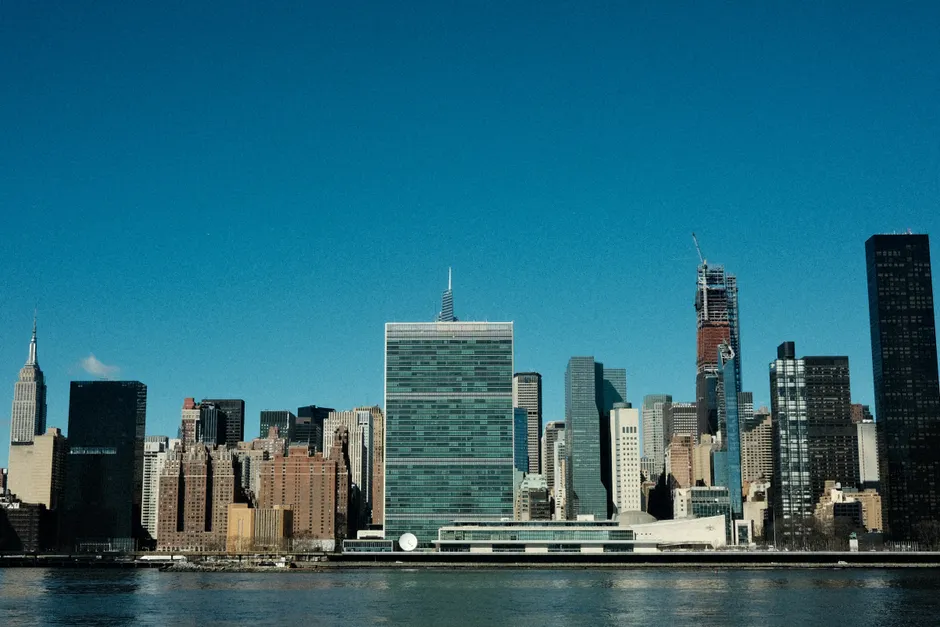
The US delegation walked out of a UN Security Council meeting on the war in Ukraine on July 27, 2026, as France was addressing the chamber. The walkout escalated a diplomatic confrontation that began over the US vote against extending UN High Commissioner for Human Rights Volker Türk's term, a vote in which Washington found itself aligned with North Korea and Russia.
The General Assembly approved Türk's second term with 144 states in favour, 10 against, and 13 abstentions. The US was among the ten opposed. France's UN Mission in Geneva responded pointedly: "The US used to be a beacon of human rights. Not anymore." French Ambassador Jerome Bonnafont defended Türk as "a voice of conscience" who demonstrated "rigor and impartiality" during his first term. BBC News
Türk has criticised Russia's war in Ukraine and Israel's conduct in Gaza during his tenure, positions that placed him at odds with US policy on at least one of those files. His reappointment was widely expected to pass by a large margin, which it did. The US opposition, then, was more symbolic than outcome-determinative, but it set the stage for the Security Council walkout that followed.
When France took the floor during the Council's Ukraine session, the US delegation departed. The walkout was a direct protest against French comments that compared Washington's human rights voting record to that of authoritarian states. Reuters corroborated the sequence of events in a wire report published July 27. Reuters
US Ambassador to the UN Mike Waltz accused France of supporting someone who had been "lecturing" democratic countries while "cozying up to the world's worst oppressors." Deputy US Ambassador Dan Negrea went further, accusing France of feigning "moral outrage" and pretending to lecture the world. Negrea said the US delegation would continue similar stands until France "renounces their condescending and disrespectful rhetoric." AP News
US Ambassador Jeff Bartos criticised Türk's reappointment and warned that "there will be consequences" for the assembly that "tolerates procedural overreach, backroom deals, and the misuse of UN posts." Bartos said "The United States will immediately reassess our engagement, participation, and funding" regarding the UN. BBC News
That funding threat carries practical weight. Washington has already cut funding for UN agencies and withdrawn from dozens of UN entities. A broader reassessment of engagement and participation, if pursued, would affect the US footprint across the UN system, from Security Council logistics to specialized agency memberships. The phrase "immediately reassess" signals intent rather than a completed policy shift, but it builds on an existing pattern of disengagement.
Deputy UN spokesperson Farhan Haq declined to comment on the US walkout and said the UN expected all member states to respect the General Assembly's decision on Türk's extension. BBC News
The broader context here is a realignment of US positioning within multilateral institutions. Voting alongside North Korea and Russia against a human rights mandate that passed with 144 votes is a deliberate signal, not an accidental coalition. The Trump administration's UN team has framed Türk's criticism of Israel's Gaza conduct as evidence of bias, and the vote against his extension fits that argument. France's decision to frame the US stance as a betrayal of its historical human rights role raises the temperature in a relationship that has functioned, until now, as a reliable Atlanticist partnership at the UN.
What comes next hinges on whether the US follows through on Bartos's funding reassessment and whether Negrea's pledge to repeat walkouts becomes a pattern. If the US delegation stages similar departures in future Council sessions, the procedural fabric of the Security Council, where sustained presence matters for consensus-building and backchannel diplomacy, could be affected. France, for its part, has shown no indication of backing away from its characterization. The standoff leaves the Council's western caucus fractured at a moment when the Ukraine agenda remains the body's most active conflict file.


