AI Chip Sell-Off Wipes Billions From Samsung, SK Hynix as China DUV Breakthrough and Nvidia Risk Spook Markets
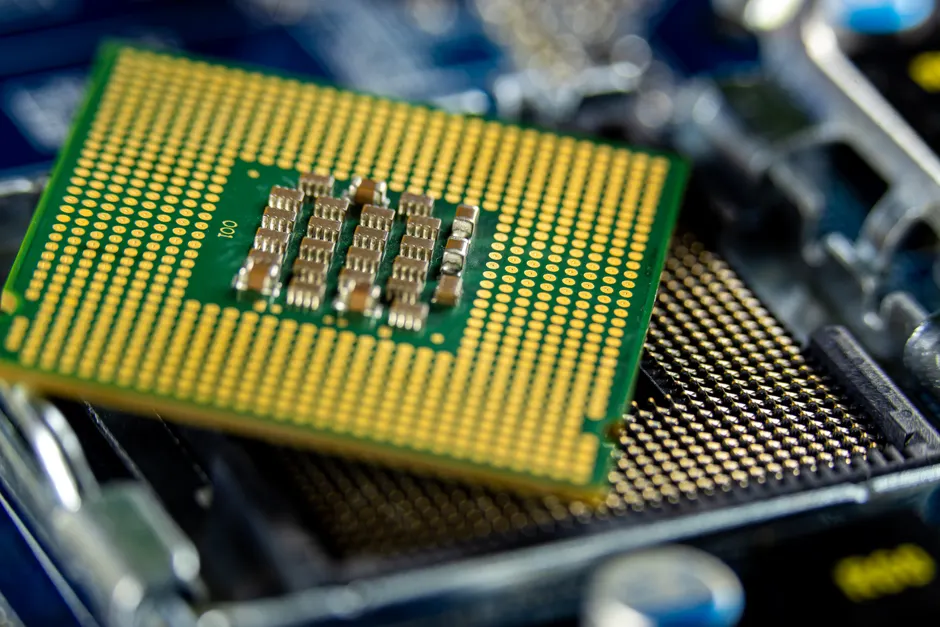
South Korea's Kospi index plunged 10.84% to close at 6,023.66 on July 28, 2026, as SK Hynix and Samsung Electronics shares collapsed by 14.7% and 13.4% respectively, triggering two trading halts on the Korea Exchange and sending shockwaves through global semiconductor equities. The rout, among the sharpest single-day declines in Asian chip stocks this year, was driven by a convergence of two catalysts: news that China has begun mass production of homegrown deep ultraviolet (DUV) lithography tools, and mounting investor anxiety over Nvidia's financial exposure to a $250 billion datacentre project.
SK Hynix closed at 1,550,000 KRW in Seoul, down 266,000 KRW on the session, with Reuters reporting a 14.7% drop; earlier intraday figures from Yahoo Finance showed declines of nearly 13% for SK Hynix and over 12% for Samsung in early trading before losses deepened. SK Hynix's US-listed shares closed below their $149 listing price, a psychologically significant threshold given the company raised over $26 billion through American Depositary Receipts priced at $149 each in a July 2026 offering whose SEC registration was declared effective on July 9. The Kospi's close at 6,023.66 marked its lowest level since mid-April and its biggest single-day decline since early March, according to Reuters and Korea Economic Daily data.
The Korea Exchange briefly suspended Kospi trading twice as circuit breakers tripped on the steep declines in the index's two heaviest semiconductor components, per the Wall Street Journal and Seeking Alpha. The selloff was not confined to Asia. When Wall Street opened, Intel, AMD, SanDisk, Western Digital, and Seagate Technology all fell by more than 4%, per The Guardian.
The trigger that crystallized the selloff came from The Information, which reported that China has begun mass production of domestically developed DUV chip-making tools. DUV lithography is the workhorse technology for mature-node semiconductor manufacturing and remains a critical layer for many memory and logic chips. The prospect of a self-sufficient Chinese equipment supply chain threatens the competitive moat that South Korean and US chipmakers have relied on as Washington and its allies have restricted China's access to advanced semiconductor manufacturing equipment. Reuters attributed the Samsung and SK Hynix slides to "Nvidia financing worries" and "China competition," linking the two threads.
The Nvidia concern has been building since July 27. The Wall Street Journal reported that Nvidia was in discussions with OpenAI to provide $250 billion for a datacentre project in Ohio. On the same day, Nvidia shares closed 5% lower and fell below $200 per share. Credit default swaps on Nvidia's five-year debt spiked, according to Swissquote senior analyst Ipek Ozkardeskaya, signalling that derivatives markets were pricing in materially higher default risk for the AI chipmaker whose valuation has anchored the entire AI hardware trade. The CDS widening matters: it reflects not just equity de-risking but a reassessment of Nvidia's creditworthiness as its capital commitment to the OpenAI project looms.
Compounding the China-competition narrative, shares in Chinese memory chip maker CXMT surged 466% on their Shanghai stock exchange debut on July 27, 2026. CXMT's explosive first-day performance stood in stark contrast to the carnage across Korean and US chip names, visually reinforcing for investors the thesis that domestic Chinese capacity is rising just as the incumbent players face questions about their own growth trajectories.
Not all analysts shared the market's alarm. Morningstar equity analyst Jing Jie Yu characterized the chip sell-off as "largely a kneejerk reaction and overdone," attributing the move to fears about China's chip-making equipment progress rather than to fundamental deterioration in the Korean or American chipmakers' businesses. That assessment carries weight but will be tested against incoming earnings data.
The timing is particularly fraught. Samsung Electronics has scheduled its Q2 2026 earnings call for 10 a.m. on July 30, two days after the rout. Investors will scrutinize management's commentary on memory pricing, AI-driven demand, and the competitive threat from Chinese DUV production. Samsung's earnings release schedule was published on July 7, just as a prior wave of chip-stock volatility was gathering force: Nasdaq futures fell on July 7 after Samsung's record quarterly profit failed to calm market jitters, and on July 8, SK Hynix dropped as much as 7.6% in a sell-off that followed overnight weakness in US semiconductor names on AI-spending sustainability concerns.
SK Hynix's own July has been volatile. After its Nasdaq ADR debut, Seoul-listed shares fell as much as 4.4% on July 13, then surged 13% on July 15 as a US stock rally, spurred by soft inflation data, lifted semiconductor names globally. That whipsaw pattern, a sharp drop followed by a sharp recovery, is now playing out at a far larger scale.
The July 28 selloff differs from earlier July tremors in both magnitude and the specificity of the catalyst. The DUV production report gives investors a concrete, structural reason to reassess the competitive landscape in memory and mature-node semiconductors, while the Nvidia CDS widening introduces a credit-risk dimension to what had been a purely equity-driven AI correction. Whether Morningstar's "overdone" characterization holds will depend heavily on what Samsung says on July 30 and on whether further details emerge on China's DUV production scale and timeline.


