IRGC Launches Ballistic Missiles at US Base in Jordan, Breaking Ceasefire Pause
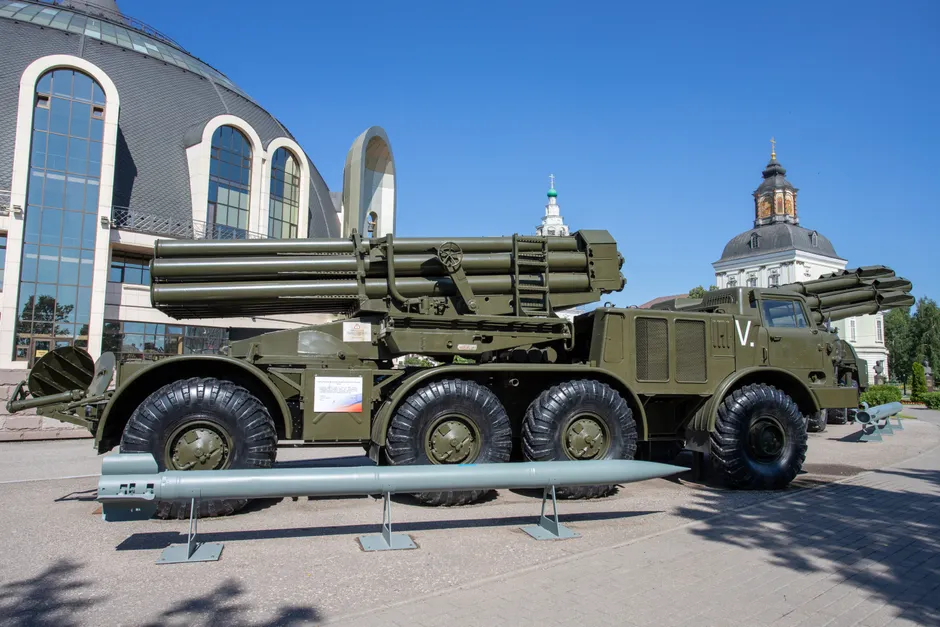
Iran's Islamic Revolutionary Guard Corps (IRGC) launched multiple ballistic missiles at US forces stationed at a base in Jordan on July 29, 2026, at 5:45 PM ET, according to a US Central Command (Centcom) statement. Centcom stated that all incoming Iranian ballistic missiles were successfully intercepted, with no impact on US forces or facilities. The target was identified as a US base in Jordan by a US official cited by Axios and reported by The Guardian.
The attack broke a weekend pause in hostilities that had held while mediators attempted to bring the opposing sides into negotiations and toward a ceasefire. The Times of Israel characterized the launch as an "attempted surprise attack on US forces." According to Moneycontrol, the strike was the first IRGC ballistic missile attack on a US base in Jordan since former President Trump paused strikes.
The IRGC offered a broader account of its own operations. In a claim reported by Deutsche Welle on July 12, the IRGC stated that its forces had targeted US bases in Jordan, Kuwait, Bahrain, and Qatar using a combination of ballistic missiles and drones. The Guardian's July 29 reporting, however, does not identify Kuwait or Bahrain as specific targets of the July 29 attack.
The missile launch coincided with a visit to Washington by Israeli Prime Minister Benjamin Netanyahu. The timing of the strike during a high-profile diplomatic engagement between the Israeli leader and the US administration adds a layer of political signaling to the military action, though the IRGC has not publicly linked the two events.
The broader regional picture surrounding the strike is one of escalating multi-front activity involving Iran-aligned actors. On July 28, 2026, Saudi Arabia announced that it had shot down drones launched by Iran-backed militias in Iraq for a second consecutive day. Iraqi Prime Minister Ali al-Zaidi ordered security agencies to investigate the Saudi allegations of drone attacks originating from Iraqi territory. The Islamic Resistance in Iraq, an umbrella group of Iran-backed armed factions, denied involvement and dismissed the Saudi claims as "fabrications."
Separately, the Iran-backed Houthis in Yemen claimed to have forced a Saudi oil tanker to reverse course. The group presented the incident as part of a blockade on Saudi shipping that the Houthis announced in late July 2026. This shipping disruption, combined with the drone incidents along the Saudi-Iraqi border and the direct IRGC missile launch, traces an arc of coordinated pressure across multiple theaters involving US and Saudi assets.
The July 29 IRGC strike and the surrounding proxy activity converge on a critical question for regional security architecture: whether the weekend mediation effort can survive a direct ballistic missile attack on US forces, or whether the intercept-and-escalate cycle has displaced the diplomatic track. The fact that all missiles were intercepted lowers the immediate pressure for a retaliatory strike, but it does not eliminate it. Washington now faces a decision matrix shaped by the Trump-era pause precedent and by the simultaneous multi-front activity involving Iranian proxies in Iraq, Yemen, and potentially the Gulf states.
The discrepancy between the IRGC's claimed target list, which included Kuwait, Bahrain, and Qatar, and the US-confirmed single target in Jordan is worth tracking. If subsequent US or allied reporting confirms strikes or attempted strikes at additional sites, the scale of the operation, and the corresponding escalation calculus, shifts considerably. For now, the verified picture from the most recent reporting centers on Jordan, a successful interception, and a collapsed ceasefire pause at a moment when the Israeli prime minister was on US soil.


