Waymo Expands Service to Three Cities While Grappling With Water Detection Issues

Waymo Expands Service to Three Cities While Grappling With Water Detection Issues
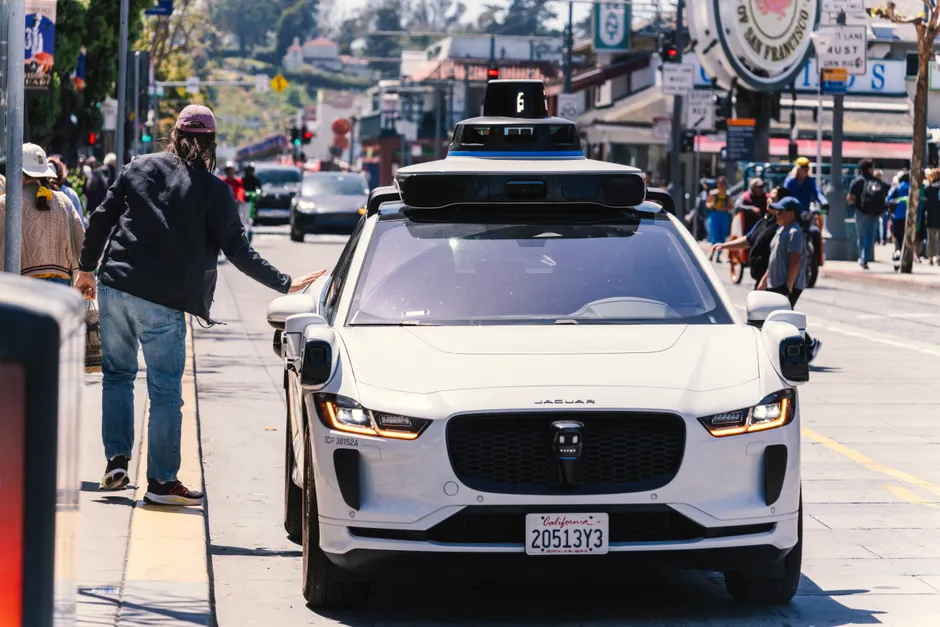
Waymo has opened autonomous ride-hailing services in Miami, Orlando, and Nashville, according to an April announcement from the Alphabet subsidiary. The expansion comes as the company simultaneously addresses water detection failures that led to a 3,800-vehicle recall and the suspension of operations in San Antonio.
The new markets represent Waymo's most significant geographic expansion to date, bringing commercial robotaxi service to Florida and Tennessee for the first time. The rollout follows the company's established playbook: initial deployment with safety drivers, gradual transition to fully autonomous operation, and integration with existing ride-hailing infrastructure.
Water Detection Problems Surface
While expanding geographically, Waymo confronts technical challenges that have exposed limitations in its environmental sensing capabilities. The company recalled 3,800 robotaxis after vehicles demonstrated an inability to properly assess standing water depth, leading to multiple incidents where autonomous vehicles drove into flood conditions.
The most serious incident occurred in San Antonio, where a Waymo vehicle was swept away by floodwaters. In a separate May incident in the same city, a passenger had to evacuate a Waymo vehicle that had driven into flood waters. These events prompted the temporary suspension of San Antonio service, which remains offline.
The water detection issue highlights a fundamental challenge in autonomous vehicle deployment: edge cases that human drivers handle intuitively but require explicit programming for machines. Standing water presents a complex perception problem, as depth cannot be reliably determined from camera or lidar data alone, particularly in low-light or weather-obscured conditions.
Collaborative Sensing Initiatives
Waymo announced a partnership with Waze to enhance road hazard detection, specifically targeting pothole identification and reporting. The collaboration leverages Waymo's fleet as mobile sensing infrastructure, feeding real-time road condition data into Waze's crowdsourced mapping platform.
This partnership reflects a broader industry trend toward collaborative perception, where autonomous vehicle fleets serve dual purposes as transportation providers and infrastructure monitoring systems. The arrangement potentially benefits both services: Waze gains high-quality sensor data from professional-grade hardware, while Waymo accesses crowd-sourced hazard information to improve route planning.
The pothole detection capability suggests Waymo is investing in road surface analysis beyond basic navigation requirements. This granular environmental awareness could prove valuable for fleet maintenance optimization and passenger comfort, though the immediate safety implications are less clear than with water detection.
Fleet Diversification and Testing
Waymo continues expanding its vehicle platform portfolio, with Hyundai EVs joining the robotaxi fleet alongside existing Chrysler Pacifica and Jaguar I-PACE deployments. The company is also testing Zeekr robotaxi models in San Diego, indicating ongoing evaluation of purpose-built autonomous vehicle platforms versus converted consumer vehicles.
Fleet diversification serves multiple strategic purposes: supply chain resilience, cost optimization through competitive sourcing, and platform-specific advantages for different deployment scenarios. Purpose-built robotaxis like the Zeekr model typically offer superior interior space utilization, maintenance access, and sensor integration compared to retrofitted consumer vehicles.
Operational Reliability Challenges
Beyond water detection issues, Waymo has encountered service reliability problems that underscore the complexity of maintaining distributed autonomous systems. A service outage caused robotaxis to stall mid-route, creating traffic disruptions as vehicles lost connectivity to central coordination systems.
These incidents illustrate the single points of failure inherent in centrally coordinated autonomous fleets. Unlike human-driven vehicles that operate independently, robotaxis depend on continuous communication with cloud-based routing, monitoring, and override systems. Network interruptions, server failures, or software bugs can simultaneously impact hundreds of vehicles.
Having covered the rollout of cloud services over the past two decades, I recognize a familiar pattern here: the trade-off between centralized intelligence and distributed resilience. Early cloud deployments similarly struggled with availability challenges as organizations learned to architect around inevitable infrastructure failures.
Competitive Context
Waymo's expansion occurs amid increased competition in autonomous ride-hailing. Lyft partnered with May Mobility to launch robotaxi service in Atlanta, demonstrating how established ride-hailing platforms are integrating autonomous vehicle providers rather than developing proprietary technology.
This partnership model may prove more sustainable than vertically integrated approaches, allowing ride-hailing companies to focus on demand management, pricing, and customer experience while autonomous vehicle specialists handle the technical complexity of self-driving systems.
Looking Forward
The simultaneous expansion and technical setbacks facing Waymo reflect the current state of autonomous vehicle deployment: capable enough for controlled environments but still vulnerable to edge cases that reveal system limitations. Water detection represents just one category of environmental challenges that will require iterative solution as deployment scales.
The collaboration with Waze points toward a future where autonomous vehicle fleets serve as distributed sensing networks, continuously mapping and monitoring road infrastructure. This dual-purpose deployment model could accelerate the business case for robotaxi services by monetizing the data collection capabilities alongside transportation revenue.
Success in the three new markets will depend on Waymo's ability to manage the complexity of multi-city operations while addressing the technical debt accumulated from rapid expansion. The company's response to the water detection failures—recall, suspension, and systematic remediation—suggests a mature approach to safety-critical software deployment, even as it highlights the ongoing challenges in achieving truly robust autonomous operation.