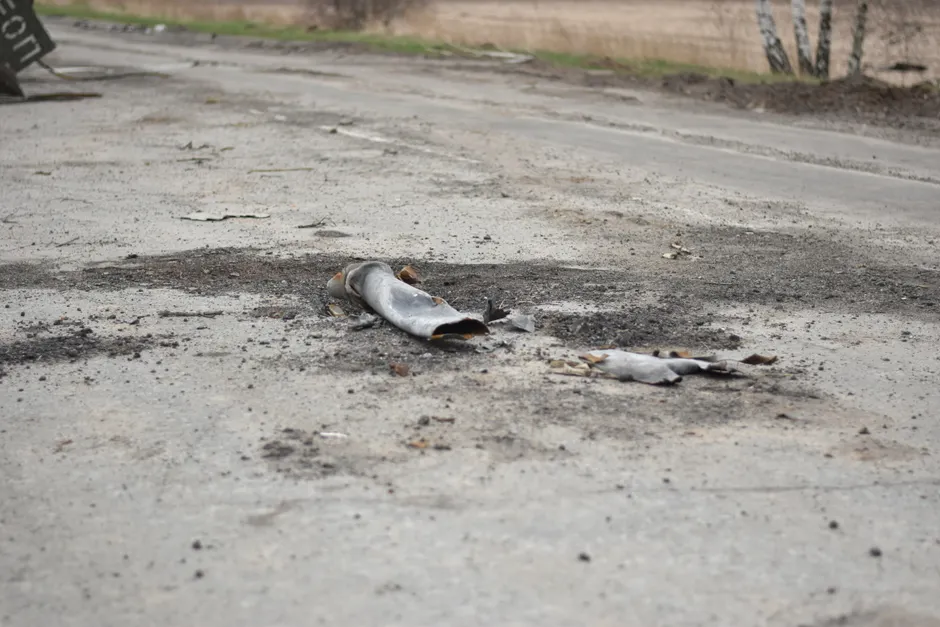
Russia Launches Massive Overnight Missile and Drone Barrage Across Ukraine, Killing at Least 14

Russia launched 70 missiles, many of them ballistic, and over 280 drones in an overnight attack on Ukraine on July 30, 2026, according to Ukrainian President Volodymyr Zelensky. The Independent. At least 14 people were killed in Russian air strikes across the country, including one person in Kyiv, Al Jazeera reported.
The scale of the barrage was exceptional in both the number of munitions and their mix. Zelensky said many of the 70 missiles were ballistic, a category that includes systems such as the Iskander-M, which Al Jazeera identified as responsible for the single fatality in Kyiv. Ukraine's air defenses intercepted more than 260 drones during the attacks, Zelensky said, but he cited a critical shortage of air defense capabilities as a constraining factor. CNN. The interception rate, while high in absolute terms, left a substantial portion of the incoming munitions unaddressed, with lethal consequences across multiple cities.
Casualty figures varied across outlets in the initial hours. The Kyiv Independent reported at least 8 killed and 38 injured across Ukraine, while Al Jazeera's later reporting placed the death toll at 14. The Associated Press, in a report published July 19, documented Russian attacks using missiles, drones, and bombs that killed at least six people and wounded dozens in Kyiv and other Ukrainian cities. AP. The earlier AP figures appear to reflect a preceding wave of strikes rather than the July 30 barrage itself.
The July 30 attack did not come without warning. Zelensky had warned on July 29 that a Russian attack was imminent, one day before the strikes materialized. Al Jazeera. That advance notice did not prevent casualties, and it underscores the gap between early warning and active interception capacity, particularly when the incoming volume includes large numbers of ballistic missiles traveling at speeds that compress decision windows to minutes or seconds.
Poland scrambled fighter jets in response to the attack, Reuters reported. The activation of Polish air assets is a standard NATO forward-edge protocol when Russian missile and drone trajectories approach or enter Polish airspace monitoring zones, and it reflects the Alliance's standing concern about trajectory spillover from large-scale barrages launched from Belarus or western Russia.
The broader context here is the trajectory of the air war itself. Russia's combined use of drones and ballistic missiles in a single coordinated overnight strike represents a doctrinal pattern that has intensified over the course of 2026. Drones, cheaper and slower, saturate and deplete air defense inventories; ballistic missiles, faster and harder to intercept, follow to strike targets that the drone wave has exposed. Zelensky's explicit mention of a "critical shortage" of air defense is the key strategic signal in his statement. It signals that Ukraine's interception capacity is being eroded not just by the pace of Russian production and launches but by the cumulative drain on interceptor stockpiles across successive large-scale barrages.
The casualty disparity between initial and later reporting also warrants attention. The Kyiv Independent's figure of 8 killed, reported on July 29, likely reflects a partial count compiled during the active phase of the attack. Al Jazeera's figure of 14, published July 30, incorporates subsequent recovery and confirmation. In fast-moving strike reporting, death tolls are almost always understated in the first hours and revised upward as debris is cleared and regional authorities consolidate their counts.
For NATO planners, Poland's scrambling of fighter jets is a procedural indicator, not an escalation. But the frequency of such activations has increased as Russian strike packages have grown larger, and each instance raises the same question that has persisted since the war's first weeks: at what volume of incoming munitions does a bordering state's defensive posture shift from monitoring to active engagement? That line has not been crossed. The pattern, however, is one of incremental pressure on the threshold.