US-Iran Escalation and the Oil Market Whipsaw: A Timeline of Strikes, Pauses, and Price Volatility

Oil prices steadied on July 30, 2026, in a volatile session as traders assessed the escalating conflict between the United States and Iran, capping a week of violent price swings that saw Brent crude move 6% lower, then 7% higher, within 72 hours (Reuters). The conflict's trajectory from sustained bombing campaign to abrupt pause, and now to a new joint front with Saudi Arabia, has left energy markets pricing geopolitical risk in near-real time.
The current escalation traces to a layered series of provocations and retaliations. The Pentagon confirmed it successfully intercepted an Iranian missile attack on U.S. forces in the Middle East on June 16, 2026 (Politico). Iran's attacks on commercial shipping in the Strait of Hormuz intensified through late June. CENTCOM struck Iranian air defense systems, ground control stations, and surveillance radar near the Strait with precision munitions on June 9 (CENTCOM), followed by additional strikes on June 27 in direct response to continued Iranian aggression against commercial shipping (CENTCOM). Around July 20, Iran attacked a tanker in the Strait of Hormuz, forcing its crew to abandon ship (AP News). Three ships were attacked in the Strait area on July 6-7, provoking further U.S. strikes (Britannica).
The retaliatory campaign formally designated "Epic Fury" saw CENTCOM complete its 13th consecutive night of strikes on Iranian military targets by July 24 (Defense.gov). The White House confirmed in Statements of Administration Policy that U.S. strikes commenced on July 7 at the President's direction, targeting missile launch sites and air defenses within Iran (White House). CENTCOM announced on July 7 that its forces had completed a new round of offensive strikes hitting over 80 targets with precision munitions (CENTCOM). A second CENTCOM release documented strikes against approximately 90 military targets on July 7-8 (CENTCOM). The New York Times reported on July 10 that Pentagon officials characterized the two days of strikes as a clear escalation (NYT). Strikes on July 18 were launched in retaliation for the deaths of U.S. service members (Al Jazeera, NPR).
The nuclear dimension predates the July campaign. In June 2025, CENTCOM conducted an overnight strike on three Iranian nuclear sites. Secretary of Defense Pete Hegseth and Chairman of the Joint Chiefs of Staff Dan Caine publicly praised the operation's success (Defense.gov). The strike on the Fordow Fuel Enrichment Plant used 30,000-pound GBU-57 "massive ordnance penetrator" bombs, described by the Pentagon as "historically successful" and "15 years in the making" (Defense.gov). The Fordow strike was revisited in context around July 22, 2026.
On the congressional front, the White House issued Statements of Administration Policy opposing both S.J.Res. 180 and H. Con. Res. 89, resolutions directing the removal of U.S. armed forces from hostilities against Iran (White House, White House). President Trump delivered a video address on July 8 providing an update on the retaliatory strikes (White House).
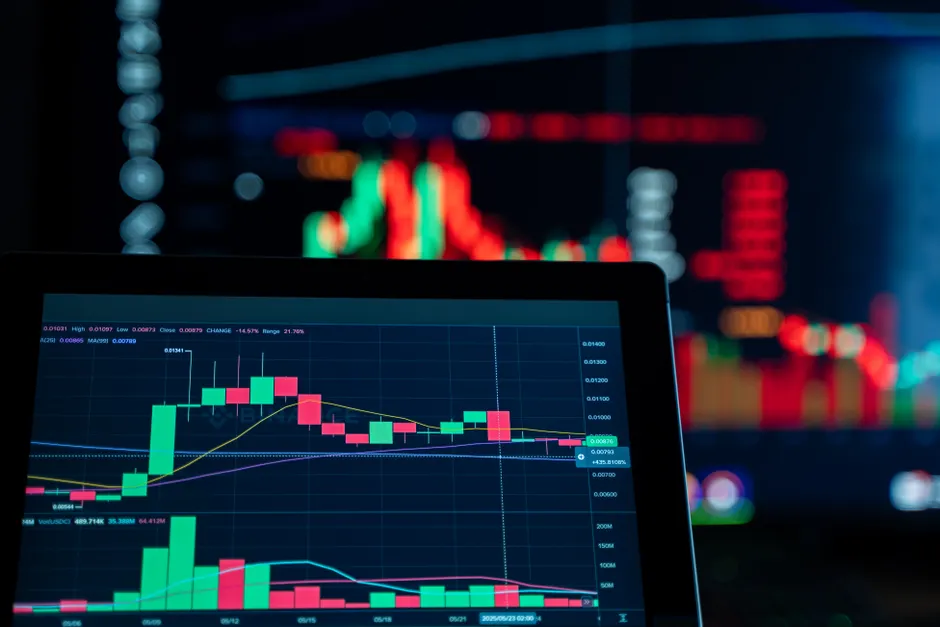
The oil market response has been a textbook case of geopolitical risk repricing in compressed timeframes. Brent settled at $94.07 on July 22, up $3.06 or 3.36%, after hitting a session high of $95, the highest in nearly six weeks (Reuters). Prices cratered over 6% on July 26 after the U.S. abruptly suspended its airstrike campaign over the weekend (Reuters). Brent fell another 4.8%, or $4.27, on July 28 as several days passed without strikes (Reuters). Then prices snapped back 7% on July 29 when the U.S. and Saudi Arabia launched joint strikes on Iran-backed groups in Iraq, blamed for drone attacks on Saudi oil facilities (Reuters).
The pivot from unilateral U.S. strikes on Iranian soil to joint U.S.-Saudi operations against proxy groups in Iraq marks a distinct phase. Iran also retaliated against Gulf states during the conflict, according to NPR reporting (NPR). The entry of Saudi Arabia as a direct participant in retaliatory strikes, rather than merely a victim of proxy attacks, widens the conflict's coalition footprint and introduces a new vector for supply-disruption risk.
For market participants, the core tension is straightforward. The pause in direct strikes on Iran that triggered the July 26-28 sell-off proved short-lived. The joint U.S.-Saudi action on July 29 demonstrated that de-escalation in one theater can coincide with escalation in another. With tankers continuing to transit Middle East conflict zones and Congress simultaneously debating withdrawal resolutions, the spread between best-case and worst-case supply scenarios remains historically wide. The July 30 session's relative stability, with prices steady rather than falling, suggests traders are pricing in a floor under the assumption that strikes will resume.
Separately, the White House noted in a March 2026 release that Iranian-backed militias wounded two U.S. service members in rocket and drone attacks against U.S. forces in Iraq and Syria (White House). The U.S. launched strikes one day after a June 25 attack (NPR). These incidents frame the casus belli cited across administration messaging: retaliation for IRGC attacks on U.S. bases, including the base in Jordan referenced in CENTCOM's operational justification (The Hill).