Razer's First Hall Effect Keyboards Bring Magnetic Switches Down to $120

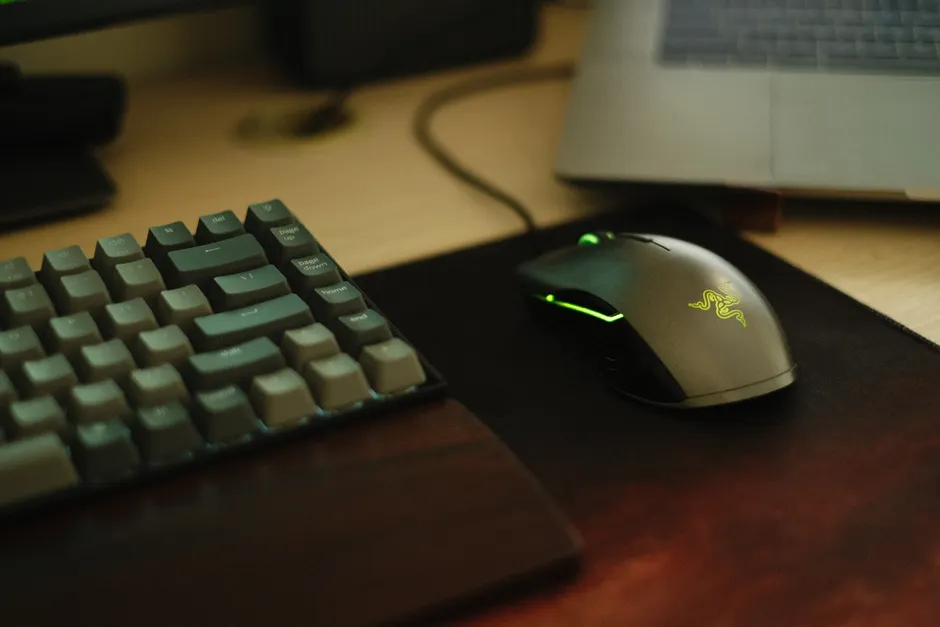
Razer has launched the Huntsman V3 HE Magnetic Mini at $120 and the Huntsman V3 HE Magnetic Tenkeyless at $140, marking the company's first keyboards to use Hall effect magnetic switches. Both boards are wired-only and available as of July 30, 2026, when The Verge published its report. The Verge
The Huntsman V3 HE line uses linear Hall effect switches with an average latency of 0.6ms. That is slightly behind Razer's own optical Huntsman boards, which average 0.48ms, but the HE models land at a meaningfully lower price point: Razer's optical Huntsman Pro keyboards start at $220, making the new magnetic boards $80 to $100 cheaper at entry.
Both keyboards carry the feature set competitive players expect from Hall effect boards in 2026: programmable actuation points, Rapid Trigger for immediate key re-registration, and an 8KHz polling rate. The switches use a floating key design, consistent with the aesthetic Razer has applied across recent Huntsman models.
The software story is where the Huntsman V3 HE gets more interesting. Razer includes three input-processing features built around competitive FPS play:
- Snap Tap prioritizes the last movement input on the A or W keys, making counter-strafing easier by eliminating the need to fully release the opposite-direction key before pressing the new one.
- Snap Flex allows keys to trigger specific actions upon release rather than upon press, effectively doubling the number of distinct commands a single key can issue.
- Dual-Keypress Priority prevents an accidental third-key input from interrupting two already-held keys, a scenario that arises in movement-heavy FPS play where simultaneous directional inputs are common.
Snap Tap carries notable baggage. Valve banned the feature in Counter-Strike 2, and a portion of the competitive community considers it functionally equivalent to a movement-assist cheat. Razer is shipping it on these boards regardless, which means buyers in Snap Tap-restricted titles will need to disable it manually or face potential consequences in ranked play.
The competitive landscape for Hall effect gaming keyboards has been consolidating around a handful of players. Razer is now directly competing with Wooting, Asus, and SteelSeries in the magnetic-switch segment. Wooting's 80HE and 60HE v2 keyboards are priced roughly $60 above the new Huntsman V3 HE models, which positions Razer as the value option among the established brands rather than the premium alternative.
The pricing gap matters because Hall effect keyboards have spent the last two years as enthusiast-tier peripherals, with Wooting in particular building its brand around uncompromising switch performance at a premium price. Razer entering at $120 for a mini layout and $140 for a tenkeyless board applies the same cost-curve pressure to magnetic switches that the broader mechanical keyboard market experienced when mainstream manufacturers pushed traditional mechanical boards below the $100 mark. The feature parity is close, the latency tradeoff is marginal, and the brand recognition is higher. That combination will likely compress prices across the segment whether competitors want it to or not.
The latency gap between Razer's optical and magnetic switches is worth noting but probably not decisive for most players. A 0.12ms difference between 0.48ms and 0.6ms is real and measurable, but it sits well below the threshold where most human reaction times or display pipeline latency would make it the binding constraint. For context, a single frame at 240Hz is approximately 4.2ms, and the 8KHz polling rate on both HE and optical boards means input is sampled every 0.125ms. The switch latency is a small fraction of the total input-to-photon pipeline.
What Razer is effectively doing here is hedging across two switch technologies rather than committing to one. The optical Huntsman line remains the latency leader and the premium offering; the new HE line covers the price-sensitive segment with a feature set that matches or exceeds what Wooting and SteelSeries ship. Whether a buyer prefers optical or magnetic switches is increasingly a question of feel and specific feature support rather than a clear technical superiority in one direction.
The Snap Tap situation remains the most consequential unresolved tension in this product category. Razer, Wooting, and others are shipping movement-assist features that game developers are actively policing, and the enforcement is inconsistent across titles and publishers. Buyers investing $120 to $140 in a keyboard whose flagship feature may be banned in the game they play most should factor that risk into the purchase. The hardware is sound. The software features are the contested ground.