Google DeepMind Announces Gemini Robotics 2: A Three-Model Architecture for Whole-Body Robot Control
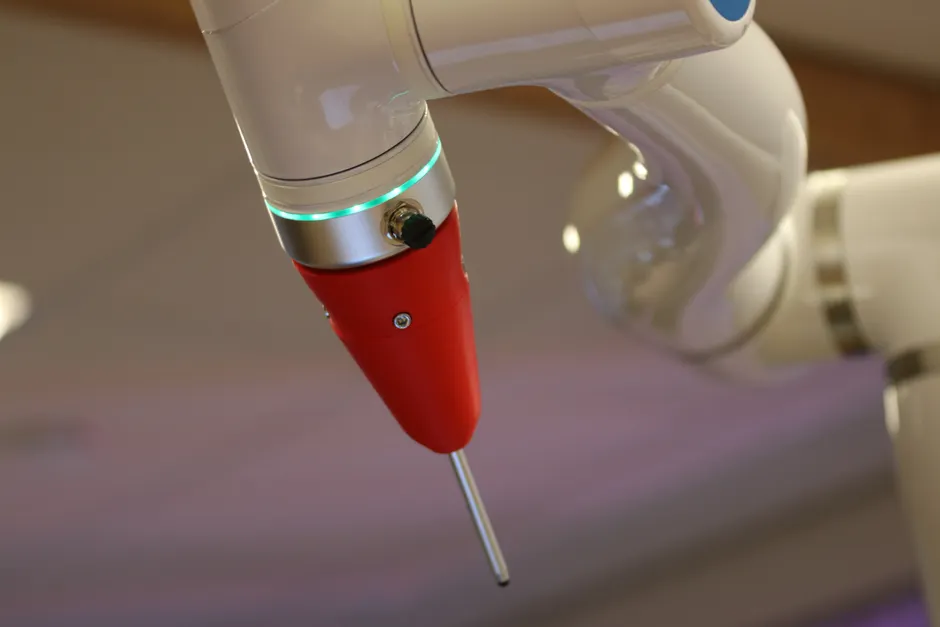
Google DeepMind announced Gemini Robotics 2 on July 30, 2026, describing the system as the intelligence layer powering the next generation of adaptable robots. The release comprises three distinct models: Gemini Robotics 2, Gemini Robotics ER 2, and Gemini Robotics On-Device 2. Together, they address vision-language-action (VLA) processing, embodied reasoning, and local inference for robotic platforms. DeepMind Blog
Gemini Robotics 2 is a VLA model that converts vision and language input into motor control. It can drive full humanoids from feet to fingertips, as well as bi-arm robots. The system enables intelligent whole-body control, advanced dexterity, and multi-robot collaboration. In demonstrated scenarios, a humanoid robot controlled by the system walks, crouches, stretches, and manipulates objects to clean up a cluttered room.
Gemini Robotics ER 2 is a vision-language model focused on embodied reasoning. It enables robots to communicate with humans, understand the physical world, and plan multi-step tasks lasting several minutes. ER 2 also introduces multi-robot collaboration, allowing robots to operate together as a team on coordinated objectives.
Gemini Robotics On-Device 2 is optimized to run locally on robotic hardware. It can achieve fast adaptation to completely new robot embodiments using only a few hours of data, reducing the reliance on extensive pre-training for novel morphologies.
This release builds on Gemini Robotics, Google DeepMind's earlier demonstration of using Gemini's multimodal understanding to drive real-world robotic action. That prior iteration established the feasibility of mapping multimodal understanding to physical actuation. Gemini Robotics 2 expands that baseline across reasoning, control, and on-device execution.
The broader context here is the architectural separation of concerns within robotic intelligence. By splitting VLA control, embodied reasoning, and on-device adaptation into distinct models, DeepMind is effectively decoupling the high-level task planning loop from the low-level motor control loop. In this author's view, this decoupling addresses a persistent bottleneck in robotics, where systems attempting to handle reasoning and actuation within a single model often struggle with latency and generalization. Isolating the planning component in ER 2, capable of orchestrating multi-step tasks over several minutes, while delegating whole-body control to the VLA model, aligns with how the underlying compute workloads actually scale.
The multi-robot collaboration capability introduced in ER 2 warrants specific attention. Coordinating multiple robots to operate as a team requires shared state awareness and task distribution that go beyond single-agent control loops. The architecture suggests that ER 2 handles the shared reasoning and task allocation, while the Gemini Robotics 2 VLA executes the localized physical manipulation for each unit.
The on-device adaptation capability also addresses a practical deployment constraint. New robotic embodiments often require extensive data collection to achieve reliable control. Gemini Robotics On-Device 2, optimized for local execution, can adapt to completely new morphologies with a few hours of data. That lowers the integration barrier for hardware developers building non-standard platforms, as the adaptation occurs locally without relying on continuous cloud inference.
Looking at the deployment trajectory, the combination of whole-body control and on-device adaptation points toward a modular future for humanoid and bi-arm robotics. Hardware manufacturers can iterate on physical form factors without completely retraining the entire intelligence stack. Having watched successive technology shifts integrate intelligence deeper into physical infrastructure over the decades, the introduction of an intelligence layer that explicitly abstracts away from specific hardware embodiments mirrors the architectural shifts that enabled scalable deployment in cloud and mobile ecosystems. The capability for a single VLA to control everything from feet to fingertips on a humanoid, while an ER model handles minutes-long task planning, establishes a functional division of labor that could accelerate physical-world AI applications.


