Ceuta's Leader Declares Emergency as 1,500 Migrants Arrive in One Week from Morocco

Ceuta's president, Juan Jesús Vivas, has declared a "humanitarian and security emergency" after approximately 1,500 migrants entered the Spanish North African enclave from Morocco over the past week, overwhelming local reception infrastructure and prompting an expected visit from Spain's Interior Minister Fernando Grande-Marlaska on Friday. Reuters
Reuters reported on July 30, 2026 that 1,500 migrants had arrived in Ceuta in a single week. The figure adds to a broader surge documented by Spain's public broadcaster RTVE, which reported that more than 1,500 mostly young Moroccan migrants reached Ceuta over the past two weeks. Spanish media estimated that between 2,000 and 3,000 people entered on Thursday alone, though the Guardia Civil had not confirmed that figure, according to Reuters. RTVE separately reported that "hundreds" of migrants crossed into Ceuta during Thursday.
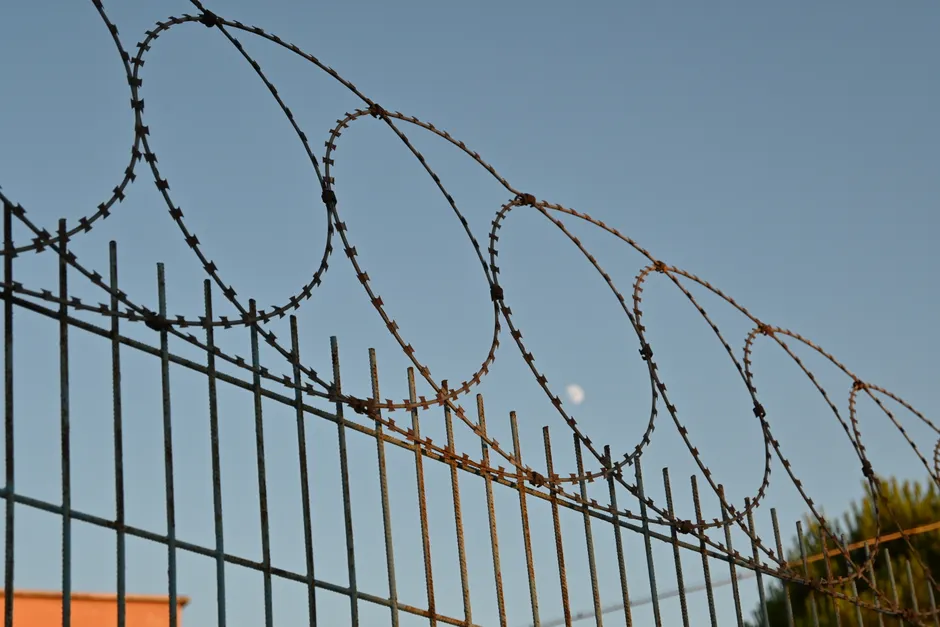
Footage published by Reuters on July 30 showed hundreds of migrants swimming from Morocco to Ceuta using inflatable rings and other flotation devices. Additional footage showed migrants running through a gate in the Ceuta border fence. Spain's Civil Guard, maritime Rescue Services, and the Red Cross were involved in rescuing migrants attempting the swim, according to Deutsche Welle. BBC News corroborated accounts of both the swimming crossings and the fence breach.
Vivas warned that reception centres for unaccompanied minors in Ceuta were operating at several times their intended capacity, Reuters reported. He also said the bodies of 60 people had been recovered at sea in recent months, according to RTVE. The Ceuta leader has urged the Spanish government to intervene directly, framing the influx as beyond the enclave's capacity to manage.
The surge has drawn immediate comparisons to May 2021, when approximately 8,000 people entered Ceuta over a matter of days. That earlier crisis exposed the fragility of Spain-Morocco migration cooperation and led to a massive, if temporary, deployment of Spanish security forces to the enclave. The current episode, while smaller in absolute numbers, is unfolding over a more sustained timeframe and has already produced casualties at sea.
Ceuta and Melilla are Spain's North African enclaves and represent the European Union's only land border with Africa. This geographic reality places Ceuta at the intersection of EU external border management and bilateral Spanish-Moroccan relations, where migration flows have historically served as both a humanitarian pressure point and a lever in diplomatic negotiations between Madrid and Rabat.
The Spanish Interior Ministry's biweekly irregular immigration reports, with accumulated data through July 15, 2026, provide the institutional baseline against which this surge is being measured. The consistency of these reports every two weeks — covering data through March 31, June 30, and July 15 — indicates that the ministry has been tracking a trajectory of arrivals that the current Ceuta surge may significantly alter in the next reporting cycle.
The broader context here is the structural vulnerability of Ceuta's infrastructure. The enclave operates with limited autonomous capacity for migrant reception and processing, and its reception centres for unaccompanied minors were already under strain before this latest surge. Vivas's assertion that they are now running at several times their intended capacity raises immediate questions about conditions inside those facilities, about the legal obligations of both the Ceuta government and Madrid under Spanish and EU migration law, and about whether the pace of arrivals will continue.
Grande-Marlaska's planned Friday visit signals that the central government is treating the situation as a political priority, at minimum. What remains unclear is whether Madrid will deploy additional security forces to the border, negotiate with Rabat to reinforce Moroccan-side enforcement, or pursue both tracks simultaneously, as it did in 2021. Vivas's public framing of the situation as an emergency is itself a political act — applying pressure on Madrid to act while also managing domestic expectations within Ceuta.
The fatalities Vivas referenced, 60 bodies recovered at sea in recent months, add a humanitarian dimension that complicates any purely security-focused response. The swimmers using inflatable rings are, by definition, taking a route that carries lethal risk, and the involvement of maritime rescue services and the Red Cross indicates that the crossings are generating emergency maritime operations in the Strait of Gibraltar approaches.
Looking at what this means for EU border policy, Ceuta occupies a singular position. It is EU territory on the African continent, bordered by Morocco, and its frontier is the EU's only terrestrial boundary with Africa. Arrivals here are not simply a Spanish domestic matter; they engage Frontex's operational mandate, the EU Commission's external border framework, and the EU-Morocco migration cooperation architecture. Whether Brussels treats this surge as a triggering event for additional support or defers entirely to Madrid's bilateral handling will signal much about how the EU intends to manage its southern frontier going forward.
The pace and method of the crossings, mass swims and fence breaches rather than the small-boat arrivals more typical of the Western Mediterranean route, also suggest a shift in tactics that may reflect reduced Moroccan border enforcement on its side of the perimeter. In 2021, Madrid alleged that Rabat had loosened border controls as a diplomatic signal during a bilateral dispute over Western Sahara. Whether a similar dynamic is at play now is a question that Grande-Marlaska's visit may begin to answer, though neither Spanish nor Moroccan officials have publicly addressed the enforcement question in the current episode.