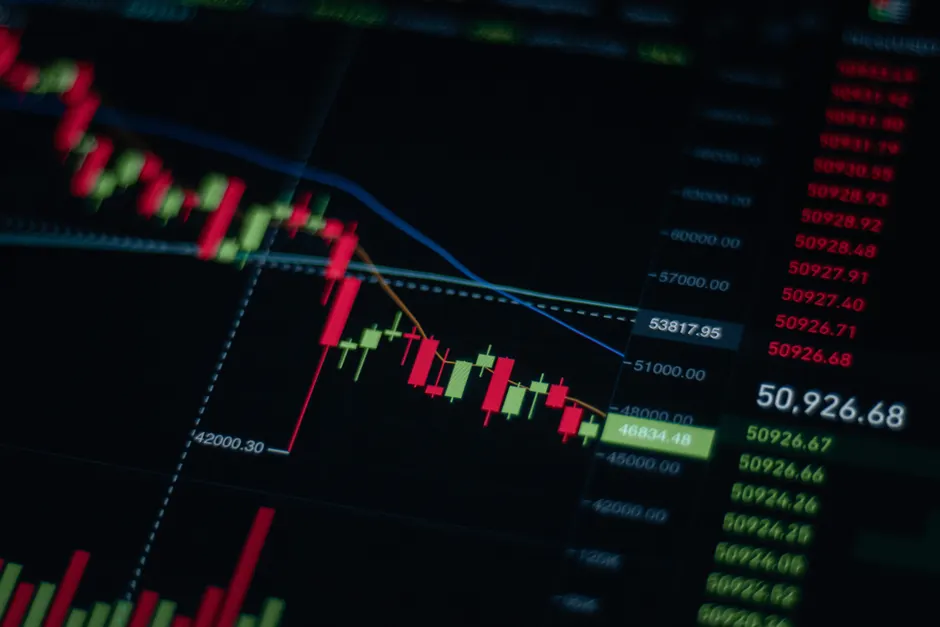
Kospi Posts Record ~15% Daily Gain as AI Rebound Reverses Historic July Rout

South Korea's Kospi index posted a record daily gain of approximately 15% on July 31, 2026, driven by a rebound in AI-sector stocks that lifted Samsung Electronics and SK Hynix each over 20% (KED Global; Moneycontrol). The rally followed a bounce in US stock markets on July 30 (Moneycontrol).
The surge came at the tail end of a brutal month. On July 28, the Kospi closed at 6,023.66, down 732.09 points or 10.84%, as a global chipmaker selloff deepened (Reuters). By that date the index had fallen 29% in July alone, exceeding its record monthly decline. The rout continued into July 29, when the Kospi fell as much as 12.6% intraday, triggering a 20-minute trading halt (Reuters).
As of July 30, the Kospi had erased $2 trillion in market value from its June 2026 record high and broken below the 6,000 level (Reuters). Yet as recently as July 20, the index was still up 55% year-to-date following an annual gain the prior year (Reuters). The swing from that position to a sub-6,000 close compressed into roughly ten trading sessions.
The violence of the drawdown drew a regulatory response. South Korea's Financial Services Commission temporarily halted new single-stock leveraged ETF listings and plans to raise deposit minimums for investors in those products (Barron's). The FSC had been discussing curbs on single-stock leveraged ETFs since at least July 8 amid concerns over market concentration (Korea Herald). The listing freeze and deposit hike came after the selloff was already underway, not before it.
On the KOSDAQ, the Korea Exchange flagged NuriFlex for a closing-price swing (jongga geupbyeon) covering July 30–31, and designated YesTech as an administrative-issue stock due to a market-capitalization shortfall (siga chongae midal) on July 31 (KRX; KRX). Both actions are procedural risk disclosures, not trading suspensions.
The broader context here is a market whose structure amplified both the drawdown and the rebound. Single-stock leveraged ETFs tied to names like Samsung and SK Hynix created a feedback loop: as the underlying fell, leveraged products rebalanced, forcing additional selling into a thin market. The FSC's halt on new listings addresses the supply side of that dynamic going forward, but the deposit-minimum increase, still in the planning stage, would not have prevented the mechanical selling that occurred during the July 28–29 plunge.
What the July 31 bounce does not resolve is the dispersion between the index-level recovery and the position of individual investors who held leveraged exposure through the drawdown. A 15% index gain, even one that lifts the two largest constituents by over 20%, does not reverse the mark-to-market losses on a 2x or 3x leveraged position that experienced a 29% monthly decline in the underlying. The mathematics of leveraged decay, particularly in a volatile path like July's, means the breakeven recovery required is substantially larger than the drawdown itself.
For market participants, the relevant question is whether the AI-sector catalyst driving the rebound has fundamental legs or whether it is a short-covering rally off oversold conditions following the July 30 US bounce. The verified facts establish the move and its proximate cause; they do not establish whether the rebound is durable or whether it simply marks a volatility spike within a longer correction. The FSC's regulatory actions, the KRX administrative designations, and the $2 trillion in erased value all point to a market that moved beyond what its existing guardrails were built to contain.