HoverAir Versa Merges Pocket Gimbal Camera With Drone in New Hybrid Device
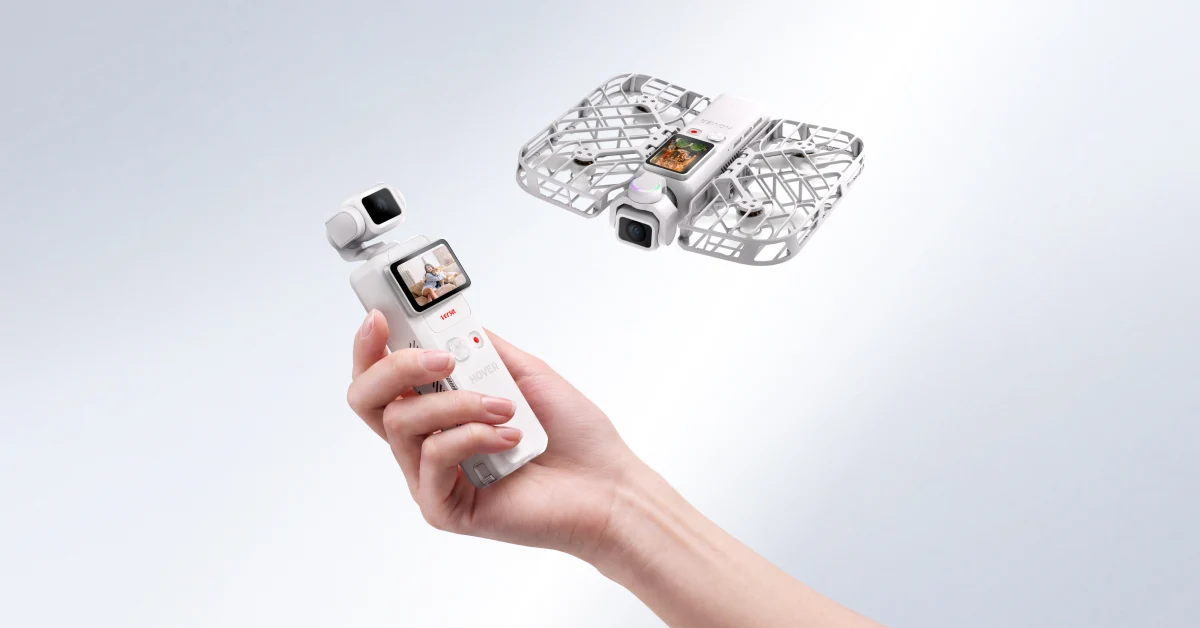
HoverAir has unveiled Versa, a hybrid imaging device that functions as a handheld three-axis gimbal camera and detaches into a palm-launched drone. The company described it on its official Instagram account as "the first 3-axis gimbal camera that can go from hand to hover in a matter of seconds" (Engadget). Petapixel, covering the announcement on July 30, 2026, called the product "the world's first flying pocket camera" (Petapixel).
In its handheld configuration, Versa features a stabilized three-axis gimbal, a built-in screen, a record button, and a joystick for direct control. Transitioning to flight mode requires no separate controller. The user slides a back plate down on the gimbal camera body, snaps it into a drone carrier, unfolds the wings, and launches from the palm (Engadget). The snap-on wing assembly is what differentiates Versa from both standalone gimbal cameras like DJI's Pocket series and from conventional compact drones that require a dedicated radio controller.
HoverAir, known for producing self-flying drones per Petapixel's reporting, is positioning Versa squarely at vloggers, travel creators, and filmmakers who want both ground-level stabilized footage and aerial shots from a single device. The appeal is logistical: one pocket-sized product replacing what currently takes two.
Versa includes an AI-powered "follow-me" mode that tracks the user's activities during flight, alongside a "3D Worlds" photo mode that executes a 360-degree flight pattern and reconstructs the captured image in three dimensions. HoverAir stated the device will ship with more than 10 intelligent flight modes designed for social media content creation (Engadget). On the imaging side, the company promises "superior dynamic range" and "incredible low-light footage," attributing those improvements to a new image processor (Engadget).
What HoverAir has not disclosed is substantial. As of the Engadget report on July 31, 2026, the company had not released Versa's camera sensor size, video resolutions, lens specifications, or price. More details are "coming soon," with the company directing interested users to subscribe for updates at hoverair.com/pages/versa (Engadget).
The absence of core imaging specifications is worth flagging. Sensor size, resolution, and lens characteristics are the variables that determine whether Versa competes with a DJI Pocket 3 or a GoPro in handheld mode, and whether its aerial footage approaches what a dedicated compact drone like a DJI Mini can produce. Without those numbers, the product exists as a concept rather than a reviewable camera. The "new image processor" claim, specifically, carries no weight until it is backed by sensor and bitrate figures.
The broader context here is that the creator hardware market has been steadily collapsing categories. Action cameras gained gimbal stabilization. Gimbal cameras gained larger sensors. Drones shrank to pocket size. Versa attempts the next logical compression: putting a gimbal camera and a drone into the same chassis. Whether the mechanical complexity of a snap-on drone carrier compromises either the handheld ergonomics or the flight profile remains an open question that only hands-on testing can answer.
The intelligent flight modes tell their own story about target audience. A 360-degree 3D reconstruction mode and more than ten social-media-oriented flight patterns are not features aimed at professional cinematographers working with dedicated aerial rigs. They are aimed at solo creators who need the drone to think for them, which aligns with HoverAir's existing reputation for self-flying devices. The bet is that convenience and automation matter more to this audience than raw imaging performance at the high end.
For now, Versa is an announcement, not a shipping product. The specification gaps are large enough that the device's competitive positioning could shift significantly once HoverAir fills them in. What is clear is the design intent: a single device that lives in a pocket, shoots stabilized handheld footage, and takes to the air without a controller swap. Whether the execution matches that ambition is a question for later.


