Thea Energy Raises $100M Series B to Build Demonstration Fusion Plant

Thea Energy Raises $100M Series B to Build Demonstration Fusion Plant
Thea Energy closed a $100 million Series B funding round on May 27, 2026, to advance development of its fusion power demonstration project. The round positions the company to build what it describes as scalable fusion power plants using arrays of mass-manufacturable magnets and dynamic software controls.
The funding announcement comes as electricity demand continues to surge across multiple sectors, driving renewed investor interest in fusion energy technologies. Data centers, AI workloads, and electrification initiatives have created sustained pressure on grid capacity, with fusion attracting capital as a potential long-term solution to baseload power generation challenges.
Technical Approach and Architecture
Thea Energy's approach centers on what the company characterizes as an "economical and scalable fusion energy system" built around mass-manufacturable magnet arrays paired with dynamic software controls. This methodology differs from traditional tokamak designs that rely on superconducting electromagnets requiring cryogenic cooling systems.
The mass-manufacturing focus addresses one of the persistent economic hurdles in fusion development—the custom fabrication and specialized materials that have historically driven per-unit costs beyond commercial viability. By designing around components that can leverage existing manufacturing infrastructure, Thea aims to achieve cost curves more aligned with conventional power generation economics.
The software controls component suggests an approach that relies heavily on real-time plasma management algorithms, potentially reducing the mechanical complexity of magnetic confinement systems. This control methodology could allow for more flexible plasma shaping and stability maintenance compared to static magnetic field configurations.
Market Context and Timing
The timing of this funding round reflects broader momentum in private fusion investment, driven by multiple converging factors. Power demand growth has accelerated beyond most grid planning assumptions, with AI training and inference workloads contributing measurably to load increases across major metropolitan areas.
Corporate power purchase agreements have become increasingly competitive, particularly for clean baseload capacity that can operate independent of weather conditions. Fusion technologies, if successfully commercialized, would provide dispatchable clean power without the intermittency challenges of solar and wind generation.
Looking at the broader pattern here, we have seen this dynamic before when enterprise demand for computing capacity outpaced traditional infrastructure buildout—first during the initial internet scaling phase, then again during the mobile transition. In both cases, novel technical approaches that promised step-function improvements in cost or capability attracted significant capital, even when fundamental technical risks remained unresolved. The current fusion investment cycle exhibits similar characteristics, with electricity demand serving as the forcing function that solar and wind scaling cannot fully address.
Development Timeline and Demonstration Project
The Series B proceeds will fund what Thea describes as a demonstration project, though the company has not disclosed specific timelines or technical milestones for the build. Demonstration-scale fusion projects typically target power output in the megawatt range, sufficient to validate technical feasibility while remaining orders of magnitude below commercial grid-scale requirements.
The scalability claims suggest Thea's design philosophy prioritizes modular deployment models over monolithic plant construction. This approach would allow for incremental capacity additions and distributed generation models that could integrate more readily with existing grid infrastructure.
Commercial fusion deployment has historically faced challenges around capital intensity and construction timelines comparable to traditional nuclear plants. Modular approaches, if technically validated, could reduce both the upfront capital requirements and the regulatory approval complexity that has constrained nuclear project development.
Industry Competitive Landscape
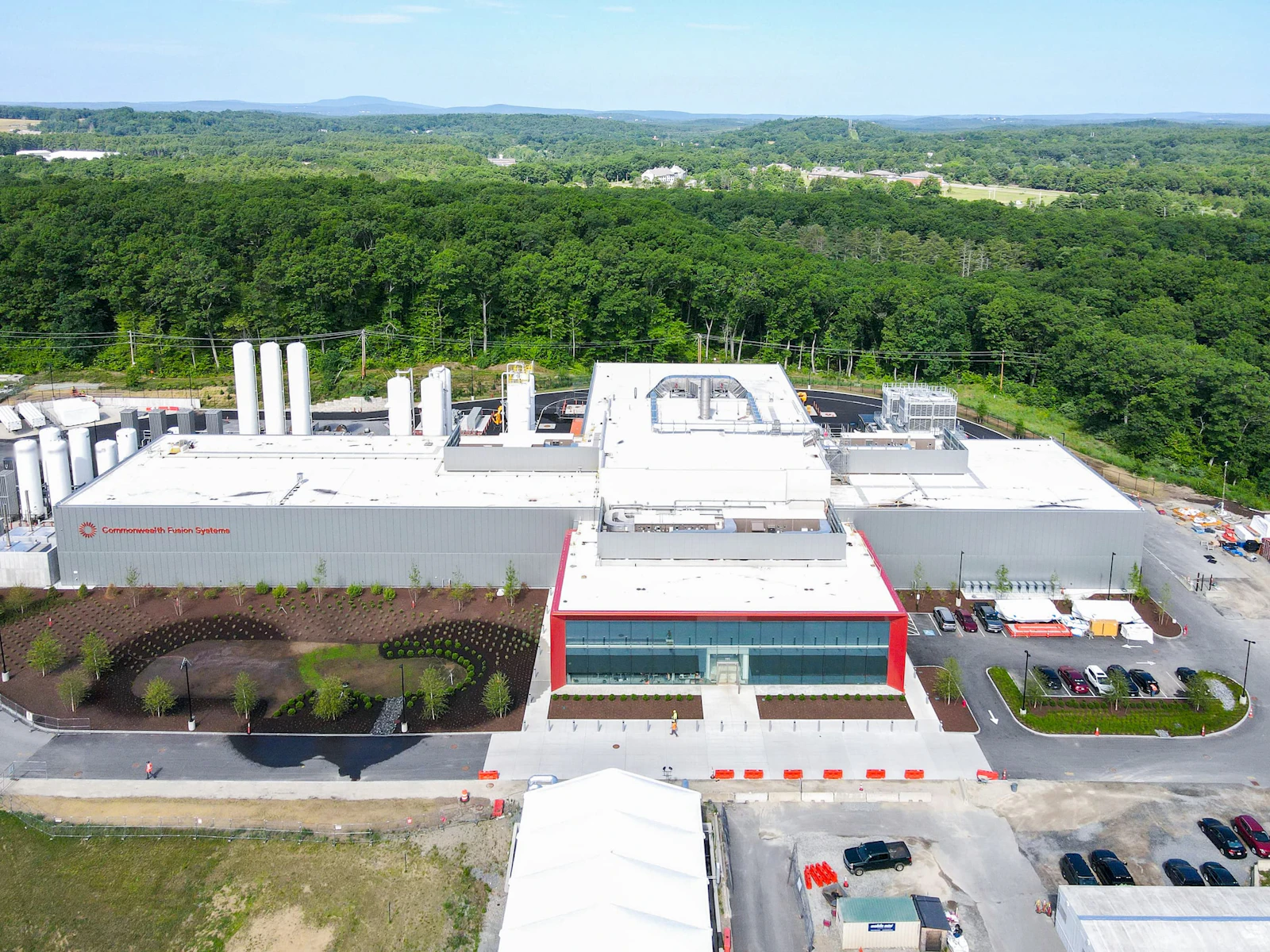
Thea Energy joins a growing cohort of privately-funded fusion companies pursuing alternatives to the ITER tokamak design path. Commonwealth Fusion Systems, TAE Technologies, and Helion Energy have each raised significant funding rounds targeting distinct technical approaches to magnetic confinement or inertial confinement fusion.
The mass-manufacturing emphasis distinguishes Thea's approach from companies focused on superconducting magnet technologies or alternative confinement geometries. This positioning suggests confidence that manufacturing scale, rather than materials science breakthroughs, represents the primary barrier to commercial fusion deployment.
The software-centric control methodology aligns with broader trends toward AI-enhanced process optimization across industrial applications. Real-time plasma management could benefit from machine learning techniques that have proven effective in other complex system control applications.
Investment and Development Outlook
The $100 million Series B represents substantial capital for demonstration-phase fusion development, though commercial deployment will likely require additional funding rounds at significantly larger scales. Grid-scale fusion plants typically require billion-dollar capital commitments, suggesting Series B proceeds primarily enable technical validation rather than commercial rollout.
The funding environment for fusion technologies remains robust, supported by both private investors and government programs targeting clean energy deployment. The Department of Energy's fusion energy programs continue to provide parallel development support, reducing some of the technical risk associated with private investment.
Worth flagging: while fusion investment momentum has accelerated, the fundamental technical challenges around sustained plasma confinement and net energy gain remain unresolved across the industry. Demonstration projects provide critical validation points, but the path from demonstration to commercial deployment historically involves multiple scaling challenges that cannot be fully anticipated at smaller scales.
The electricity demand drivers supporting current fusion investment appear durable across multiple technology adoption cycles, providing a sustained market pull for successful technologies. Whether Thea's mass-manufacturing approach proves technically and economically viable will determine its ability to capture that demand opportunity.