Trump Halts Iran Attack as Strait of Hormuz Deal Framework Emerges — but Passage Remains Blocked
US President Donald Trump announced on August 2, 2026 that he was holding off on a major military attack against Iran, saying the decision followed a request from Iran and other regional countries after the perimeters of a deal had been agreed upon (Al Jazeera). Trump said the potential agreement would include the "immediate, complete, and total opening of the Strait of Hormuz and an end to Iran's nuclear threat" (CNN). He also said the US and Israel have agreed to halt new attacks on Iran, provided a deal to end the months-long conflict is reached "rapidly" (Al Jazeera).
The pullback came after Saudi alarm and threats from Tehran. Saudi Arabia's Crown Prince Mohammed bin Salman spoke by phone with Trump before the announcement, stressing the need to prioritise dialogue to reduce escalation (The Guardian). Iran's Foreign Minister Abbas Araghchi had a separate phone call with Saudi Foreign Minister Faisal bin Farhan on Saturday night (Al Jazeera). Pakistan, Qatar, Oman, and Turkiye have also been exchanging messages and trying to nudge both sides toward an agreement (Al Jazeera).
Tehran's response to Trump's announcement was sharply skeptical. Iran's acting Defence Minister Majid Ebn-e-Reza said Trump's pullback comment was made within the context of "psychological operations and a war of calculations," while adding that threats from the US are taken seriously even if delivered as part of psychological warfare (Al Jazeera). Iran's foreign ministry spokesperson went further, saying Trump's claim that Iran had requested a ceasefire is "false and baseless" (Crisis Group). The gap between Trump's portrayal of a request from Iran and Tehran's explicit denial is one of the clearest flashpoints in assessing whether a deal framework genuinely exists or is being rhetorically constructed to justify a pause.
Iran's wartime military command warned on August 1 that US and other interests across the region could be attacked in tit-for-tat strikes if Washington launched threatened attacks against civilian infrastructure, including power plants and petrochemical manufacturers (Al Jazeera). That warning underscored the escalatory logic driving both sides toward restraint: a US strike on Iranian infrastructure would likely trigger asymmetric retaliation against US-aligned assets across the Gulf and beyond.
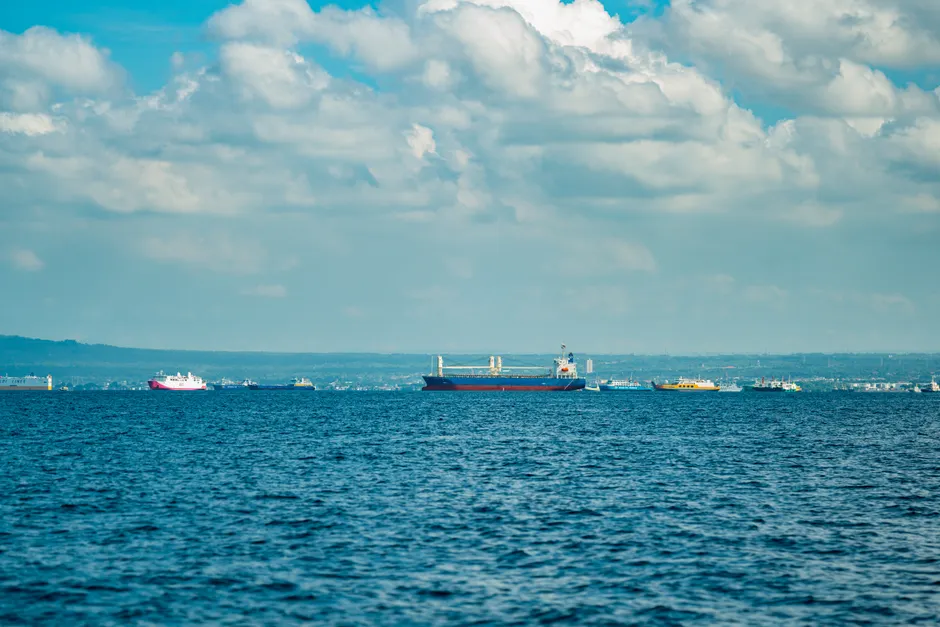
The Strait of Hormuz remains effectively closed. The IRGC-affiliated Fars news outlet reported that numerous ships were stuck in the northern corridor of the Strait in Iranian waters on Sunday at noon and could only pass if Iran's armed forces allowed (Al Jazeera). Iranian authorities said the same restriction would remain in force for the southern sea corridor passing through Oman's territorial waters (Al Jazeera). The IRGC has continued to strike or turn back ships attempting to transit the Strait (Al Jazeera).
The US Department of Defense reported in May that Iran had blocked safe passage through the Strait for commercial cargo and tanker vessels, trapping thousands of ships inside the Persian Gulf, and launched "Project Freedom" to escort them through (US Department of Defense). Secretary of War Pete Hegseth said Iran had repeatedly threatened and attacked commercial shipping in order to effectively cut off commercial traffic and damage the economy (US Department of Defense). The US has maintained that its action against Iran is a blockade of Iran's ports and coastline, not a blockade of the Strait itself, with enforcement occurring inside Iran's waters (US Department of Defense).
A memorandum of understanding reached between Iran and the US in June 2026 partially reopened the Strait in exchange for lifting a US blockade on Iran's southern ports and offering a two-month relief from oil sanctions (Al Jazeera). That MoU immediately became a point of contention: the US said it entitled ships to pass through the southern corridor, while Iran maintained the agreement left its armed forces in charge of making arrangements for passage (Al Jazeera). All provisions of the June MoU have since been rolled back, with military strikes resumed and fears of a wider conflagration growing (Al Jazeera).
Iranian forces first declared the Strait closed on March 4, 2026, threatening and carrying out attacks on ships attempting transit (Congressional Research Service). The conflict has since cycled through escalation, a fragile MoU, rollback, and now another attempted pause — each iteration leaving the core dispute over who controls passage through the Strait unresolved.
The structural problem is clear from the record. Every prior agreement has foundered on the same interpretive gap: Washington reads transit as a right, Tehran reads it as a privilege contingent on Iranian military discretion. The June MoU codified that ambiguity rather than resolving it, and its collapse was a consequence of the contradiction it papered over. Trump's August 2 announcement invokes the same two deliverables — Hormuz reopened, nuclear threat ended — without any indication that the interpretive dispute over corridor control has been addressed. Tehran's denial that it requested a ceasefire, coupled with the acting defence minister's framing of Trump's statement as psychological operations, suggests the two sides may not even be describing the same conversation.
What the regional mediators may be able to provide is a face-saving formula that both sides can claim as victory: Trump gets to say Iran asked for a pause, Iran gets to say it never did, and both point to an agreement that exists mainly as a framework. Whether that formula can survive contact with the IRGC's operational control of the Strait, which has not paused for any prior diplomatic arrangement, is the variable that will determine whether this halt becomes a durable de-escalation or another interval between strikes.