Sudanese Army Drone Strike on Darfur Court Session Kills at Least 35
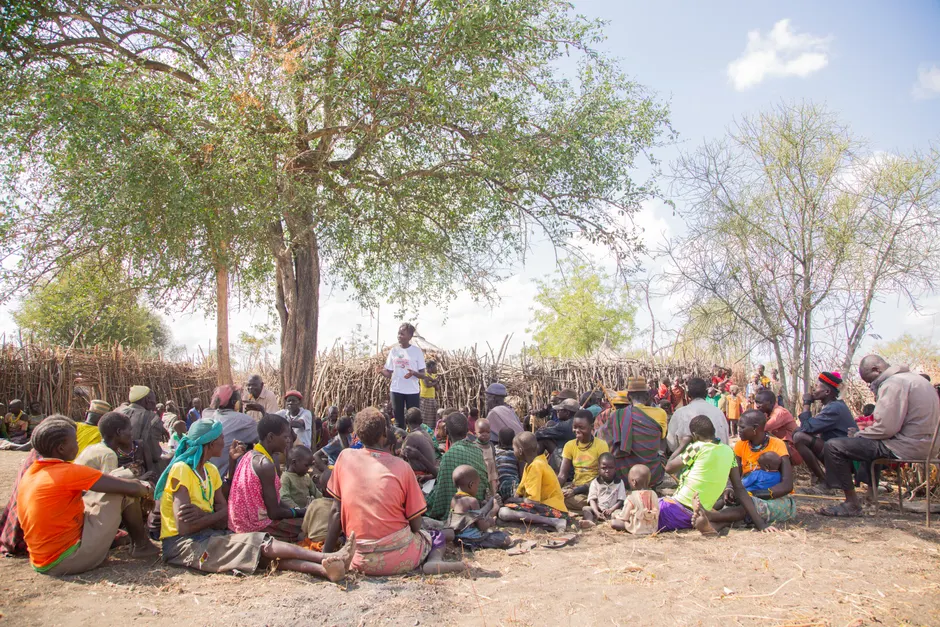
A Sudanese army drone strike on a traditional court session in the village of Ghara al-Zawiya, in northern Darfur, killed at least 35 people on Sunday afternoon, according to the Emergency Lawyers Group. Dozens more were injured in the attack, which targeted a community gathering held under a tree with the participation of local tribal leaders. BBC
The Emergency Lawyers Group, which monitors violence against civilians in Sudan, said Ghara al-Zawiya is controlled by the paramilitary Rapid Support Forces (RSF). The RSF holds most of Darfur in western Sudan. The Sudanese army has not commented on the strike. BBC
A witness quoted by AFP said four tribal leaders and two RSF commanders were among those killed. The privately owned Darfur 24 website quoted a local resident who said two drones flew over the town before launching more than four missiles. BBC
The RSF's self-declared parallel government condemned the strike as "a horrific crime," reporting 37 people killed and 50 wounded. The discrepancy in casualty figures between the Emergency Lawyers Group and the RSF-aligned authority could not be independently reconciled. France 24
Al Jazeera also reported the strike on August 2, 2026, citing the Emergency Lawyers Group's initial account of 35 killed. Al Jazeera
The Emergency Lawyers Group called for an investigation and condemned the targeting of the court, describing attacks on civilians and civilian infrastructure as a grave violation of international humanitarian law. The organization noted that drones are being increasingly used to target civilian areas and gatherings, exacerbating risks to the population. BBC
Sudan's civil war has lasted about three years, killing tens of thousands and forcing millions from their homes. The conflict pits the Sudanese Armed Forces, aligned with the transitional government in Port Sudan, against the RSF, which controls broad swathes of Darfur and other western regions. Both sides have faced credible allegations of atrocities. The RSF has been accused of war crimes including drone attacks on civilians over the course of the conflict. A UN fact-finding mission said the RSF's siege and attack on el-Fasher last year bore the hallmarks of genocide. The RSF has denied the genocide accusations. BBC
The broader context here matters for assessing what this strike signals about the conflict's trajectory. The targeting of a traditional court session, an indigenous dispute-resolution mechanism predating the colonial state and still central to local governance in Darfur, carries implications beyond the immediate casualty count. Traditional courts function as civilian infrastructure in communities where formal judicial institutions have collapsed under wartime conditions. If the strike was deliberate, it suggests a willingness to disrupt local governance structures in RSF-held territory, not merely to degrade combat capabilities.
The reported presence of two RSF commanders among the dead complicates the legal and operational picture. Under international humanitarian law, the proportionality of a strike depends on the anticipated military advantage weighed against civilian harm. The co-location of military and civilian figures at a community gathering raises questions about whether the army identified a legitimate military target or treated a civilian assembly as one by default.
The Emergency Lawyers Group's observation about the escalating use of drones against civilian gatherings tracks a pattern visible across multiple conflict theaters. Drone warfare lowers the threshold for strikes on assembled groups, as it reduces the operational risk to the attacking force and eliminates the need for ground engagement. In Darfur, where community gatherings under trees are a routine feature of social and judicial life, this dynamic is particularly acute.
The casualty discrepancy between the Emergency Lawyers Group (35 killed) and the RSF's self-declared government (37 killed, 50 wounded) is consistent with the fog-of-war reporting environment in Sudan, where independent verification is severely constrained by access restrictions and active hostilities. Neither figure can be independently confirmed at this point.
Sudan's civil war has entered its third year with no credible peace process underway. The RSF controls most of Darfur and has established a parallel governing authority, while the army-backed government operates from Port Sudan. International mediation efforts, including initiatives by Saudi Arabia, the United States, and the African Union, have not produced a durable ceasefire. The el-Fasher siege, which the UN fact-finding mission said bore the hallmarks of genocide, remains a flashpoint. Against this backdrop, a strike on a community court in northern Darfur, regardless of the military rationale, adds another layer to a conflict already saturated with allegations of atrocities on both sides.