UN Rights Chief Türk Calls on Iran to Halt Executions, Citing Fair Trial Violations and Suppression of Dissent
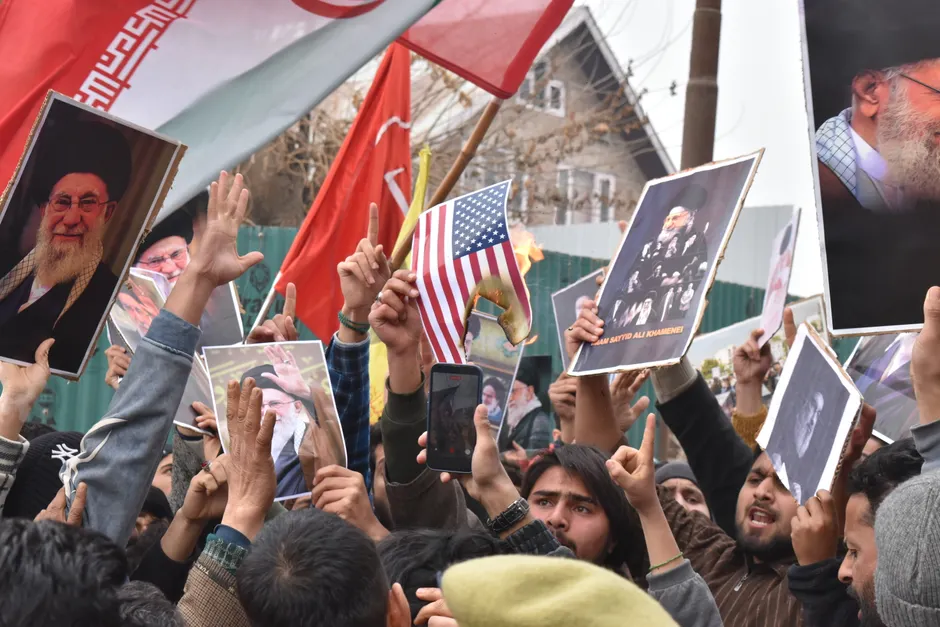
UN High Commissioner for Human Rights Volker Türk called on Iranian authorities on August 5, 2026 to halt all executions and move toward abolition of the death penalty, citing a surge in capital punishment used to instill fear and suppress dissent since March.
Türk reported that Iran has executed at least 56 people on national security-related charges since March 19, with 27 of those cases linked to protests, according to Reuters. The figure covers the period since the UN's most recent reporting cycle on Iran and reflects what Türk described as a deepening crackdown on civic space and freedom of expression across the Middle East, a trend he previously warned had intensified following US and Israeli military strikes on Iran (OHCHR, April 2026).
The lack of fair trial and due process guarantees in Iranian executions was "deeply troubling," Türk said, noting that confessions had allegedly been obtained under torture and other ill-treatment. Several executions have reportedly been carried out in public, and some only weeks after arrest. In one case Türk flagged, twelve defendants were sentenced to death following a single three-hour closed-door hearing (BBC News).
That case, involving protesters from Isfahan, has drawn repeated UN scrutiny. In July 2026, UN human rights experts urged Iran to quash the death sentences imposed on the twelve men at the single hearing, condemning the imposition of capital punishment for involvement in the January 2026 protests (OHCHR, July 2026). UN experts said the defendants were sentenced in a closed courtroom without clarity as to each individual's responsibility for the crimes charged, which included "enmity against God" and "corruption on Earth" in connection with the killing of four law enforcement officers on January 8 (BBC News).
Two of the Isfahan group, Abolfazl Sepahi Badjani and Amirhossein Safari Hosseinabadi, were executed in public in a square in Isfahan, per Iran's Human Rights Activists News Agency (HRANA). Two fellow defendants, Erfan Esfandiari and Gol Mohammad Mohammadi, were executed on July 19 (BBC News).
Separately, 19-year-old Arvin Kheirkhahan was executed after being convicted of "enmity against God" over his alleged role in January's unrest, according to HRANA. Iran's judiciary also announced the execution of two men, Omid Behzad and Pouria Safvat, convicted of spying for Israel. The two were accused of sending coordinates, images, and other information on sensitive military, law enforcement, and security sites to Israel's Mossad intelligence service (BBC News).
The Iranian government has previously defended its use of the death penalty, stating that it is limited to only "the most severe crimes" (BBC News).
Türk's August 5 statement builds on a sustained UN engagement with Iran's human rights record. In January, Türk told the Human Rights Council in Geneva that while the killing on the streets of Iran may have subsided, "the brutality continues," and he called on Iranian authorities to end their brutal repression (OHCHR, January 2026). The Human Rights Council adopted a resolution the same day extending the mandates of its Iran fact-finding mechanism and urging Tehran to respect, protect, and fulfil its human rights obligations (OHCHR, January 2026). In April, Türk deplored the crackdown on dissent, stating that Iranians' rights are being eroded in "harsh and brutal ways" (UN News, April 2026).
The broader context here is one of converging pressures. The post-March escalation in executions coincides with the aftermath of US and Israeli military action against Iran, which Türk warned has deepened repression of civic space not only inside Iran but across the region. The use of capital punishment for protest-related offenses, espionage convictions, and public executions collectively signals that Iranian authorities are deploying the death penalty across multiple categories of cases, from political dissent to alleged intelligence cooperation with a hostile state. The convergence of these categories in a single reporting period raises the question of whether the executions serve primarily as a judicial function or as an instrument of deterrence, which is the core of Türk's charge that capital punishment is being "used to instill fear and suppress dissent" (OHCHR, August 2026).
The structural concerns Türk raised extend beyond individual cases. The allegation that twelve defendants were sentenced to death in a three-hour closed-door hearing, without individualized determination of responsibility, touches on due process standards that Iran is bound to uphold under the International Covenant on Civil and Political Rights. The reported extraction of confessions under torture, if substantiated, would constitute a separate violation of the Convention Against Torture. Whether the extended fact-finding mandate adopted by the Human Rights Council in January yields further accountability mechanisms will depend on the Council's next session and the degree of diplomatic pressure member states are willing to apply.