Corsair Launches Skiff 100 Keyboards and Harpoon v2 Wireless Mouse
Corsair has introduced three new gaming peripherals: the Skiff 100 and Skiff 100 Plus keyboards and the Harpoon v2 wireless gaming mouse. The announcement, reported on August 5, 2026, brings a rotary control dial and cross-platform compatibility to the keyboard lineup while refreshing the Harpoon mouse with an updated sensor and asymmetric ergonomics Engadget.
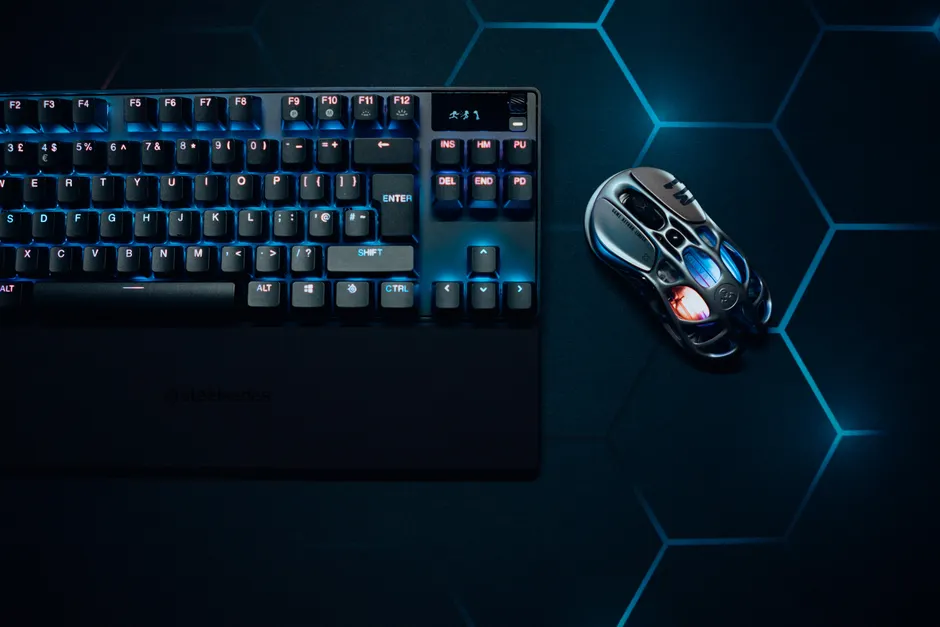
The Skiff 100 and Skiff 100 Plus share a common feature set centered on quiet membrane keys, 10-zone RGB lighting, and a detachable wrist rest with a rubber surface. Both keyboards include a rotary dial positioned for quick access to volume and track controls, a feature more commonly associated with productivity-focused input devices than mainstream gaming boards. Corsair lists the Skiff 100 at $60 and the Skiff 100 Plus at $70, with the $10 differential buying six programmable G-keys on the Plus model. Those G-keys can be customized for in-game commands and macros, bringing the Plus closer to the feature set traditionally found on higher-tier boards Corsair.
A notable design choice is the absence of any software requirement. Both keyboards are compatible with PC, Mac, Xbox, and PlayStation straight out of the box. That cross-platform, driver-free approach is relatively unusual in the gaming peripheral space, where vendor software suites are typically expected for macro programming and lighting configuration. The G-keys on the Skiff 100 Plus are presumably programmed on-device rather than through a companion application, though the specifics of how macro assignment works without software have not been detailed.
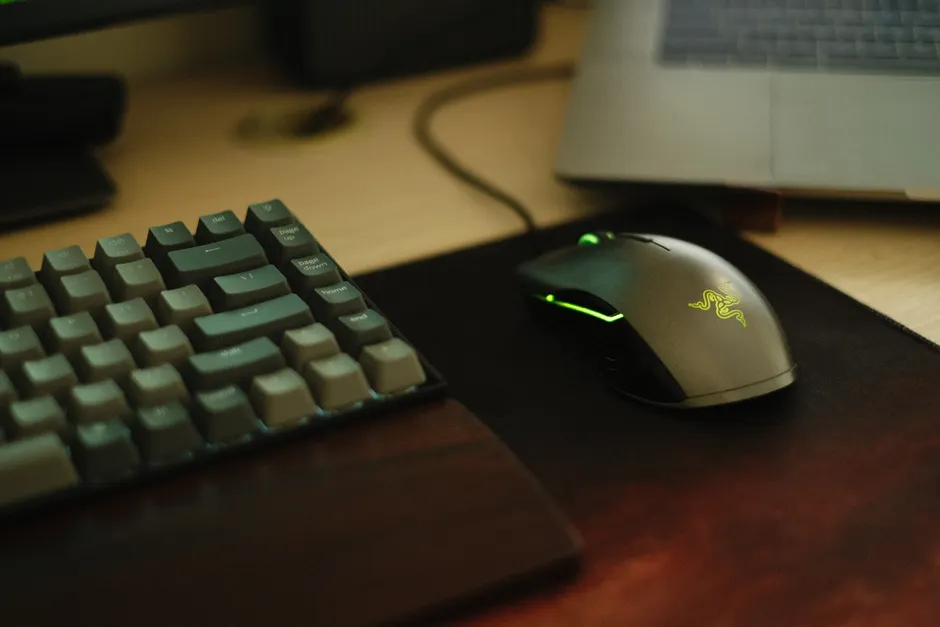
The Harpoon v2 wireless mouse arrives as a refresh of Corsair's entry-level wireless gaming mouse line. It features the Marksman 26K sensor, six programmable buttons, and an asymmetric ergonomic shape. Battery life is rated at up to 140 hours per charge. Like the keyboards, the Harpoon v2 requires no software installation and is compatible with PC and Mac. It is priced at $70, matching the Skiff 100 Plus Corsair.
The membrane switch choice on the Skiff boards positions them firmly in the value segment. Mechanical switches have become the default expectation among enthusiast keyboard buyers, and membrane designs at this price point target users who prioritize quiet operation and cost over tactile feedback and switch customizability. The 10-zone RGB implementation is a middle-ground lighting approach, offering more granularity than single-color or per-key-limited setups but stopping short of the per-key RGB found on premium boards.
The rotary dial is the most interesting inclusion here. Corsair is not the first to put a control dial on a keyboard, but doing so on a $60 membrane board pushes the feature downmarket. For users who split time between gaming and media consumption, having a physical volume and track-control mechanism on the keyboard reduces reliance on secondary inputs or OS-level adjustments. Whether the dial is programmable beyond its default volume and track functions is not specified in the available product information.
The platform breadth across the keyboard lineup is worth noting. Console keyboard support varies by game and system, but the ability to move a single peripheral between a PC desk and a console setup without reconfiguring software has practical value for users who game across platforms. The Harpoon v2's restriction to PC and Mac, while the keyboards support consoles as well, creates a slight asymmetry in the cross-platform story.
Taken together, the three products fill out Corsair's lower-priced peripheral tier with a specific emphasis on plug-and-play simplicity. The Skiff 100 and Skiff 100 Plus keyboards and the Harpoon v2 wireless mouse are all available now through Corsair's direct channels.