Persimmon Lifts 2026 Outlook as Burnham Housing Agenda and Cost Discipline Align
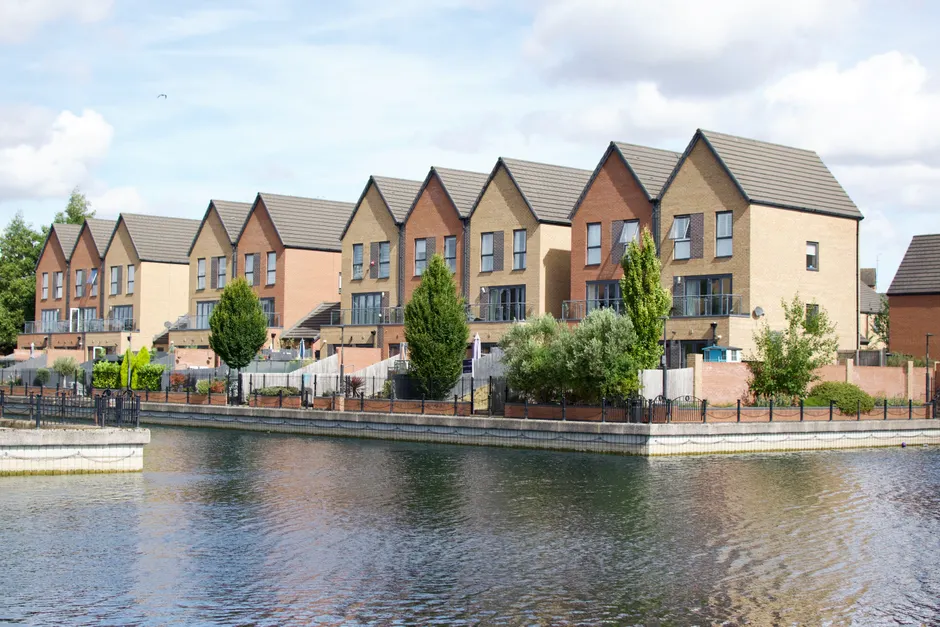
Persimmon lifted its full-year outlook on August 6, 2026, targeting approximately 12,500 home completions for the year, at the upper end of its prior guidance range of 12,000 to 12,500. The housebuilder declared itself "well-placed" to benefit from Prime Minister Andy Burnham's policy agenda, framing the political environment as a tailwind for volume delivery even as inflationary headwinds build (The Guardian).
The upgraded guidance accompanies half-year results that underscore sustained momentum. Persimmon reported pre-tax profits of £168m for the six months ended 30 June 2026, a 15% increase year-on-year, on the back of a 13% rise in completion volumes. Group revenue for the period reached £1.73bn, with 5,189 new homes sold. An interim dividend of 20p per share was declared, with an ex-dividend date of 15 October 2026 (Reuters).
The trajectory has been building for several reporting cycles. In its 2024 trading statement, Persimmon completed 10,664 homes, up 7% from 9,922 in 2023 and ahead of market expectations. Full-year 2025 results showed completions rising further to 11,905, with an average sales price of £278,203, up 4% from £268,499. Group revenue for 2025 stood at £3.75bn, with profit before tax of £397.3m. The company's 2025 trading statement had already flagged 12% completion growth, with underlying profit before tax in line with market consensus.
The guidance evolution itself tells a story of progressive confidence. As recently as August 2025, Persimmon was targeting roughly 12,000 completions for 2026, against a 2025 range of 11,000 to 11,500. By March 2026, that had narrowed to 12,000 to 12,500, with the company leaning on marketing and incentives to outperform the broader sector. The August 6 update lands at the ceiling of that range (Reuters, March 2026).
Persimmon is not relying on demand alone to hit its numbers. The company disclosed a series of management actions aimed at securing further cost savings: procurement savings, specification optimisation, house-type design changes, overhead reductions, and operational efficiencies. These measures come as the builder navigates rising input costs and anticipates additional inflationary pressure in 2027, partly attributed to the ongoing Middle East conflict and its effects on supply chains and material pricing.
S&P Global construction PMI data published the same day showed optimism across the UK construction sector rising last month, providing macro-level corroboration for the sector-specific confidence Persimmon is expressing. The builder's half-year results presentation was titled "Strong growth; strong platform," signalling management's view that the operating environment is stable enough to sustain volume expansion through 2026 and beyond.
The alignment between Persimmon's delivery ramp and Burnham's housing policy agenda is the variable to watch. The company's explicit invocation of the Prime Minister's programme suggests it expects policy support, whether through planning reform, direct procurement, or demand-side subsidies, to underpin its volume targets. Whether that policy tailwind materialises at the scale the housebuilder is pricing in remains an open question, but Persimmon is positioning its cost base and build programme as if it will.
The risk concentrated in the 2027 outlook is material. Management's flag on Middle East-driven inflationary pressure signals that supply chain disruption and commodity price volatility remain live concerns for the sector, even as 2026 delivery holds firm. The cost-saving initiatives, while broad in scope, will need to offset pressures that originate well outside Persimmon's operational control. The interim dividend declaration at 20p per share indicates the board is comfortable with the current cash trajectory, but the tension between rising volumes, tightening margins, and external inflationary forces will define the next reporting cycle.
What gives the updated outlook credibility is the consistency of execution across multiple reporting periods. Completions have risen from 9,922 in 2023 to a projected 12,500 in 2026, a 26% increase over three years, with revenue and profit tracking upward in step. The company has moved through three guidance revisions for 2026 alone, each one ratcheting upward, and has delivered at or above market expectations in both 2024 and 2025. The question for investors is whether the cost-saving programme can absorb the 2027 inflationary shock that management itself has flagged, or whether the current platform of growth plateaus under input-cost pressure that no amount of procurement optimisation can fully neutralise.