Russia Suffers 42,800 Casualties in July 2026 as Ukraine Renews Deep-Strike Campaign

Ukraine's General Staff claims Russia suffered 42,800 casualties in July 2026, potentially the highest monthly toll Kyiv has estimated this year, as President Volodymyr Zelenskyy renewed a three-tier air strike campaign against targets inside Russia and occupied territory on August 4. The figure coincides with record Russian glide-bomb usage and a casualty exchange ratio that independent analysis now places at nearly 8:1 in Ukraine's favor.
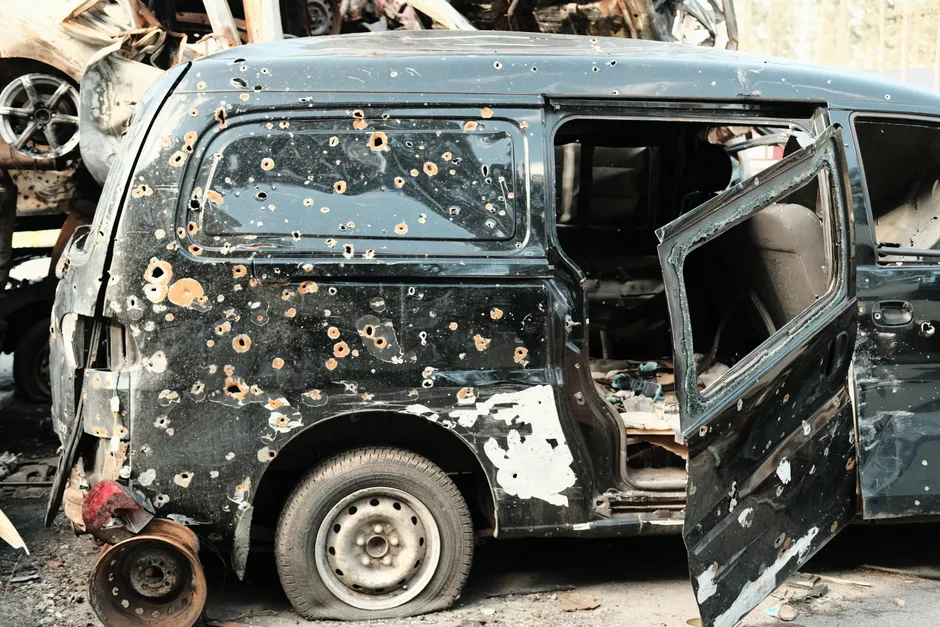
According to Ukraine's defence ministry, Russia unleashed 8,300 glide bombs in July, more than in any other month of the war. That escalation in air-dropped munitions tracks with sustained bombardment of Ukrainian cities. On June 30, Russian glide bombs killed two people and injured at least 15 in Zaporizhzhia, per the regional governor. On August 3, Russian aircraft dropped eight glide bombs on a city in southern Ukraine within 90 minutes, killing one person and wounding dozens, according to regional chief Ivan Fedorov. Days later, Russia fired dozens of ballistic missiles at Kyiv and the surrounding region in early August, killing at least 17 people and destroying warehouses.
Zelenskyy told Fox News that Ukraine's own casualties have reached 450,000, of whom 50,000 are fatalities. The disclosure offers a rare Ukrainian acknowledgement of total losses, though independent verification of either side's figures remains difficult in an active war zone.
The asymmetry in losses has widened sharply. The Center for Strategic and International Studies (CSIS) estimated the Russia-Ukraine casualty ratio rose to nearly 8:1 in the first half of 2026, up from between 2:1 and 3:1 for much of the war. CSIS attributed the shift largely to Ukraine's expanded use of drones. Zelenskyy said drones alone accounted for 30,272 of Russia's July casualties.
The drone-driven advantage underpins Ukraine's broader air strike strategy. Zelenskyy declared a 40-day Ukrainian air strike campaign a success and renewed it on August 4. The renewed campaign operates across three tiers: strikes on military production and oil refining inside Russia; attacks on energy infrastructure and weapons flows in occupied territories near the front line; and direct targeting of front-line positions. Ukraine's Security Service (SBU) reported that over the initial 40-day campaign it struck 14 refineries, dozens of oil depots and loading terminals, 14 aircraft, and four airfields.
Looking at what this means for the trajectory of the conflict, the deep-strike campaign represents a deliberate Ukrainian effort to degrade Russia's logistical and industrial sustainment rather than rely solely on front-line attrition. Targeting refineries and oil depots constrains fuel supply for Russian aviation and armored operations, while strikes on airfields aim to reduce the sortie rate of the aircraft delivering glide bombs. The three-tier architecture suggests an integrated operational concept linking strategic, operational, and tactical depths.
Russia, for its part, continues to escalate its own strike tempo. Zelenskyy has noted that Russia attacks Ukraine monthly with mostly Shahed loitering munitions, over 150 missiles of various types, and more than 5,000 glide bombs. He has also said Russia's military-industrial complex is planning to increase production of FPV and other drones, glide bombs, artillery, and mortars. These planned production increases, if realized, could offset some of the delivery losses Ukraine has inflicted through its deep strikes, though the interplay between industrial output and battlefield attrition remains contested.
The prospect of further Russian mobilization adds another variable. Zelenskyy believes Russia could call up to half a million reservists in October 2026. A mobilization of that scale would be consistent with sustaining high-force-density operations despite the casualty rates Kyiv reports, but it would also carry political and economic costs for Moscow that are difficult to assess from outside.
Several factors warrant scrutiny. The 8:1 casualty ratio, even if directionally accurate, reflects a period of intensified Russian offensive activity where territorial gains may have been prioritized over force preservation. Whether that ratio holds as Russia rotates in fresh formations or adjusts tactics is an open question. Ukraine's deep-strike campaign has demonstrated reach into Russian territory, but its cumulative effect on Russian refining capacity and fuel distribution will depend on Moscow's ability to repair damaged infrastructure and reroute supply chains. And the casualty figures from both sides are operational estimates produced by belligerents in an active conflict; they serve as indicators of trend and scale rather than precise accounting.
What is clear is that the war's intensity did not abate in mid-2026. Both sides are pressing advantages: Russia through mass fires and mobilization, Ukraine through precision drone strikes and deep interdiction. The competing dynamics of Russian industrial mobilization and Ukrainian strike warfare are likely to define the operational environment through the autumn.