Italy Defies Spain's Deadline, Vows to Maintain Border Checks Through August 15
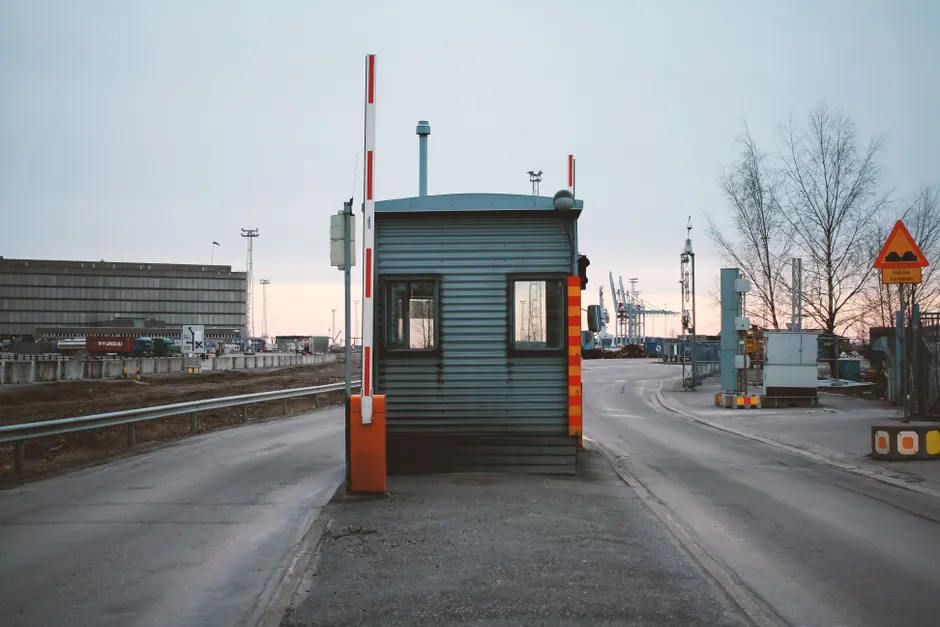
Italy has vowed to maintain border controls on travellers from Spain until at least August 15, 2026, rejecting a two-day Spanish ultimatum to lift the checks and setting up the most direct confrontation between two Schengen member states in recent memory. Al Jazeera
The Spanish government delivered its ultimatum on Friday, August 7, giving Rome until the end of Sunday, August 9 to end the border checks or face what Madrid called "proportional measures." Reuters Italy responded the same day, stating it would not bow to ultimatums or impositions from Spain. Al Jazeera
The dispute traces back to August 1, when Italian Prime Minister Giorgia Meloni announced the temporary reintroduction of border checks with Spain, a measure she characterized as "extraordinary" and aimed at safeguarding national security. Italy suspended Schengen free-movement rules with Spain and shut its air and sea borders in response to the Ceuta migrant crisis. Euronews
The catalyst was a mass crossing into the Spanish enclave of Ceuta from Morocco. Around 72,000 people entered Ceuta by foot and by sea last week. Authorities tallied at least 100 deaths during the border rush. The vast majority of those who crossed have since returned to Morocco. Al Jazeera
The humanitarian fallout inside Ceuta remains acute. Spain's Youth Minister Sira Rego reported that at least 1,342 of the undocumented migrants still in the enclave are children, hundreds of them unaccompanied. Ceuta authorities said at least 1,100 children needed assistance, while the enclave's theoretical housing capacity stood at only 90 places. Al Jazeera
Spain has taken steps on its own soil in parallel. Spanish police dismantled a people-smuggling operation believed to have brought 2,000 migrants into the country via Spain's southeastern coast and the island of Ibiza. Al Jazeera
Italy's decision to halt border-free travel with Spain, however, has drawn scrutiny. Analysts have described the move as political rather than practical, noting that the Ceuta crisis involved Spain's southern border with Morocco, not the Italy-Spain frontier that Meloni's government chose to seal. Al Jazeera
The broader European context is charged. Twenty-two EU member states signed a joint letter accusing Spain of creating "pull factors" that destabilise the bloc's borders. Al Jazeera The letter signals that Rome is far from isolated in its criticism of Madrid's migration posture, even as its unilateral suspension of Schengen provisions raises separate legal and institutional questions.
The Schengen Borders Code permits member states to reintroduce temporary checks at internal borders for reasons of national security, typically for an initial period of up to two months with possible extensions. Italy's August 1 reimposition falls within that framework on its face. What is unusual is the targeting of a specific fellow member state rather than blanket checks, and the explicit linkage to a migration event occurring on a different external frontier.
Spain's threatened countermeasures, if implemented, would mark an unprecedented cycle of reciprocal Schengen suspensions between two eurozone partners. Madrid has not specified the form these measures would take, but the term "reciprocal" suggests mirror-image border checks on Italian travellers.
The deadline of Sunday, August 9 now functions as the decision point. If Italy holds firm, as it has pledged, and Spain follows through, the dispute enters a phase where the European Commission would come under pressure to mediate or initiate infringement proceedings. The Commission has not yet intervened publicly.
The Ceuta crisis itself carries dimensions that extend well beyond the bilateral dispute. A crossing of 72,000 people in a single week, with at least 100 deaths, places it among the most severe migration events on European territory in recent years. The presence of over 1,300 unaccompanied or separated children in an enclave with 90 housing places underscores a humanitarian capacity gap that neither Spain nor the EU has addressed at scale. The joint letter from 22 member states indicates that Spain's handling of its southern border is now a matter of bloc-wide contention, not merely a Spanish domestic issue.
Italy's border checks, set to run through at least August 15, may outlast the Spanish deadline by nearly a week. The gap between Spain's Sunday ultimatum and Italy's stated end date suggests Rome is calculating that Madrid will not escalate before the checks are due to lapse, or that the political cost of backing down exceeds the cost of a reciprocal response. Whether that calculation holds depends on what Spain does on Monday.