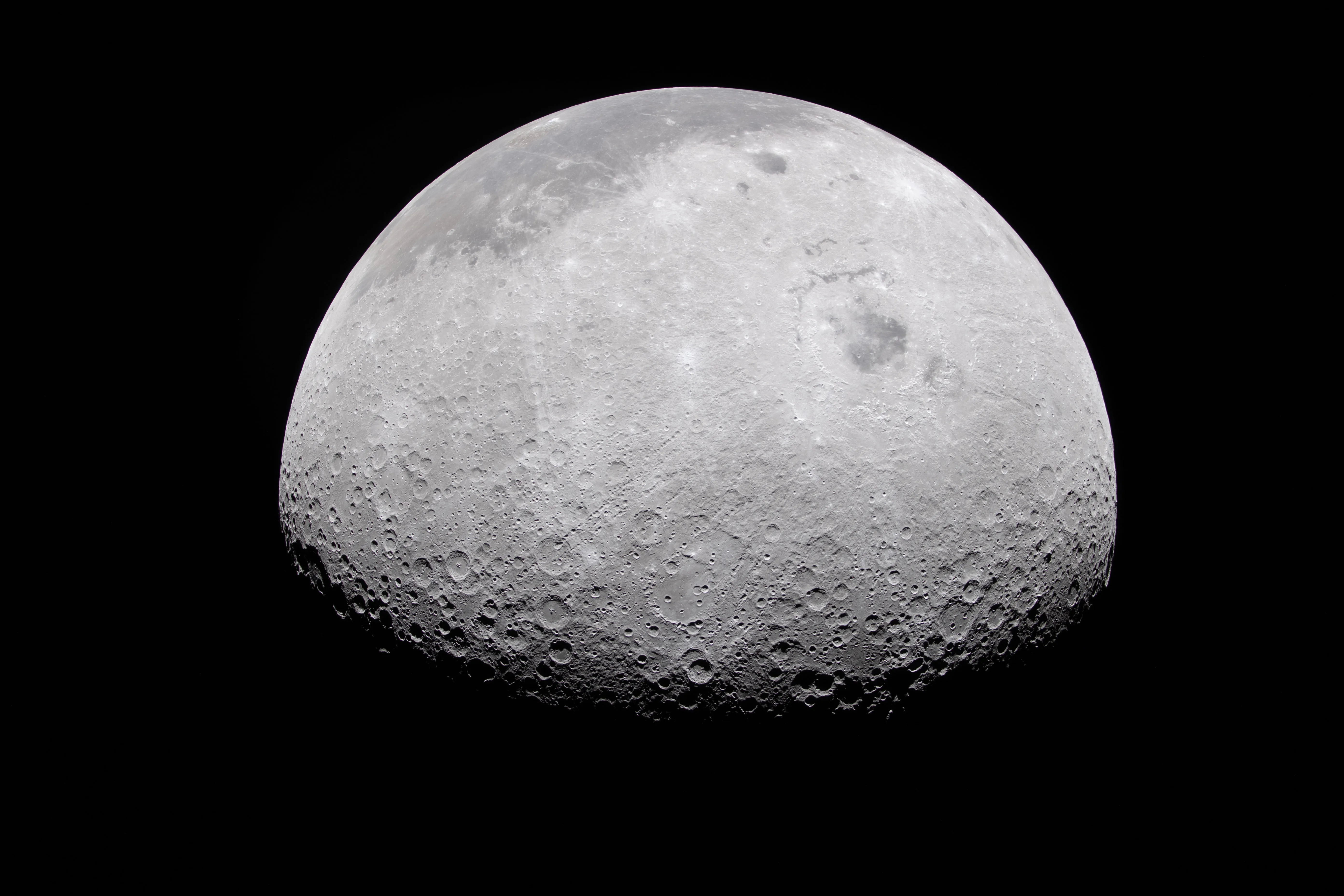
KASA Releases Before-and-After Images of SpaceX Falcon 9 Lunar Impact Site Captured by Danuri
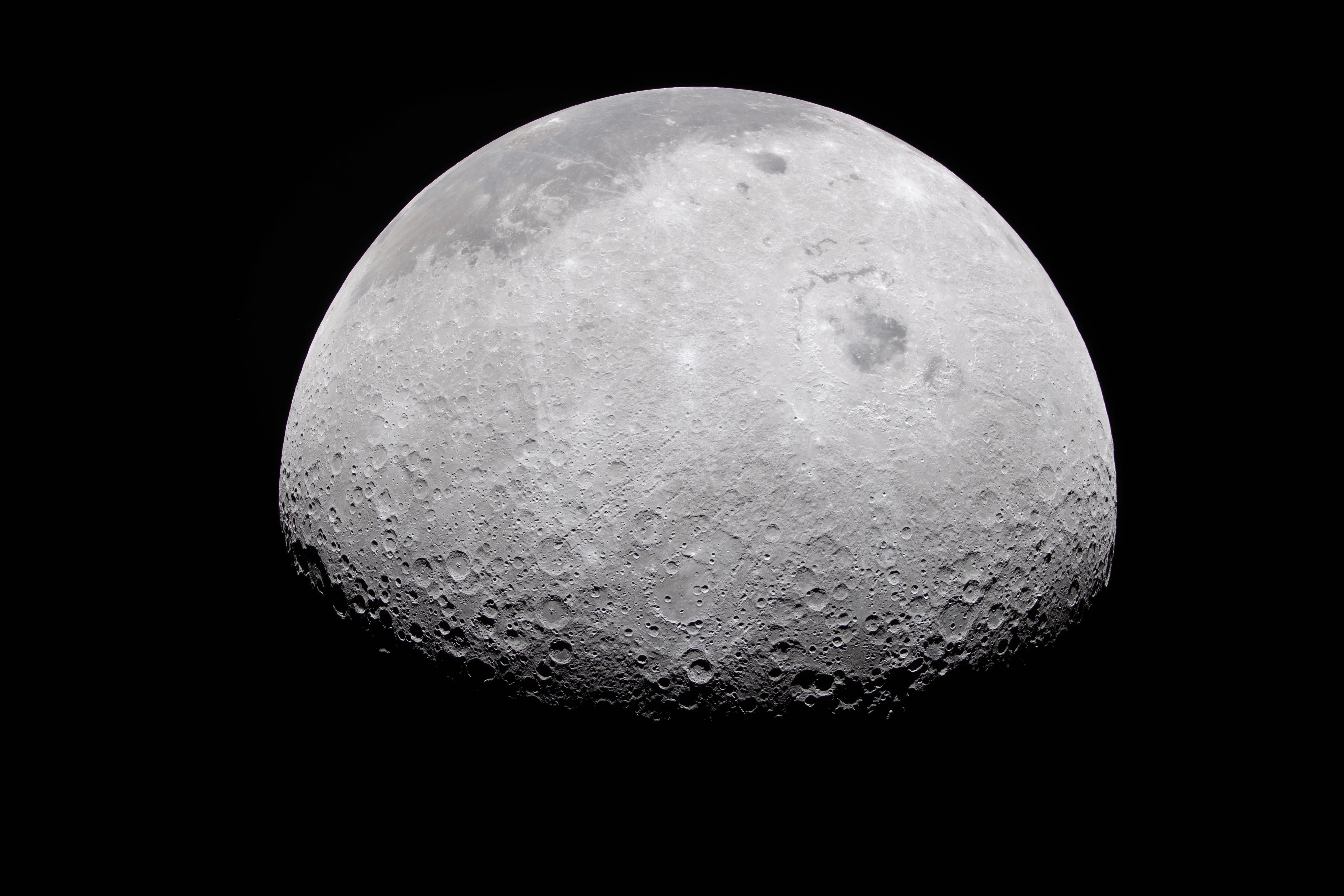
The Korea AeroSpace Administration (KASA) has released what it claims are the first before-and-after images of the SpaceX Falcon 9 lunar impact site, captured by South Korea's Danuri lunar orbiter. The images document the crater left by the Falcon 9 second stage, which struck the Moon's surface in the early hours of August 5, 2026 at a reported speed of 5,400 mph. NASA estimated the resulting crater at roughly 60 feet wide and 12 feet deep. (Engadget)
The four-ton upper stage had been in orbit since January 2025, when it carried two lunar landers to orbit as part of the Blue Ghost mission. After payload deployment, the stage remained in a lunar trajectory with no remaining propellant budget for a controlled disposal burn. It impacted on the lunar far side, where the impact was expected to eject a plume of dust and rock outward from the surface. (Engadget; USA Today)
SpaceX addressed the uncontrolled lunar impact publicly, stating that for most missions it plans a controlled deorbit of the Falcon second stage so it safely reenters over the ocean. The company further stated that for higher-energy missions like a lunar transfer orbit, nearly all vehicle performance is devoted to placing the payload in the intended orbit, so a controlled disposal maneuver is not always possible. (Engadget; SpaceX on X)
The images were captured by Danuri, also known as the Korean Pathfinder Lunar Orbiter (KPLO), a spacecraft built by the Korea Aerospace Research Institute (KARI) that has been operating in lunar orbit since 2022. Danuri carries an imaging instrument designated LUTI, which was used to photograph the impact site. KARI's 2023 annual report also documents that the orbiter has executed collision avoidance maneuvers (CAMs) to avoid collisions with other spacecraft at the Moon, underscoring the increasingly congested cislunar environment that missions like Blue Ghost and the Falcon 9's errant upper stage now occupy. (KARI 2023 Annual Report; NASA)
NASA had planned to observe the impact and estimated crater dimensions in advance, publishing its projections for the crater size prior to the event. KASA's release of before-and-after imagery now provides a visual record against which those projections can be compared. (Engadget; NASA)
The broader context here is the growing volume of hardware reaching cislunar space as commercial lunar delivery services scale up. The Falcon 9 upper stage that impacted on August 5 is not the first spent rocket stage to strike the Moon, but it is among the first to be documented this thoroughly by a non-US, non-Chinese lunar orbiter. Danuri's imaging campaign demonstrates that the number of actors capable of producing useful lunar reconnaissance data is expanding beyond the traditional spacefaring nations. For mission planners and debris-tracking organizations, that is a meaningful capability gain.
SpaceX's explanation for the uncontrolled disposal highlights a real trade-off in launch vehicle design and mission architecture. When an upper stage is tasked with a high-energy translunar injection, the residual propellant needed for a controlled deorbit may simply not exist. The alternative, leaving the stage in a chaotic lunar or Earth-Moon trajectory, creates a debris object that may persist for months or years before an uncontrolled impact. The Falcon 9 stage spent roughly 19 months in orbit before striking the surface. During that window it represented an untracked or loosely tracked hazard to other cislunar assets, including Danuri itself.
Worth flagging: as commercial lunar payload delivery cadence increases under programs like NASA's Commercial Lunar Payload Services (CLPS) initiative, the frequency of upper stages and other hardware reaching the lunar environment without disposal plans is likely to rise. The international community has not yet established binding norms for post-mission disposal in cislunar space equivalent to the debris mitigation guidelines that govern low Earth orbit. Each uncontrolled lunar impact is, at minimum, a data point in an accumulating risk profile.
The crater itself is scientifically minor in isolation. The Moon has no atmosphere and no erosion mechanisms beyond micrometeorite bombardment, so impact craters persist indefinitely. A 60-foot crater joins millions of others. But the imaging campaign that captured it, performed by a Korean orbiter using an indigenously developed instrument, is a signal of how the lunar operational landscape is widening. More spacecraft, more operators, more imaging assets, and more debris, all converging on the same region of space.