Colombia Gets a New President — and Launches Military Strikes Right Away

Colombian soldiers killed Hernando Forero Mosquera, the leader of a breakaway armed group called Frente 28, during an operation in the countryside on August 10, 2026. Three other suspected members were also killed. President de la Espriella, who had just started his job days earlier, praised the military and said Forero — also known as 'El ruso' (The Russian) — was an explosives expert BBC News.
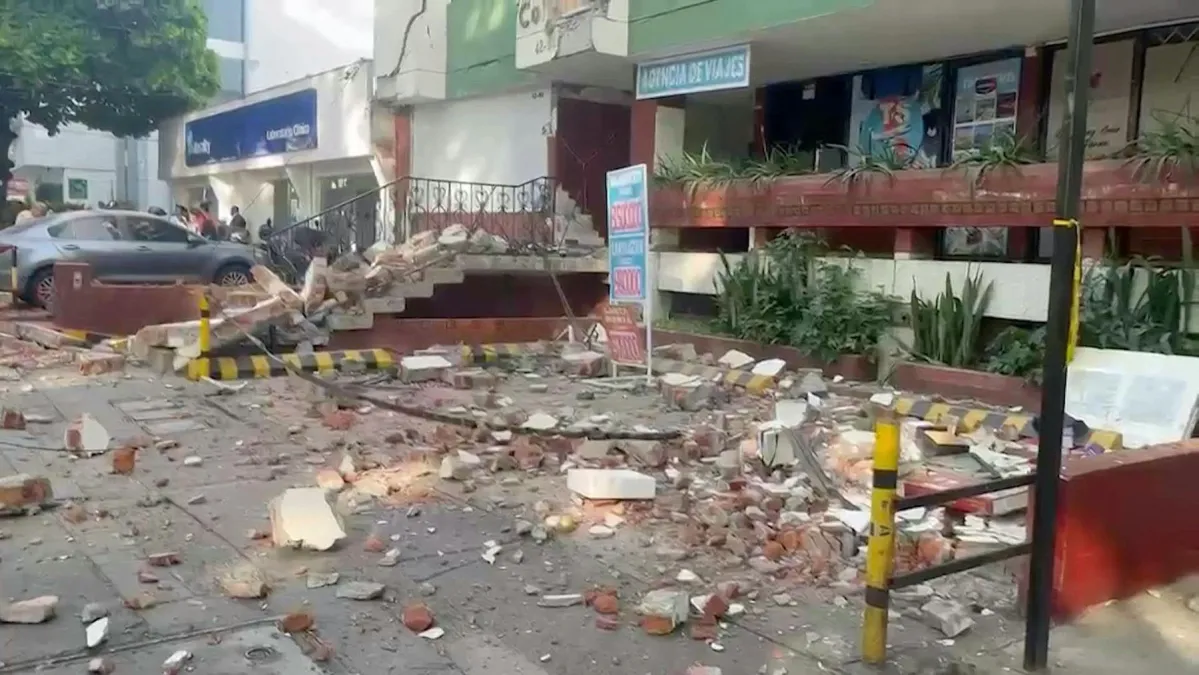
The operation happened just one day after de la Espriella was sworn in as president. On that same day, two bombs went off in Colombia. A car bomb at a tollbooth in Cauca province injured two security guards. In a separate attack in Cesar province, a police officer was killed by explosives dropped from a drone. The 48-year-old president promised a tough military response to armed groups when he took office in August 2026. He also froze government spending but kept social programs running Reuters.
In other operations, Colombian soldiers killed two suspected members of the Gulf Clan, a criminal group, in Antioquia province. Colombian forces also fought members of another armed group called 'Comuneros del Sur,' killing three in combat on August 3, 2026 Presidencia de la República.
De la Espriella said he would handle armed groups very differently from the previous president, Gustavo Petro. Petro was the first left-wing president in Colombia's history. He wanted to solve the conflict by talking with armed groups instead of fighting them — a plan he called 'total peace.' But that plan failed. Armed groups kept breaking ceasefires (agreements to stop fighting temporarily) and walking away from the negotiations. A report from July 2025 found that illegal armed groups in Colombia had gained thousands of new members and taken control of more territory while Petro was president Reuters.
To understand why armed groups are still active, it helps to know some history. In 2016, the Colombian government signed a peace agreement with FARC, a large rebel group. Most members laid down their weapons. But some refused and kept fighting. These breakaway groups, called 'dissidents,' make money mainly from cocaine trafficking and illegal mining. They are a major reason violence has returned to Colombia. In June 2026, another rebel group called the ELN said it was open to talking with the new president but also said it could survive a military attack Reuters.
De la Espriella chose Jorge Eduardo Mora as his defense minister Reuters. US President Donald Trump supported de la Espriella's candidacy. The US government said it would give $1 billion in security help to Colombia. The US also brought Colombia into a group called 'Shield of the Americas,' an alliance of countries in the Western Hemisphere working together against drug trafficking and organized crime. A Colombian government report said 12,385 members of armed groups had been captured, and 1,538 of those had turned themselves in voluntarily Presidencia de la República.
The broader context here is a major change in how Colombia's government handles security. When Petro became president in August 2022, he replaced top military and police leaders as part of an effort to improve human rights Reuters. His 'total peace' plan tried to get all armed groups to negotiate at the same time. But the groups kept violating ceasefires, and the plan fell apart. That left de la Espriella's government with a security gap and a strong reason to take a harder line. The July 2025 report showing that armed groups had expanded during Petro's time in office gave the new administration factual evidence to justify the shift.
What does this mean for the region? The partnership between Washington and Bogotá could change how countries across the Americas fight drug trafficking. The $1 billion in security aid and Colombia's membership in 'Shield of the Americas' show that the US wants to base its regional drug-fighting efforts on military cooperation with Colombia. For de la Espriella, the big test is whether a military approach can weaken groups that are deeply tied to the cocaine trade and illegal mining — without causing the civilian displacement and human rights problems that have come with such offensives in the past. The ELN's signal that it is open to talks but also claims it can withstand military pressure suggests armed groups may switch back and forth between negotiating and fighting depending on what works best for them at any given moment.
Colombia has tried both military and negotiation-based approaches before, and each has come with trade-offs. What makes this moment different is that three things are happening at once: peace talks have failed and left a security gap, a new president has a mandate to use force, and the United States is willing to pay for a militarized strategy. Whether this combination can succeed where past efforts have fallen short is an open question — and the answer will affect not just Colombia but the wider fight against organized crime across the region.