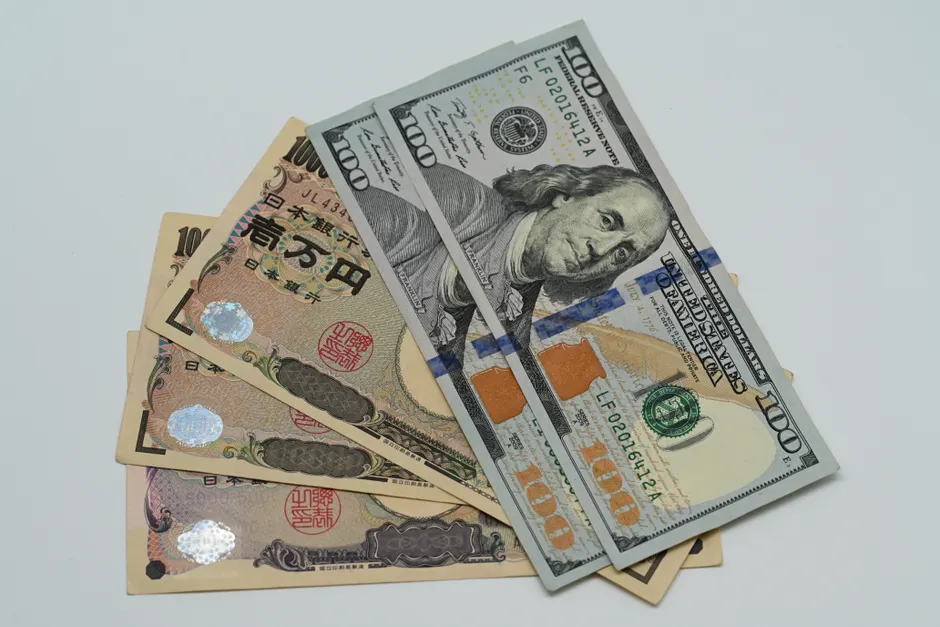
The Euro-Dollar Exchange Rate Is Barely Moving — Here's What's Going On

ING's latest currency note, published August 11, 2026, says the euro-dollar exchange rate is stuck in a tiny range: between $1.1515 and $1.1560 per euro. That's a difference of less than half a cent.
In currency markets, traders measure tiny price moves in units called pips — each pip is worth about one-hundredth of a cent. A 45-pip range, which is what ING is reporting, leaves almost no room for profit from short-term trading. The bank says it is "hard to see EUR/USD trading much outside" those bounds without something new to push the market. ING
This calm stands out because other currency pairs have been moving sharply. On August 2–3, 2026, Reuters reported the Japanese yen surging more than 1% to 155.20 per dollar after Japan and the United States confirmed they had jointly intervened in the currency market. Reuters Two governments teaming up to move exchange rates is unusual. The group of leading economies known as the G7 generally discourages this kind of direct involvement, even if they don't always follow their own advice in practice.
The British pound has also been range-bound, but across a much wider band. Reuters reported in late July 2026 that the pound was trading between $1.3011 and $1.3867 — a spread of about 850 pips. Reuters That is nearly twenty times wider than the euro-dollar range. The gap reflects different expectations about where interest rates are heading in each region, not a bet on which currency will win.
The Federal Reserve's policy is one reason the dollar has been steady. Reuters reported in March 2026 that the Fed was set to hold its key interest rate between 3.50% and 3.75%. Reuters That is higher than markets expected a year earlier. In late 2025, traders put only a 41% chance on the Fed cutting rates by a quarter-percent in December. Reuters The Fed keeping rates relatively high helps explain why the dollar index sat at 97.85 as recently as February 2026. Reuters
ING's own forecasts for the euro-dollar rate have shifted over the past two years. In November 2023, the bank's G10 FX Outlook 2024 predicted a year-end rate of $1.15 and US growth of just 0.5%, well below the 1.0% consensus. ING By April 2025, ING projected the pair trading in a volatile range of $1.12–$1.16. ING A June 2025 piece titled "EUR/USD: 1.20 is in sight" noted the pair had broken above $1.17 and argued its fair value had risen from just below $1.10 to $1.145. ING
In November 2025, ING's G10 FX Outlook 2026 said fair value could "nudge up from the 1.15 area towards 1.20." ING By May 2026, ING was warning the pair could drift back down to $1.15. ING That is exactly where it has settled, with the August 11 range centered just below $1.155.
The trajectory tells a story. ING's estimate of fair value has climbed from below $1.10 in mid-2025 to a $1.15–$1.20 corridor, but the actual exchange rate has hovered near the bottom of that range rather than the top. The idea that $1.20 was "in sight" has not been proven wrong — it has just been pushed further into the future. The current quiet is what happens when a market runs out of reasons to move: the Fed is on hold, the European Central Bank's next steps are already baked into prices, and the risk premium built into the dollar has shrunk.
The broader context here is worth understanding. When the euro-dollar rate goes this quiet, it usually precedes one of two things. Either some policy shock or economic surprise triggers a sharp breakout in one direction, or the market grinds along slowly enough that holding dollars stops paying off. Think of it like a pressure valve: the longer it stays shut, the more pressure builds. The joint yen intervention in early August is a reminder that governments will step in when currency moves get too wild for their liking. If that willingness spreads to other currency pairs or changes how the G7 coordinates on currencies, the current tiny range in euro-dollar could vanish fast.
For professional currency traders, the takeaway is narrow. The strategies that make sense right now are ones that profit from low volatility itself — betting that things stay calm — rather than betting on a direction. The moment the Fed shifts its stance, the range breaks, and the wider $1.12–$1.20 corridor ING has been tracking for two years becomes the relevant benchmark again.